


Timestamps:
0:00 Starting from the Vladimir Dimitrov – Maistora Art Gallery
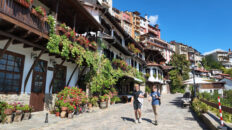
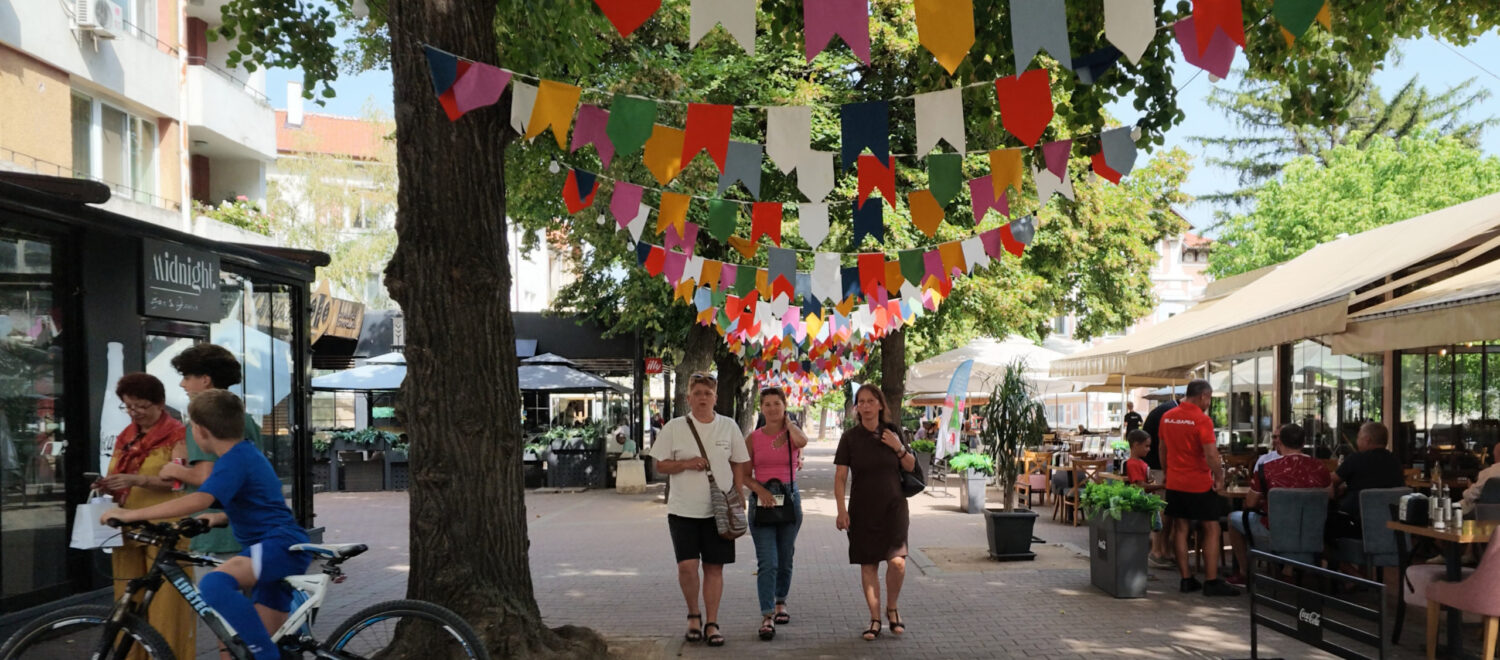
2:30 Pedestrian Bulgaria Boulevard
5:51 Kyustendil Town Hall & Velbazhd Square
11:36 Tsar Osvoboditel Boulevard
19:56 Velbazhd Square
20:28 The Arch (Arkata)
21:26 Monument to the Bulgarian Soldiers
24:34 Bulgaria Boulevard
29:49 Krum Kyulyavkov Drama Theatre
30:39 Iron Bridge
31:43 Restaurant Friends
33:41 Bulgaria Boulevard
43:29 Tsar Osvoboditel Boulevard
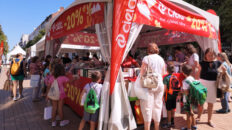
45:00 Kyustendil Market
52:52 Fire Department
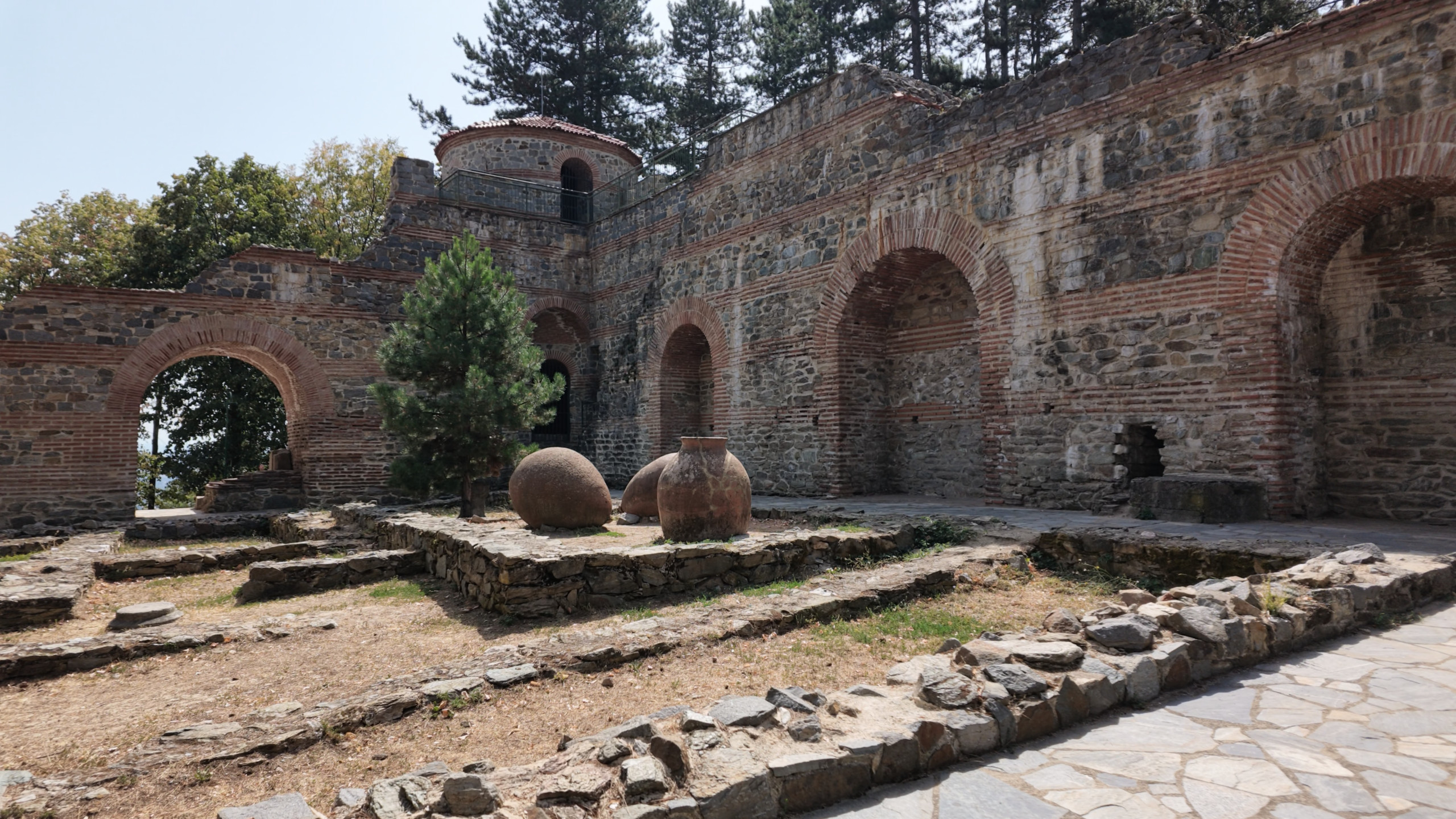
54:43 Hisarlaka
57:14 Hisarlaka Fortress
About Kyustendil
Kyustendil sits in the far west of Bulgaria, built directly on top of a Roman city that earned official town rights in 106 AD. Most travelers who visit Bulgaria never make it here. It sits away from the Sofia-Plovdiv-Varna route most itineraries follow, just 22 kilometers from both the Serbian and North Macedonian borders – a genuine crossroads rather than a stop on the way to somewhere else.
The center still runs on its old bones. Bulgaria‘s pedestrian heart here, Bulgaria Boulevard, connects Velbazhd Square – the town’s medieval core – to a cooperative market that has barely changed its rhythm in decades. Above it all sits Hisarlaka, a hilltop fortress the Ottomans destroyed in the 15th century and nobody ever rebuilt.
If you want to see a Bulgarian town that has not been rebuilt for tourists, Kyustendil is one of the last places in the country where that is still genuinely true.
History and Interesting Facts
The Romans called this city Pautalia. It got official town rights in 106 AD, the same year as Serdica (Sofia) and Philippopolis (Plovdiv), and it grew around a healing sanctuary – an asclepion – that was reportedly the second-largest in the whole Balkans, behind only Epidaurus in Greece.
By the Middle Ages the town was known as Velbazhd, and Velbazhd Square still carries that name. In 1330, a battle fought right here changed the balance of power in the medieval Balkans: Bulgaria’s Tsar Mihail III Shishman was killed in the fighting, and Serbia won the day.
Centuries later, under Ottoman rule, the sultan Mehmed the Conqueror kept his court here for a time. The town survived two major plagues and two significant earthquakes over the following centuries – and, on a lighter note, Yuri Gagarin, the first man in space, visited Kyustendil in 1966.
The fortress above the city, Hisarlaka, has the oldest story of all. Romans built the first version of it around 400 AD, and it stayed in continuous use for over a thousand years, through two Bulgarian empires. It was destroyed three separate times – first by the Huns, then by the Avars and Slavs, and finally by the Ottomans in the 15th century. After that last destruction, nobody ever rebuilt it. What stands today is essentially how it was left.
Main Attractions
Vladimir Dimitrov – Maistora Art Gallery
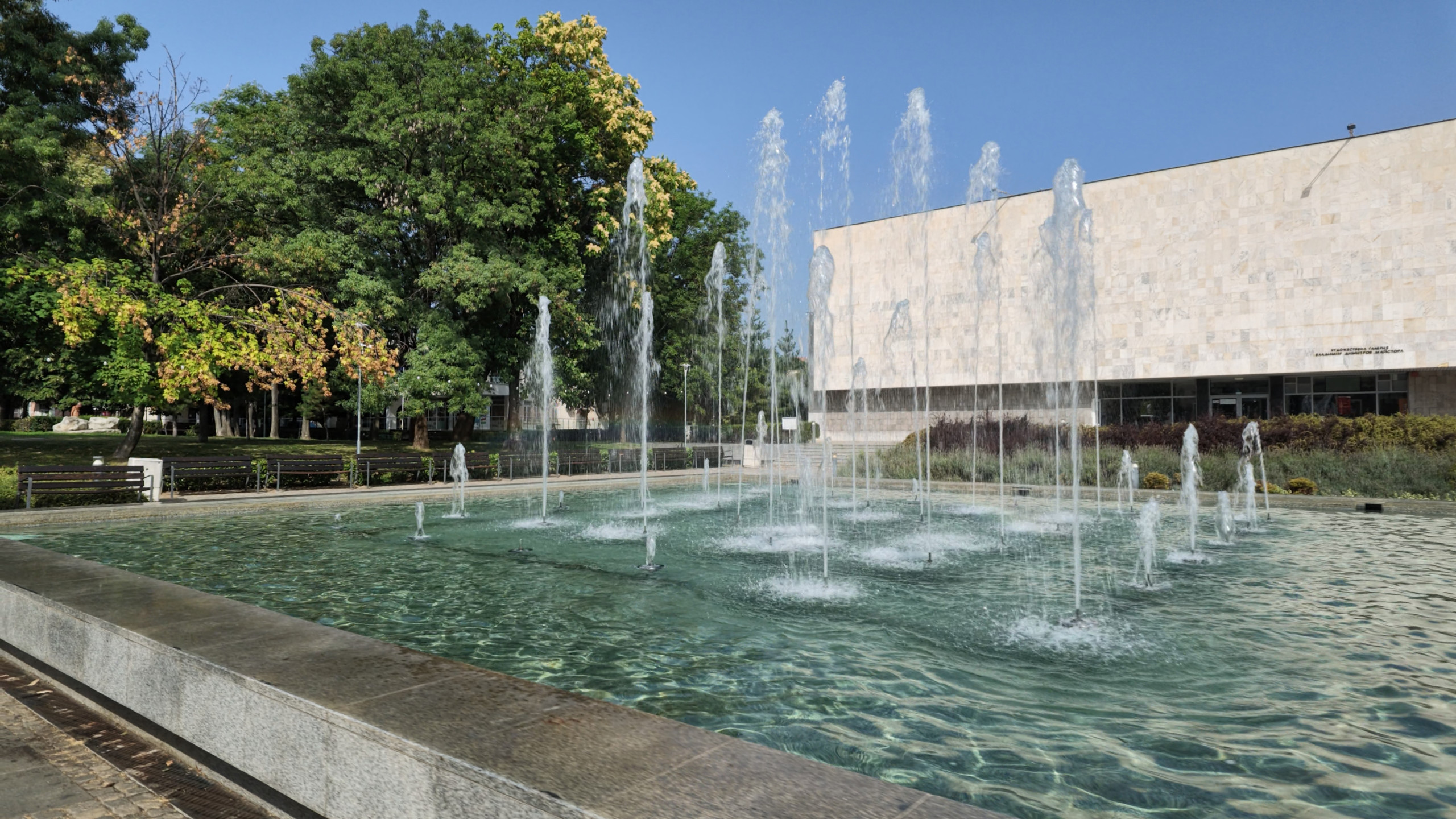
The walk starts at the gallery dedicated to Vladimir Dimitrov, known simply as Maistora – the Master. Many Bulgarians consider him the country’s finest painter, and this gallery is one of Bulgaria’s 100 National Tourist Sites. Expect rural life scenes, portraits, and landscapes rather than anything abstract. Worth the first stop of the day, before the town center fills up.
Bulgaria Boulevard
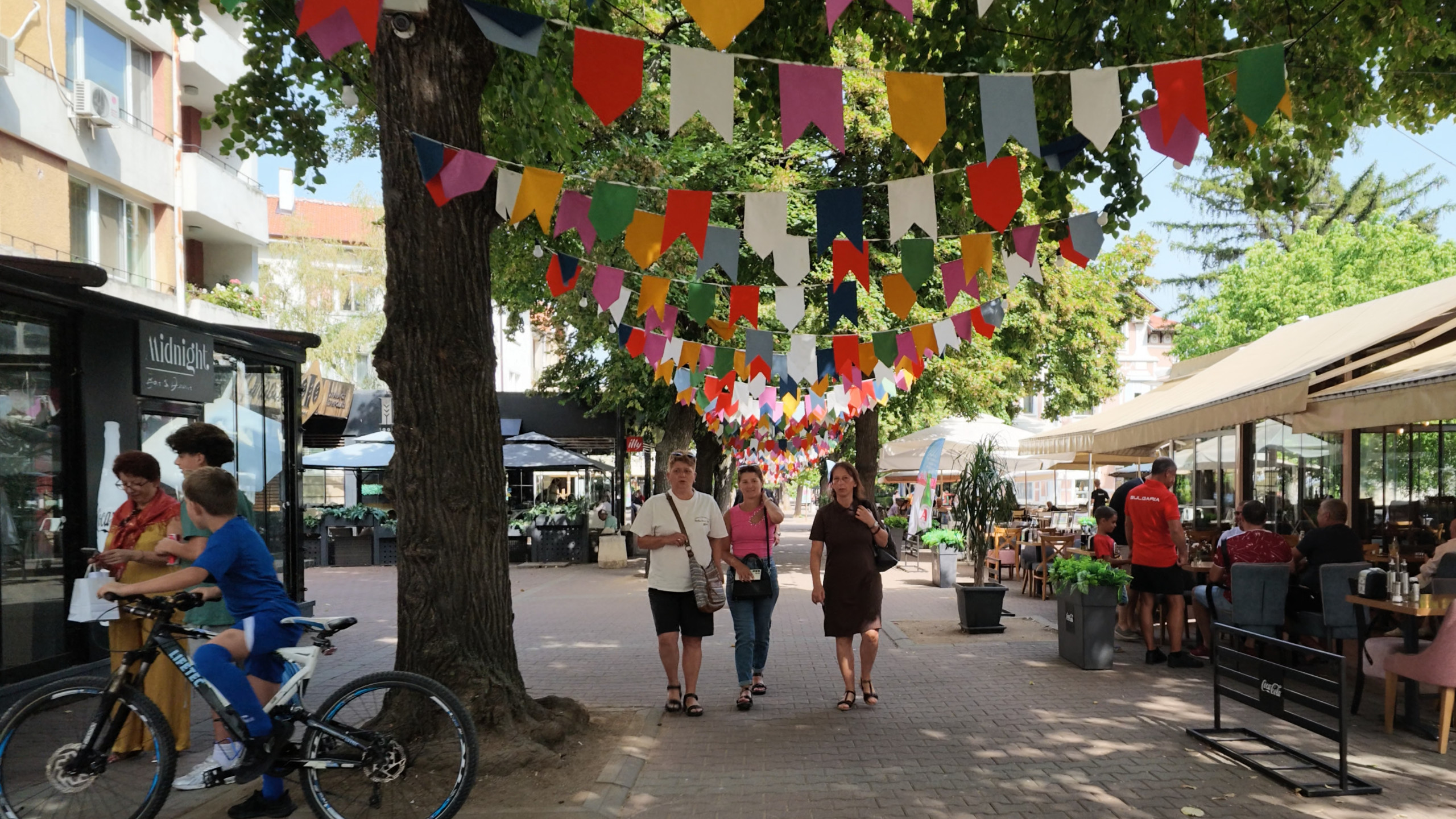
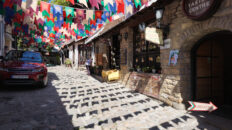
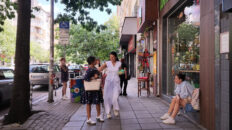
The pedestrian spine of the town, running through the center and looping past most of the other attractions on this list. Cafes, bakeries, and small shops line the whole way down. If a place along here looks busy with locals rather than visitors, that is usually the one worth trusting.
Kyustendil Town Hall and Velbazhd Square
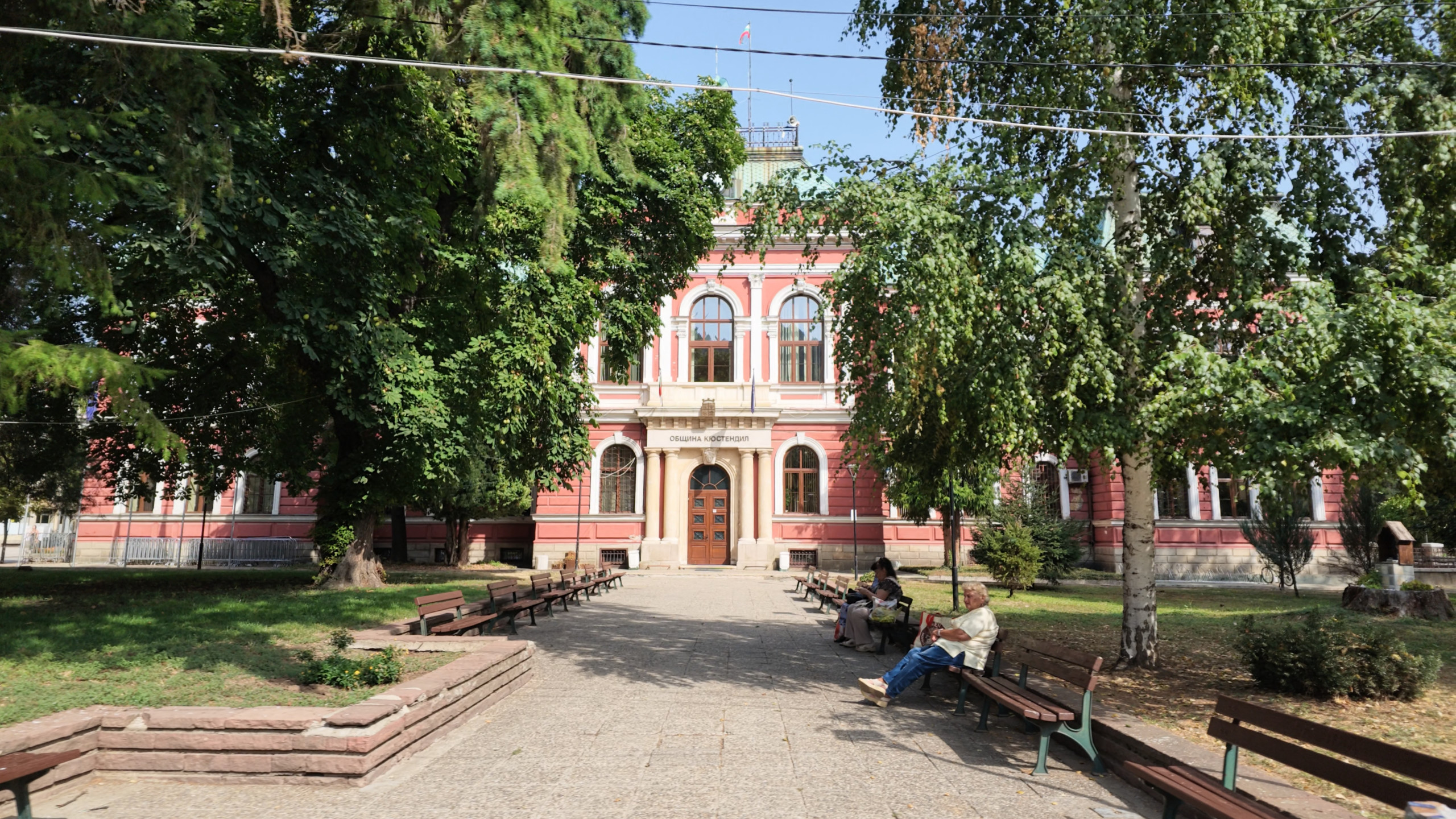
The town hall sits right on Velbazhd Square, the real center of Kyustendil day or night. This is the square that kept the town’s medieval name, and it still functions as the default gathering point for markets, concerts, and anything else that needs an audience.
The Arch (Arkata)
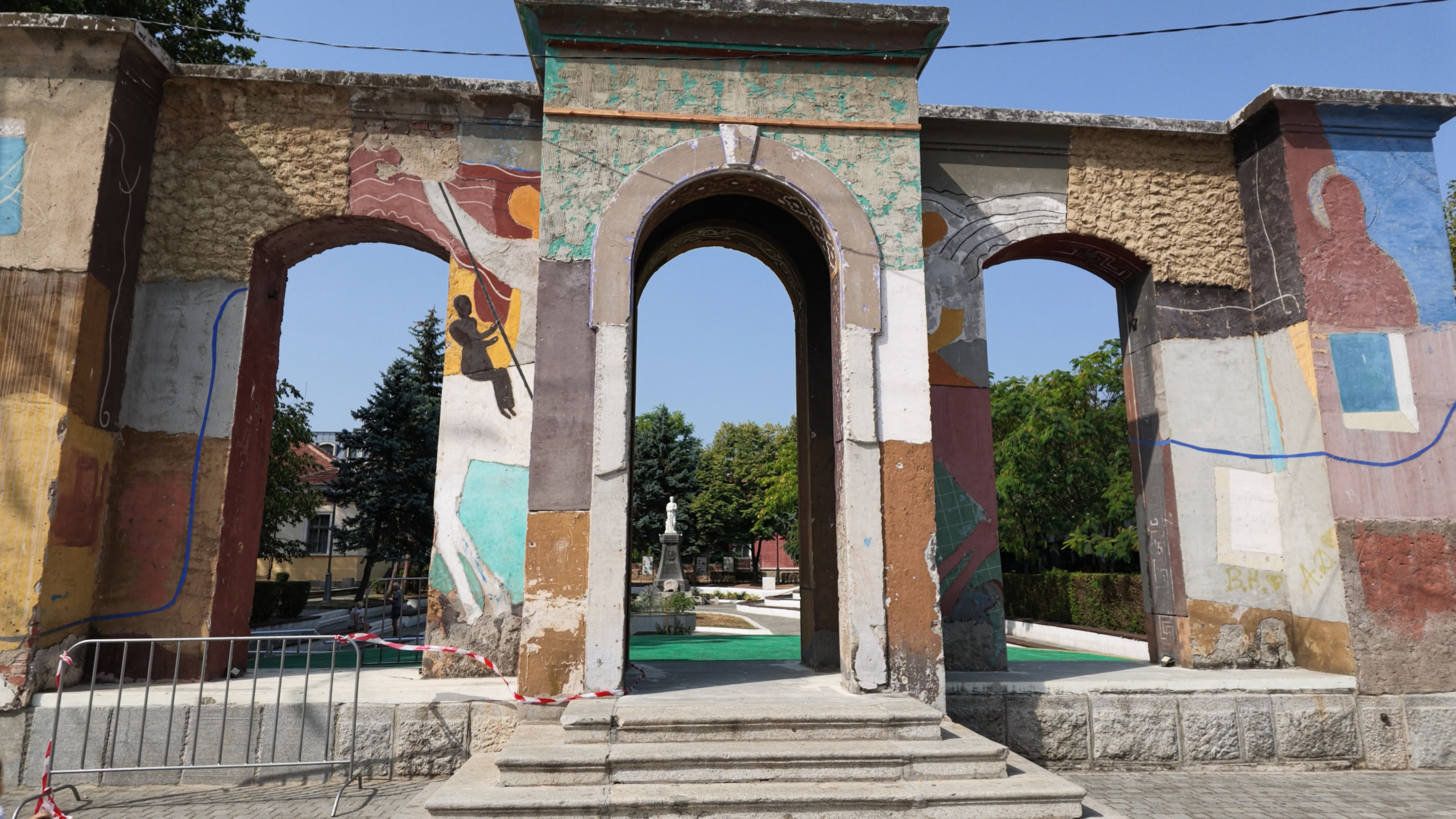
A single standalone arch across from the town hall, and a landmark with a better story than it looks. It is the last surviving wall of Kyustendil’s old theater building, torn down in the 1980s after the town’s current theater opened in 1979. Everything else is gone. This is what is left.
Monument to the Bulgarian Soldiers
A small, quiet park sits just behind the arch, home to a monument honoring Bulgarian soldiers who died for the country. Simple and respectful rather than grand. Worth a quiet minute before moving on.
Krum Kyulyavkov Drama Theatre
Named after the Bulgarian writer Krum Kyulyavkov, born in Kyustendil in 1893. The current building opened in 1979 – the direct successor to the old theater now reduced to that single arch back at the square. A nice detail if you walk both in one day: you are looking at the same institution, twenty minutes and forty years apart.
The Iron Bridge
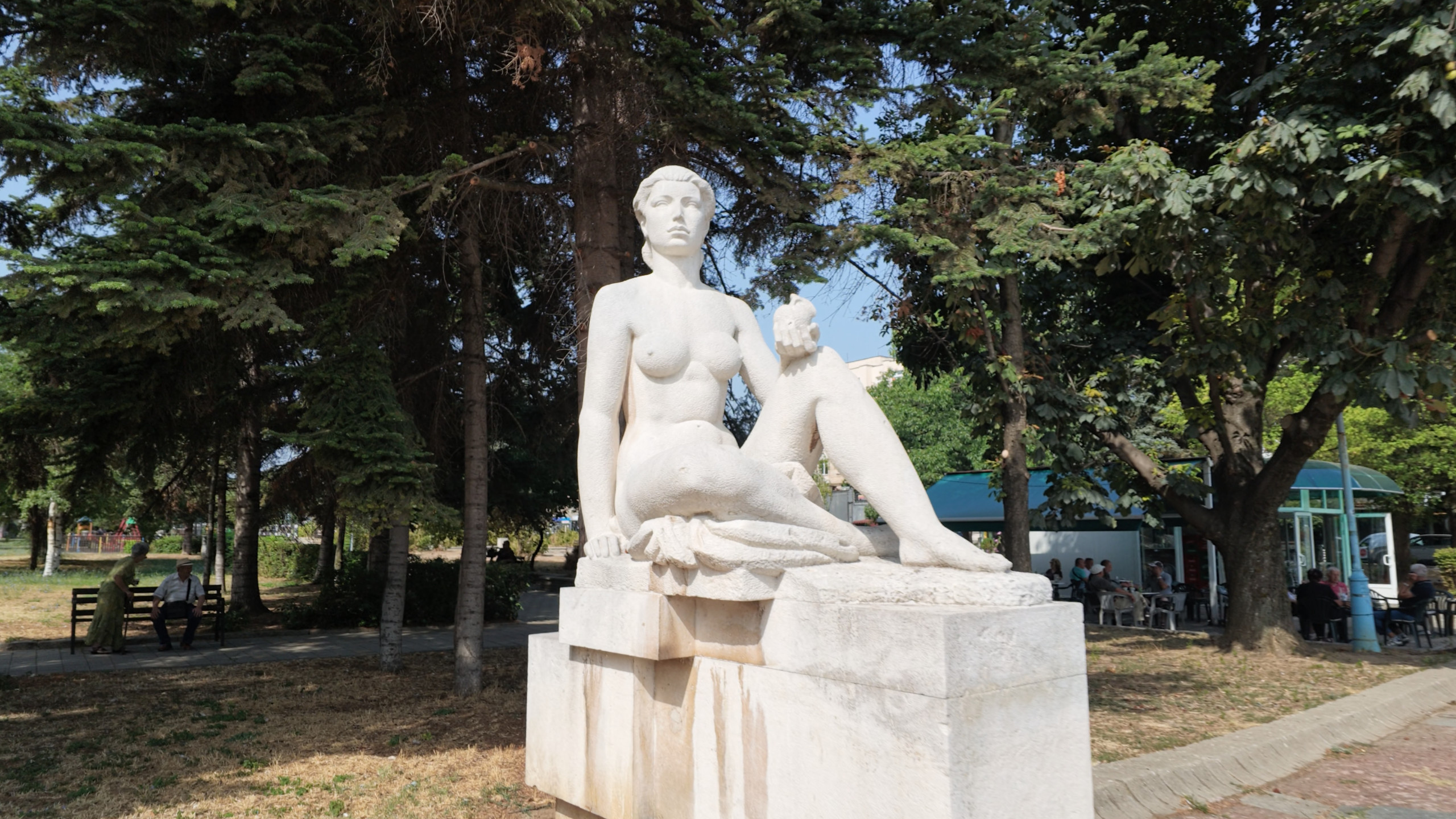
Built in 1909 by an Austrian engineer, the Iron Bridge is guarded by four statues, all of them women, which is exactly why locals call it the Women’s Bridge instead of its official name. It is the single most photographed spot in town, and it earns it. Restaurant Friends, a popular local spot, sits right beside it if you want to make a stop of it.
Kyustendil Market
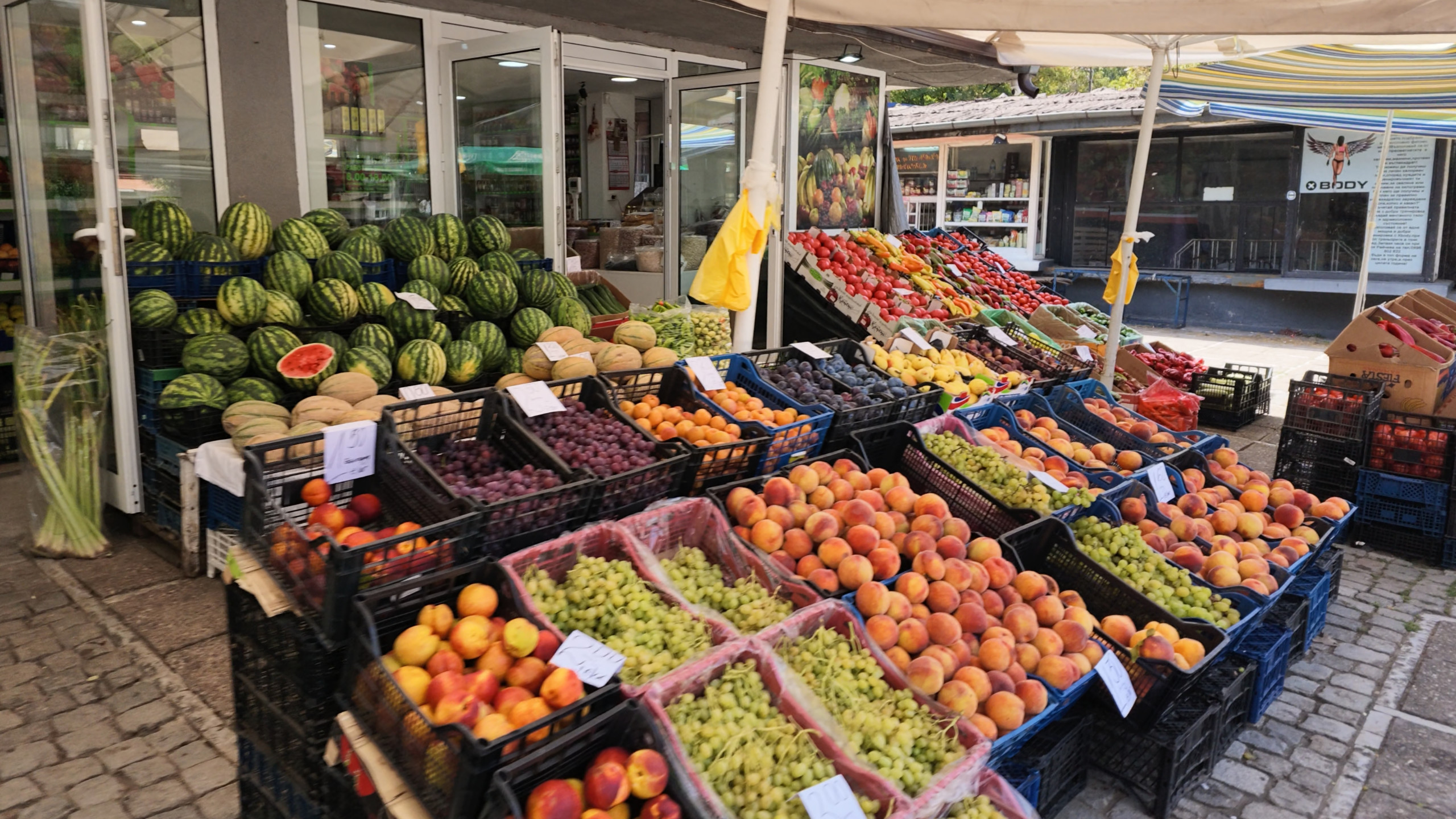
Kyustendil’s cooperative market – fruit, vegetables, and local food, sold by people who actually grew it. This is exactly the kind of stop most travel videos skip entirely, and exactly why it is worth slowing down for. Prices here run lower than any supermarket in Sofia, and vendors sell what is actually in season rather than what was imported. Cherries from this region are considered some of the best in the country – a kilo in season costs just a couple of euros.
Hisarlaka Fortress
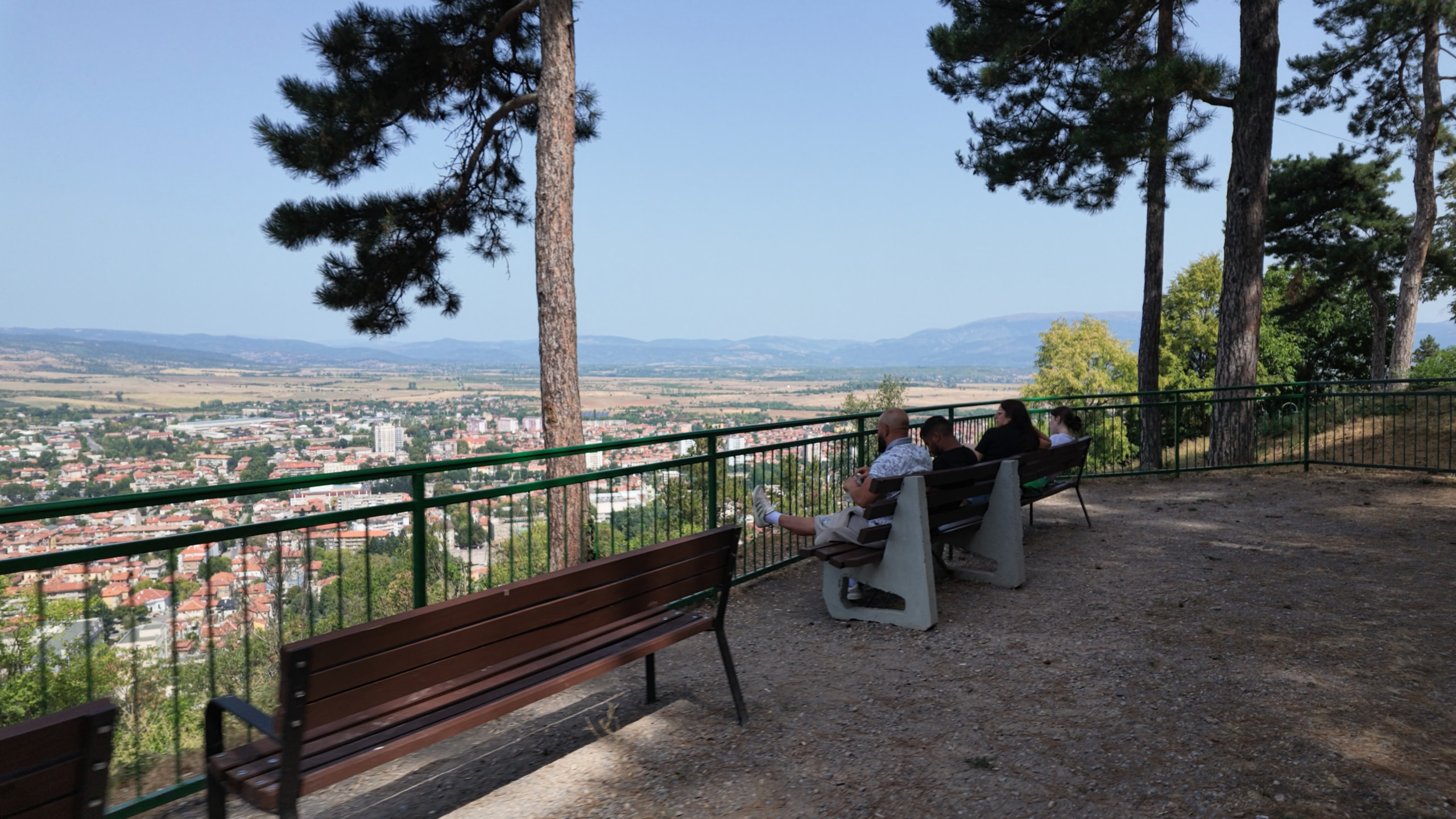
The walk ends on the hill above the city, at the fortress that ran this whole region for a thousand years. The walls here run up to 3 meters thick in places, and 14 towers – round and square mixed together – once stood along them. A shaded path leads up (trees cover most of it, so it stays cooler than you would expect from a hilltop climb in summer), and the view from the top takes in the whole city laid out below. Do not skip the climb for the view alone.
Not filmed on this walk, but worth knowing about: Kyustendil is a national balneological resort with more than 40 mineral springs, and the old Roman thermae and Ottoman-era Dervish Bath near the center are both still standing. Neither made it into this particular route.
What to Eat and Drink
Kyustendil calls itself the Orchard Garden of Bulgaria, and the fruit is genuinely the reason to eat locally here. Cherries are the headline crop, with a whole festival dedicated to them every June. Peaches and apples from the same orchards show up on market stalls and breakfast tables across the country – a lot of them start right here.
For a proper meal, the cafes and small restaurants along Bulgaria Boulevard cover the usual Bulgarian staples – shopska salad, kavarma, grilled meats – at prices well below what you would pay in Sofia. Restaurant Friends, near the Iron Bridge, is a popular local choice if you want a sit-down meal mid-walk rather than market snacking.
Practical Information
Getting There
Kyustendil is about 90 kilometers southwest of Sofia, around an hour and twenty minutes by car. The nearest airport is Sofia Airport, and from there a rental car is the most straightforward way in – public transport between the two cities runs but adds significant time. If you are flying in from abroad, it’s worth comparing flight options into Sofia before you book a car.
Arriving from outside the EU, it is worth sorting out a local data plan before you land rather than after – an eSIM set up in advance saves the hassle of finding a SIM shop once you are already in a small town.
Cost of Living
- Coffee: around €1.50
- Casual meal: around €8 to €10
- Local draft beer: around €2
- Budget accommodation: around €25 to €35 per night
- Mid-range hotel: around €45 to €65 per night
For accommodation, Booking.com has the fullest listing of the town’s small hotels and guesthouses, most of them well under Sofia prices.
Best Time to Visit
Summers here run warm and dry, similar to most of inland Bulgaria – expect high twenties Celsius through July and August. Late spring is quieter and just as pleasant for walking. If cherries are the draw, aim for June: that is both cherry season and the month of Kyustendil’s cherry festival, so expect the town to be livelier and slightly busier than usual.
What’s Near Kyustendil
Sofia
Bulgaria’s capital is about an hour and twenty minutes away by car, and it is also where the nearest airport sits. Easy to treat as either the start or end point of a trip that includes Kyustendil.
Blagoevgrad
About 53 kilometers away, just over an hour and a half by car. A livelier, younger city built around its student population – a good contrast to Kyustendil’s quieter pace.
Pernik
Around 55 kilometers away, on the road back toward Sofia. Worth a stop for its industrial history if that route is already on your way.
Rila Monastery
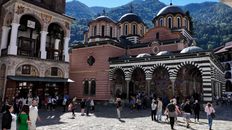
About 75 kilometers away, roughly an hour and forty minutes by car. Bulgaria’s most famous monastery and a UNESCO World Heritage Site – a longer day trip, but a genuinely worthwhile one. If you’d rather not drive it yourself, a guided day tour is an easy way to see it.
Gyueshevo Border Crossing
Just 22 kilometers from the center, this crossing puts North Macedonia within reach of a short drive – close enough that lunch in another country is a realistic option, not just a novelty.