

📍 Location: Pernik, Bulgaria
📹 Filmed on: 25 April 2026
⛅ Weather: 21°C
🎧 This video features binaural audio – for the best experience, use headphones.
📜 Turn on subtitles for travel tips, prices, and history throughout the walk.
⏱️ Chapters:
00:00 Palace of Culture, Pernik
05:11 Targovska Street – Main Shopping Street
10:41 Krakra Pernishki Square
20:14 Memorial of Mining Labor
25:16 Targovska Street – Return
30:52 Regional Court Building
31:42 Central Park and Struma River
45:09 Krakra Pernishki Square – Return
51:17 St. Ivan Rilski Square
51:40 Mining Directorate Building
52:00 St. Ivan Rilski Church
53:56 Museum of Mining, Pernik
54:18 Regional History Museum
55:05 Monument of Evtim Arsov
56:43 Municipality Hall Pernik
1:01:53 Krakra Pernishki Monument
About Pernik
Pernik is Bulgaria‘s mining capital – a city built on coal, shaped by industry, and carrying a history that most visitors to the country know nothing about. It sits 30 kilometers southwest of Sofia, which makes it one of the easiest day trips in the country. And yet almost nobody makes it here.
The city has around 75,000 residents today. At its industrial peak during the communist era, that number was significantly higher – Pernik was one of the most strategically important cities in Bulgaria, and the architecture of its center still reflects that ambition. Wide squares, neoclassical civic buildings, a Palace of Culture that was built to impress.
What you find on arrival is a city that is genuine, unhurried, and completely untouched by tourism. The locals are friendly, the prices are among the lowest in the eurozone, and the story of the place – from its medieval defenders to its mining legacy – is more interesting than most people expect. It is the kind of destination that rewards curiosity.
History and Interesting Facts
The area around Pernik has been inhabited since the Thracian period. The city grew in strategic importance during the medieval Bulgarian empires, when the Pernik fortress became one of the most contested strongholds in the western Balkans.
The defining moment in Pernik’s medieval history came in the early 11th century, when a Bulgarian boyar named Krakra Pernishki held the fortress against Byzantine Emperor Basil II – one of the most formidable rulers in Byzantine history. Basil II had just crushed the Bulgarian army at the Battle of Kleidion in 1014, blinding 15,000 Bulgarian prisoners after the victory and earning the name “Bulgar-Slayer.” Bulgaria’s tsar died from shock shortly after. Krakra refused to surrender.
He reportedly commanded 35 fortresses besides Pernik and held out through years of Byzantine campaigns. Byzantine chronicles name him as one of the most formidable Bulgarian commanders Basil II ever faced. He finally came to peaceful terms with Byzantium in 1018 – keeping his lands and his titles. A city named after that legacy.
The Ottoman period brought relative quiet to Pernik, but it also brought the discovery that would define the city’s modern identity. Coal was first mined here in 1891, under Ottoman administration. The reserves turned out to be substantial, and by the communist era, Pernik had become the industrial backbone of Bulgaria – its mines powering factories, railways, and homes across the country.
The post-communist transition hit the city hard. The mines gradually closed through the 1990s and 2000s, and the population declined sharply as jobs disappeared. But Pernik did not lose its character. The Surva International Festival of Masquerade Games, held every January and listed on UNESCO’s Intangible Cultural Heritage list since 2009, has given the city a new kind of recognition – and the pride of a community that still knows exactly who it is.
Main Attractions
Palace of Culture
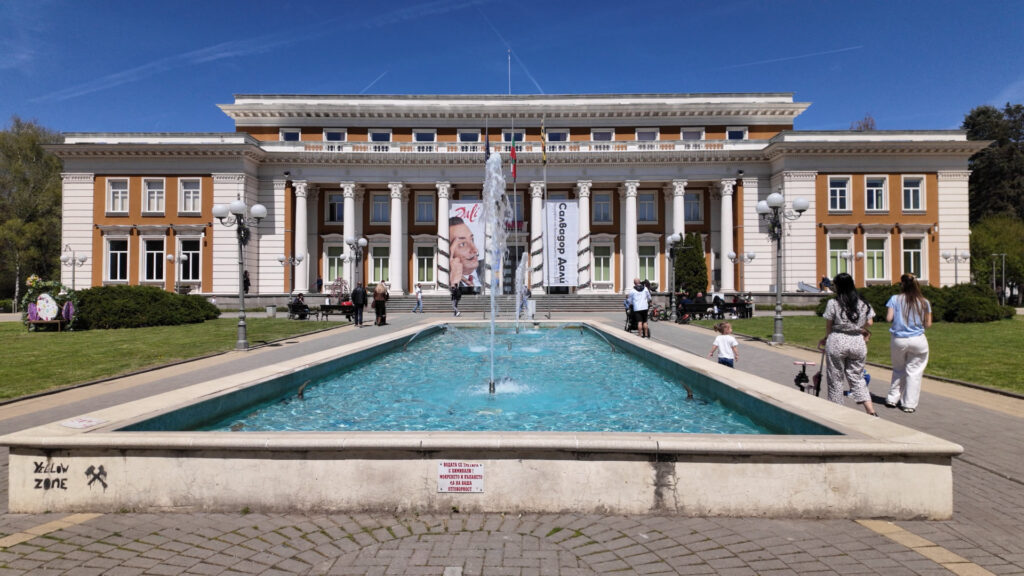
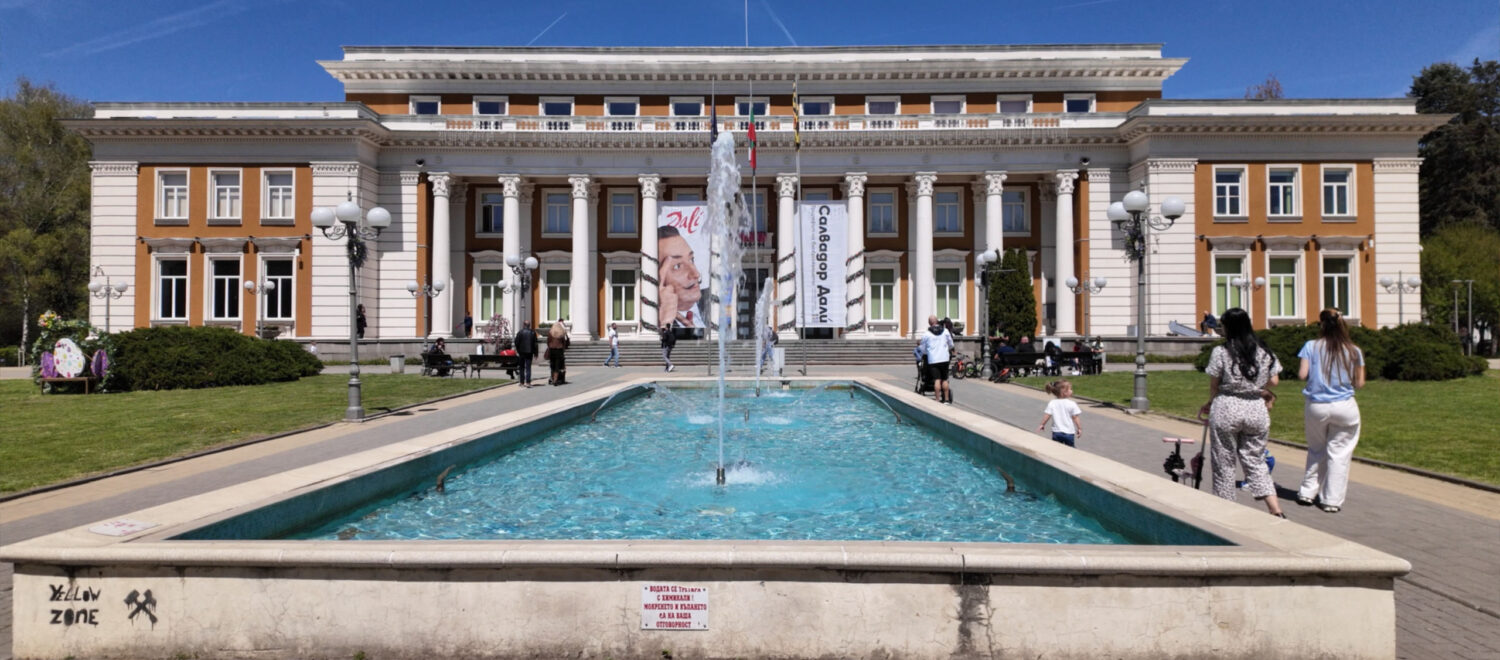
The walk starts in front of the Palace of Culture, which opened on 10 February 1957 and has been the center of cultural life in Pernik ever since. The building is neoclassical in style – columns, symmetry, classical proportions – quite grand for a mining city, and deliberately so. It houses the Boyan Danovski Drama Theatre and has been the setting for a number of film productions over the years.
It is free to walk past and photograph. If you are visiting during a performance or event, tickets are very affordable.
Targovska Street
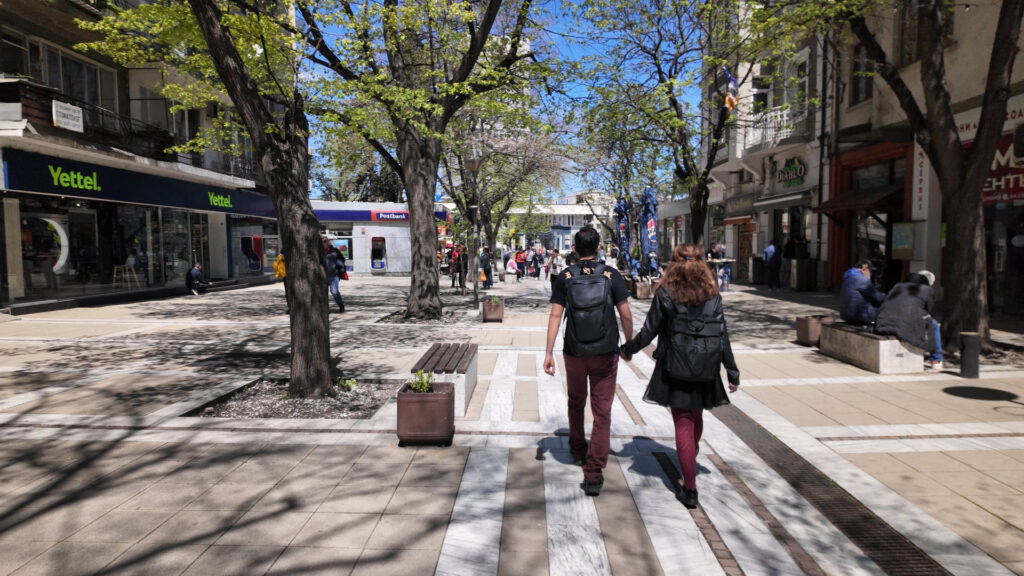
Targovska is the main pedestrian street of Pernik – the spine of the city center and the route that connects its main landmarks. It is not a tourist strip. There are real shops, local cafes, bakeries, and people going about their day with no interest in selling you anything. That is exactly the point.
A coffee on Targovska costs around €1 to €1.50. Stop at any bakery for banitsa – the standard Bulgarian breakfast pastry, filled with cheese or spinach. It costs almost nothing and is always good.
Krakra Pernishki Square
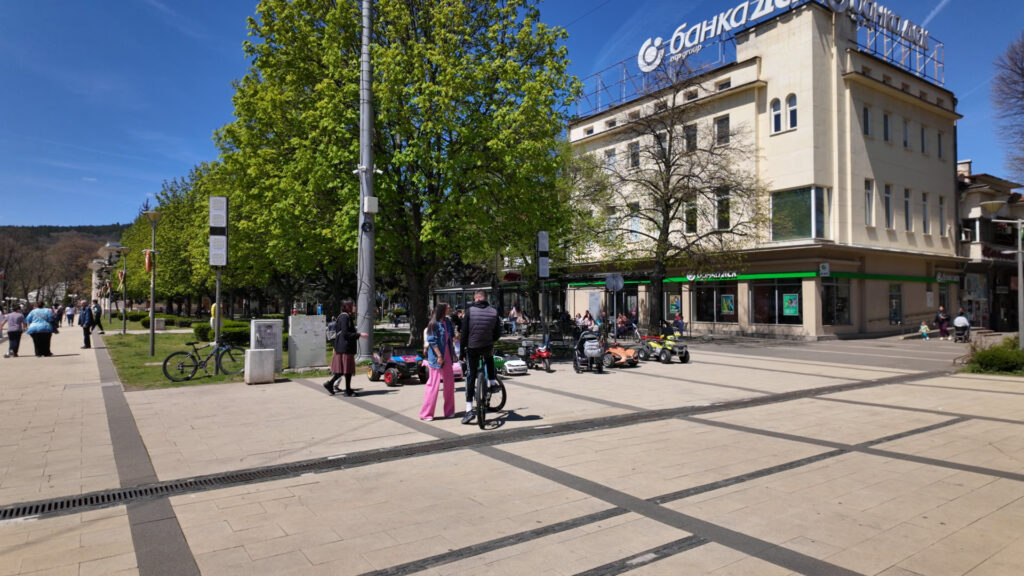
The central square of Pernik is named after the medieval commander who made this city famous. It is surrounded by civic buildings from the communist era – wide, open, and built with a sense of importance that reflects what Pernik once was. The square fills up in the evenings with locals, and the pace here is slow and genuine.
This is the best spot to sit down and take in the full scale of the city center. The Krakra monument, the Mining Memorial, and the church cluster are all within easy walking distance from here.
Memorial of Mining Labor
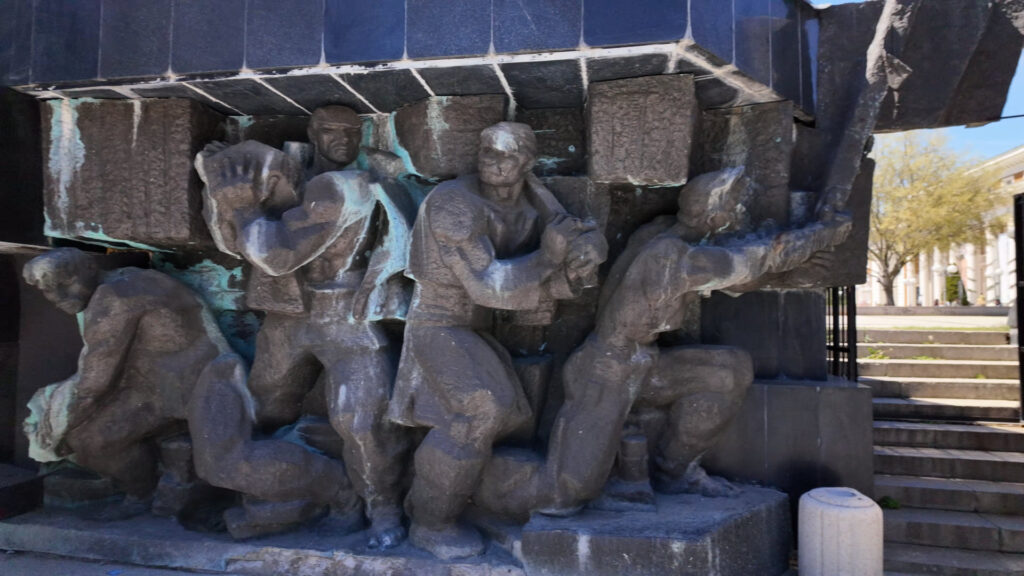
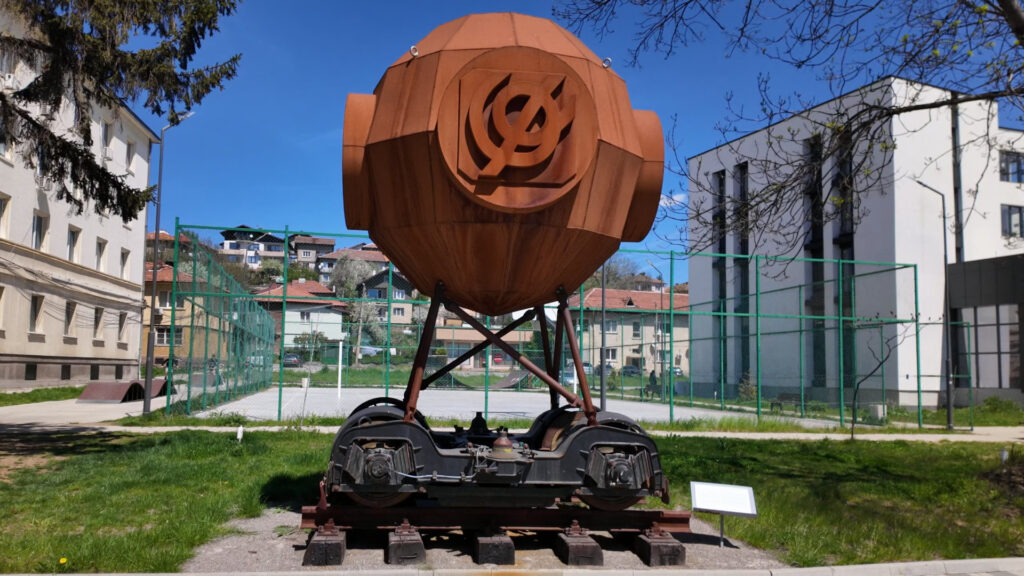
The Memorial of Mining Labor stands on the main square and is one of the most striking monuments in Pernik. It was built to honor the generations of workers who went underground every day to extract the coal that powered the country. At the industry’s peak, thousands of men worked the Pernik coal fields. The memorial does not let you forget that.
It is the kind of monument that stops you for a moment. Raw, direct, and specific to this place in a way that most communist-era memorials are not.
Mining Directorate Building
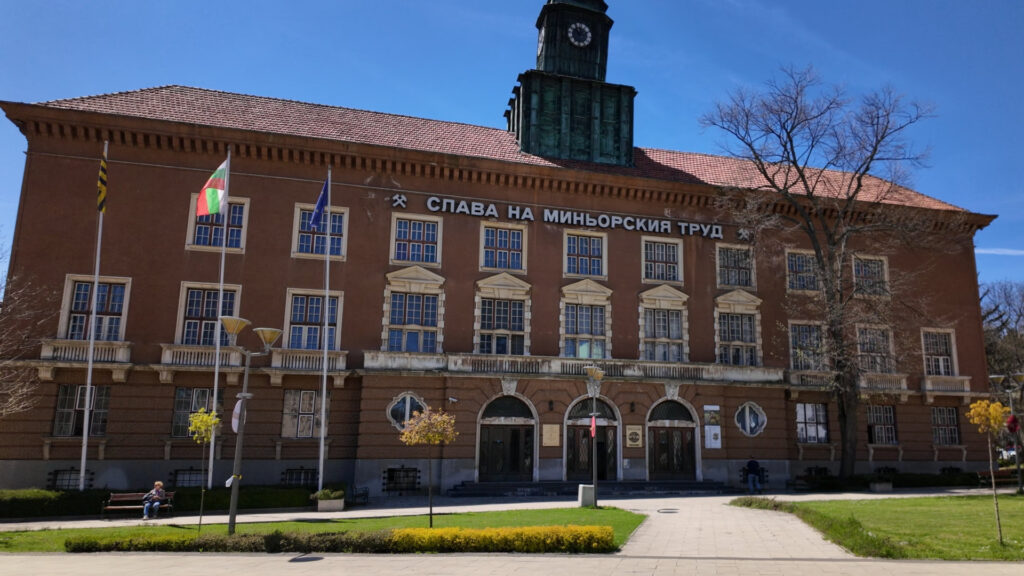
Just off the main square, the Mining Directorate building is one of the most architecturally remarkable structures in Pernik and almost nobody talks about it. Built in 1932 as the national headquarters of the Autonomous Mine Pernik – which at the time controlled 83% of all coal mines in Bulgaria – it is neoclassical in style with carved mining symbols worked into the facade. The clock tower is connected by a Breguet mechanism to 30 other clocks inside the building. The interior is designed in Gothic style, with richly ornamented ceilings and vaults.
It is worth slowing down here. The building tells you more about Pernik’s industrial ambitions than anything else in the city.
Central Park and Struma River
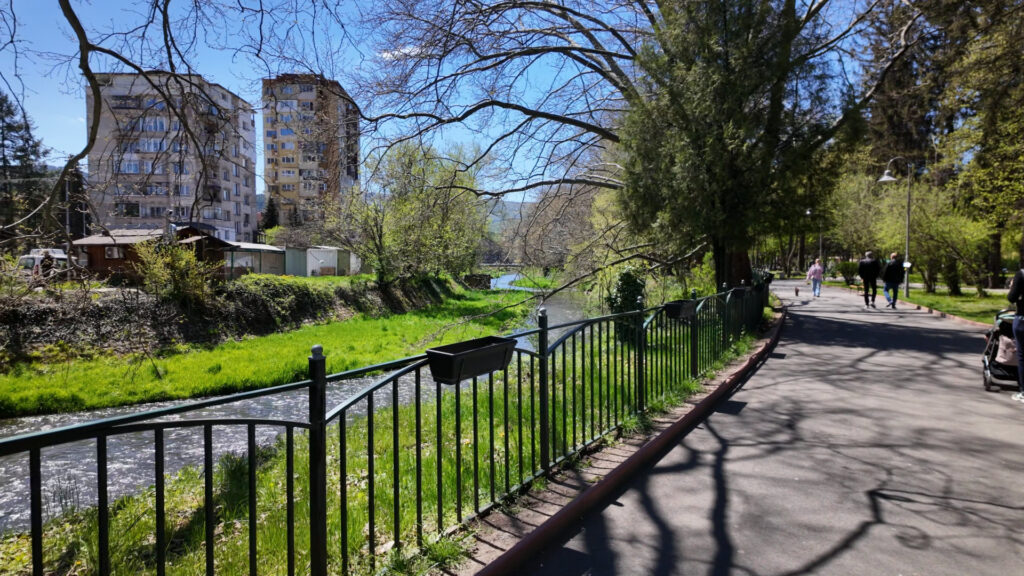
The central park of Pernik runs along the Struma River and is the city’s main green space. It is clean, well-maintained, and used daily by residents of all ages. The Struma itself begins its journey near here – rising in the mountains close to Sofia before flowing 290 kilometers south through Bulgaria and into Greece.
The park is a good place to slow down mid-walk. Benches along the river, trees for shade, and a completely local atmosphere. No tourist infrastructure, no entry fee, no reason to rush.
St. Ivan Rilski Church
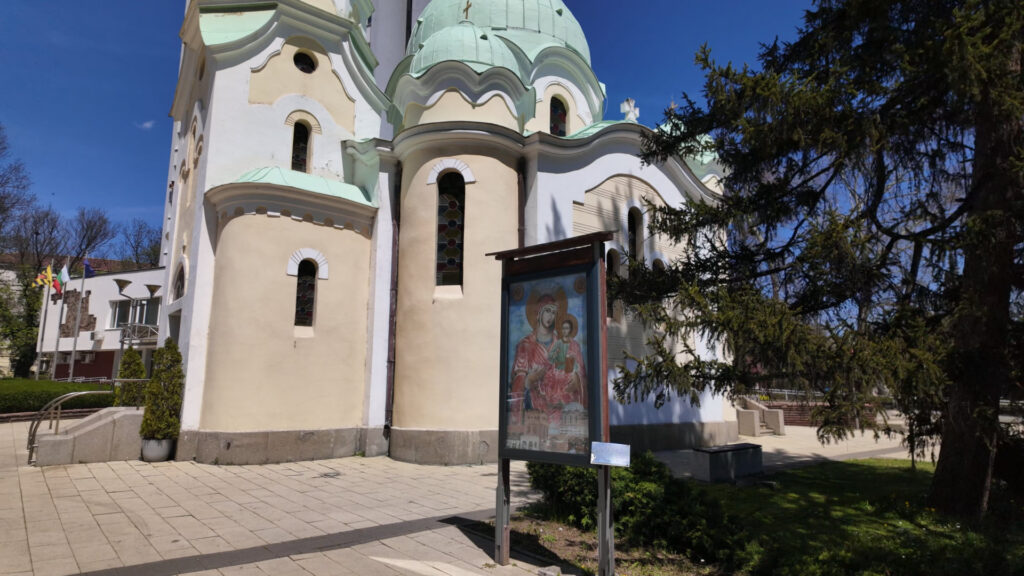
The church is named after Bulgaria’s patron saint – St. Ivan Rilski, a 10th-century hermit and monk who is one of the most revered figures in Bulgarian Orthodoxy. His home, the Rila Monastery, is around 100 kilometers from Pernik and is one of the most visited sites in Bulgaria. This church carries his name and reflects his continued importance in Bulgarian religious life.
The surrounding square is quieter than the main Krakra square – a slightly older, more peaceful part of the city center. Worth a few minutes.
Museum of Mining
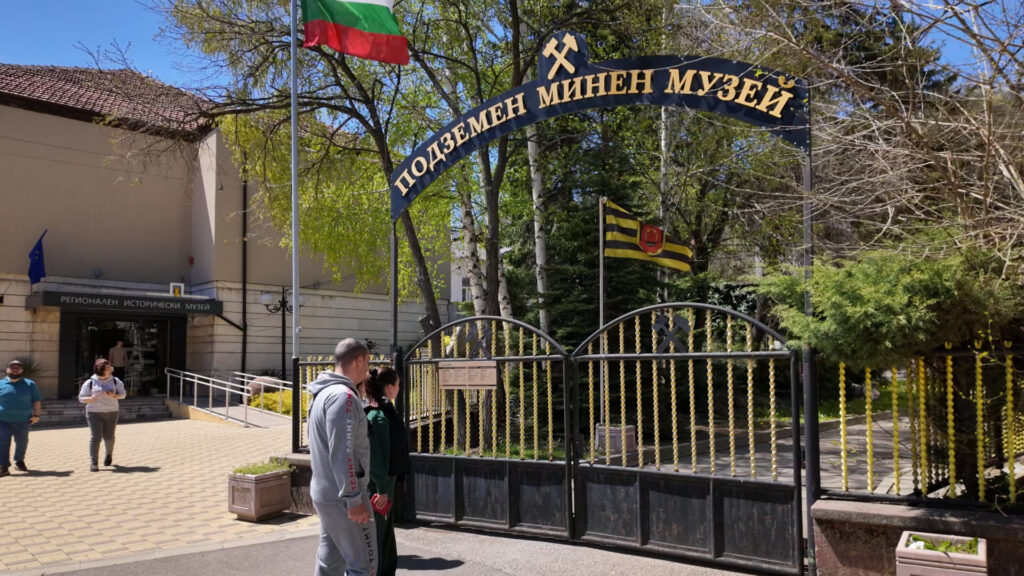
The Museum of Mining is one of the only dedicated coal mining museums in Bulgaria. It covers the history of Pernik’s mining industry from its Ottoman-era beginnings through the communist-era peak and into the post-industrial present. If you have any interest in industrial history, this is the most specific and honest account of what this city was built on.
Entry fees are small. Check current opening hours before you visit, as they vary by season. You can book local tours and experiences through Booking.com if you want a guided context for the museum visit.
Regional History Museum
The Regional History Museum covers the full span of Pernik’s history – from its Thracian and Roman-era origins through the medieval period, the Ottoman years, and into the modern industrial era. The collection is broader than the Mining Museum and gives a more complete picture of the region.
The two museums are next to each other, so visiting both in one go is easy. Budget an hour for both if you want to see them properly.
Monument of Evtim Arsov
Outside the Regional History Museum stands the monument of Evtim Arsov, a Bulgarian revolutionary from the Pernik region. It is part of a cluster of institutions – the two museums, the church, and the municipality – that together tell the full story of the city in one compact area. Worth a look as you pass between the museums.
Municipality Hall
The Municipality Hall is a clean, well-maintained civic building that governs a region of around 90,000 people including the surrounding villages. It is not a major attraction on its own, but it rounds out the civic center and sits on the route toward the Krakra Monument. The building is worth a glance for its proportions and upkeep.
Krakra Pernishki Monument
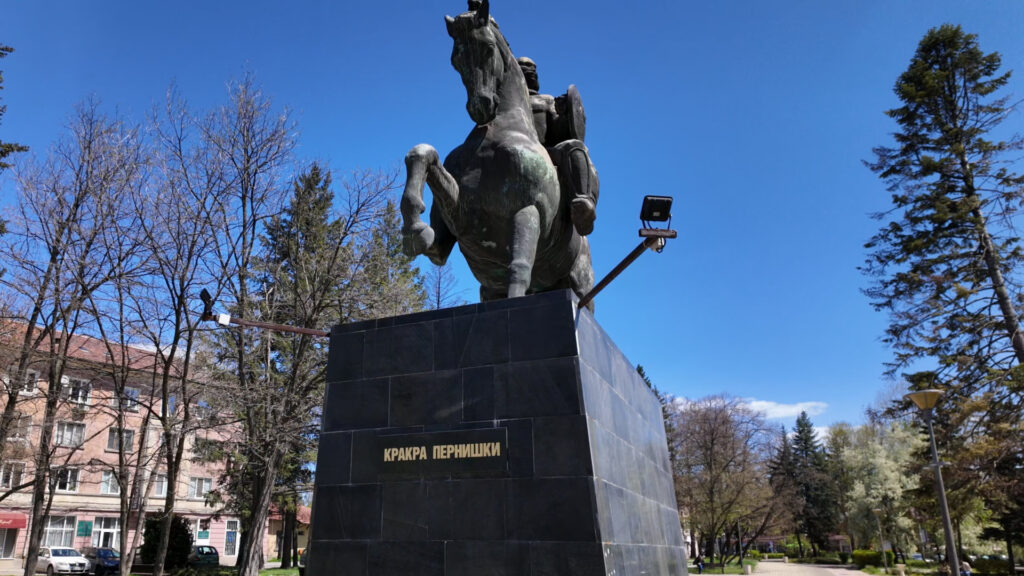
The most recognizable landmark in Pernik. The Krakra Pernishki Monument was raised during the communist period and depicts the medieval commander as a warrior-defender, sword raised – the image that appears on every promotional photograph of the city. The scale is striking in person. You will not mistake it for anything else.
Stand here for a moment and think about what the name means. A city called Pernik, built around a fortress, named after the man who would not break even when Bulgaria did. That is the story in one place.
The Krakra Pernishki fortress itself – the original hilltop stronghold where the medieval stand took place – is a short drive outside the city center. If you have time, it is worth the detour.
What to Eat and Drink
Pernik is not a food destination in the way that Sofia or Plovdiv are, but the local restaurant scene on and around Targovska Street covers everything you need at prices that are among the lowest you will find anywhere in Bulgaria.
Kavarma is the dish most associated with Bulgarian home cooking – a slow-cooked meat stew with vegetables and spices, served in a clay pot. Every local restaurant does a version of it. Order it if you see it on the menu.
Kebapche are grilled minced meat sausages, served with fries or salad and a piece of bread. They are the standard quick lunch at almost every Bulgarian grill restaurant. Simple, filling, and reliable.
Shopska salad is the Bulgarian salad: tomatoes, cucumbers, roasted peppers, onion, and a generous pile of white sirene cheese on top. It comes with everything and is always fresh. Do not skip it.
Banitsa is the Bulgarian pastry – filo dough with cheese or spinach filling, sold warm from bakeries throughout the day. The ones from local bakeries on Targovska are the right breakfast for this kind of walk. Pick one up early.
Beer in Pernik costs around €1.50 to €2.50 for a half-litre in a bar. Bulgarian lager is the standard – Zagorka, Kamenitza, and Ariana are the three names you will see everywhere. All are perfectly drinkable cold on a warm afternoon.
A full sit-down lunch for two at a local restaurant – starters, mains, drinks – should run around €15 to €22. That includes beer.
Practical Information
Getting There
Pernik is 30 kilometers from Sofia and takes 30 to 40 minutes by car depending on traffic. The route is straightforward and well-signed from the Sofia ring road.
By train, direct services run from Sofia Central Railway Station to Pernik approximately every hour. The journey takes 42 to 53 minutes depending on the train type. Get off at Pernik station – not Pernik Razpredelitelna, which is a different stop further out. Tickets are inexpensive and can be bought at the counter or from machines at Sofia Central. You can search flights into Sofia and onward connections through Kiwi.com, which also covers train and bus routes.
By bus, services run from Sofia Serdika bus station with a journey time of 45 to 60 minutes. The train is usually the better option – more frequent and more reliable. A taxi or transfer from Sofia is a reasonable option if you are arriving with luggage or early in the morning before trains start running.
If you are travelling internationally and need to stay connected without a local SIM, Saily eSIM covers Bulgaria and works from the moment you land.
Cost of Living
- Espresso or coffee: €1.00 – €1.50
- Meal at a local restaurant (per person): €5 – €8
- Dinner for two with drinks: €15 – €22
- Beer (0.5L in a bar): €1.50 – €2.50
- Budget accommodation: €20 – €35 per night
- Mid-range hotel: €35 – €60 per night
Pernik is one of the most affordable cities in Bulgaria, which makes it one of the most affordable in the eurozone. You can do a full day here – transport, food, a museum or two – for well under €30 per person. Find accommodation in Pernik or nearby Sofia through Booking.com.
Best Time to Visit
January is the standout month. The Surva International Festival of Masquerade Games takes place in late January and transforms the city – thousands of kukeri performers in bells and fur, ancient rituals, and an atmosphere unlike anything else in Bulgaria. Book accommodation well in advance if you are planning to visit for Surva. It draws visitors from across Europe.
Spring and autumn are the best seasons for a walking visit. April and May bring mild temperatures and green parks along the Struma. September and October are quieter still. Summer is warm but Pernik is not a heat destination – if you want beaches, the Black Sea coast is a better choice for July and August.
What’s Near Pernik
Sofia
Sofia is 30 kilometers away – the most obvious pairing with a Pernik visit. If you are already in Sofia, Pernik is a half-day addition. If you are basing yourself in Pernik, Sofia is a full-day trip that covers everything from ancient Serdica to Vitosha Boulevard. Our Sofia walking tour takes you through the city at street level.
Vitosha Mountain
Vitosha rises directly above Sofia and is visible from much of western Bulgaria, including Pernik. The Aleko area on the mountain offers hiking in summer and skiing in winter, and is reachable by bus from Sofia in under an hour. A good half-day option if you want some mountain air after the city.
Borovets Ski Resort
Borovets is around 80 kilometers from Pernik and is Bulgaria’s oldest ski resort, sitting at the foot of Musala – the highest peak in the Balkans. In winter it is one of the best value ski destinations in Europe. In summer the mountain trails are excellent for hiking. Easy to reach by car from Pernik in just over an hour.
Koprivshtitsa
Koprivshtitsa is around 90 kilometers east of Pernik and is one of Bulgaria’s best-preserved National Revival villages – cobblestone streets, traditional architecture, and a role in the 1876 April Uprising against Ottoman rule that every Bulgarian schoolchild knows. It is a completely different side of Bulgarian history from Pernik, and the two make a strong combination in a longer itinerary.
Plovdiv
Plovdiv is around 150 kilometers southeast of Pernik – a longer drive but absolutely worth it for a full day. The Old Town is one of the most atmospheric in Bulgaria, with Roman ruins, Ottoman-era houses, and a thriving arts scene. Reachable by car in under two hours from Pernik.
Rila Monastery
The Rila Monastery is around 100 kilometers from Pernik and is Bulgaria’s most famous religious site – a UNESCO World Heritage monument set deep in the Rila mountains. It was the home of St. Ivan Rilski, the patron saint whose name you see on the church in Pernik’s city center. A powerful full-day trip. Reachable by car in just under two hours.