






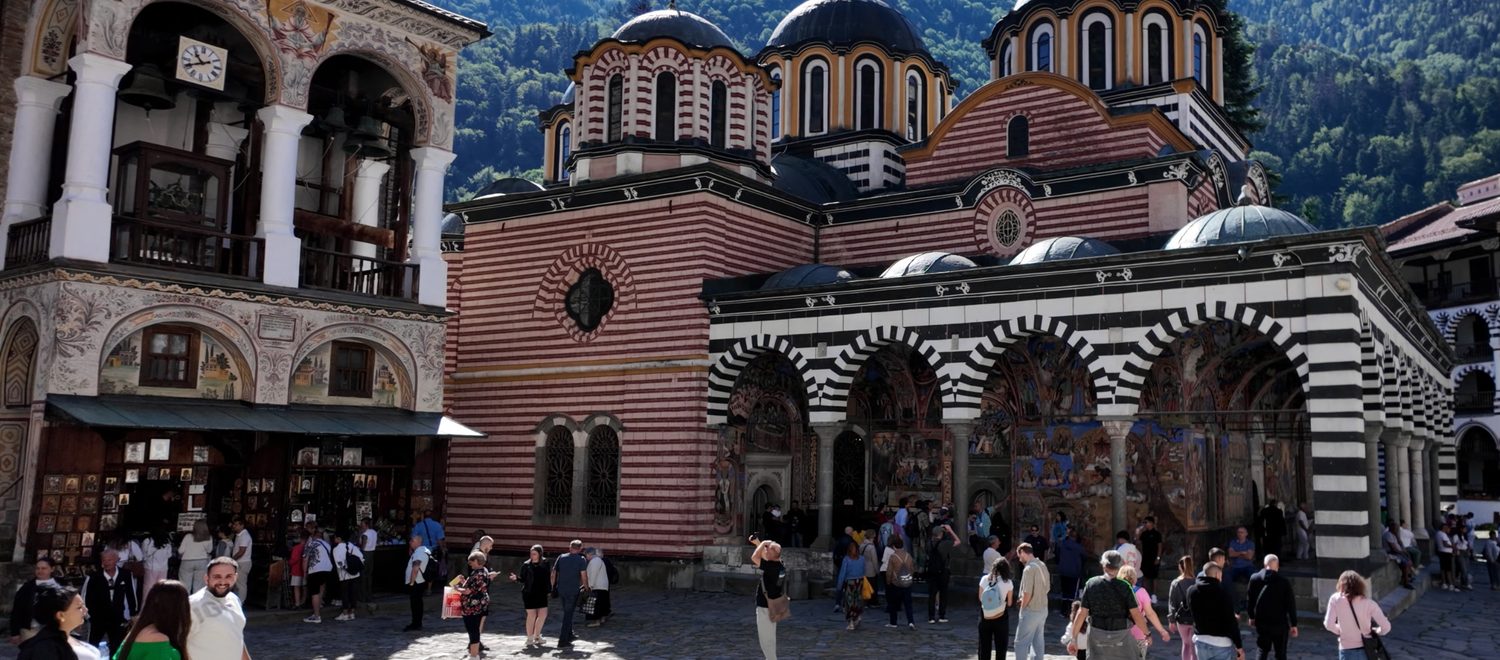
📍 Location: Rila Monastery, Bulgaria
📹 Filmed on: 15.08.2026
⛅ Weather: 21°C
🎧 This video features binaural audio – for the best experience, use headphones.
📜 Don’t forget to turn on subtitles for travel tips and additional information.
00:00 Entrance of Rila Monastery
01:31 Into the Courtyard
05:40 Exterior Frescoes
10:34 The Courtyard Fountain
11:04 Iconostasis & More Frescoes
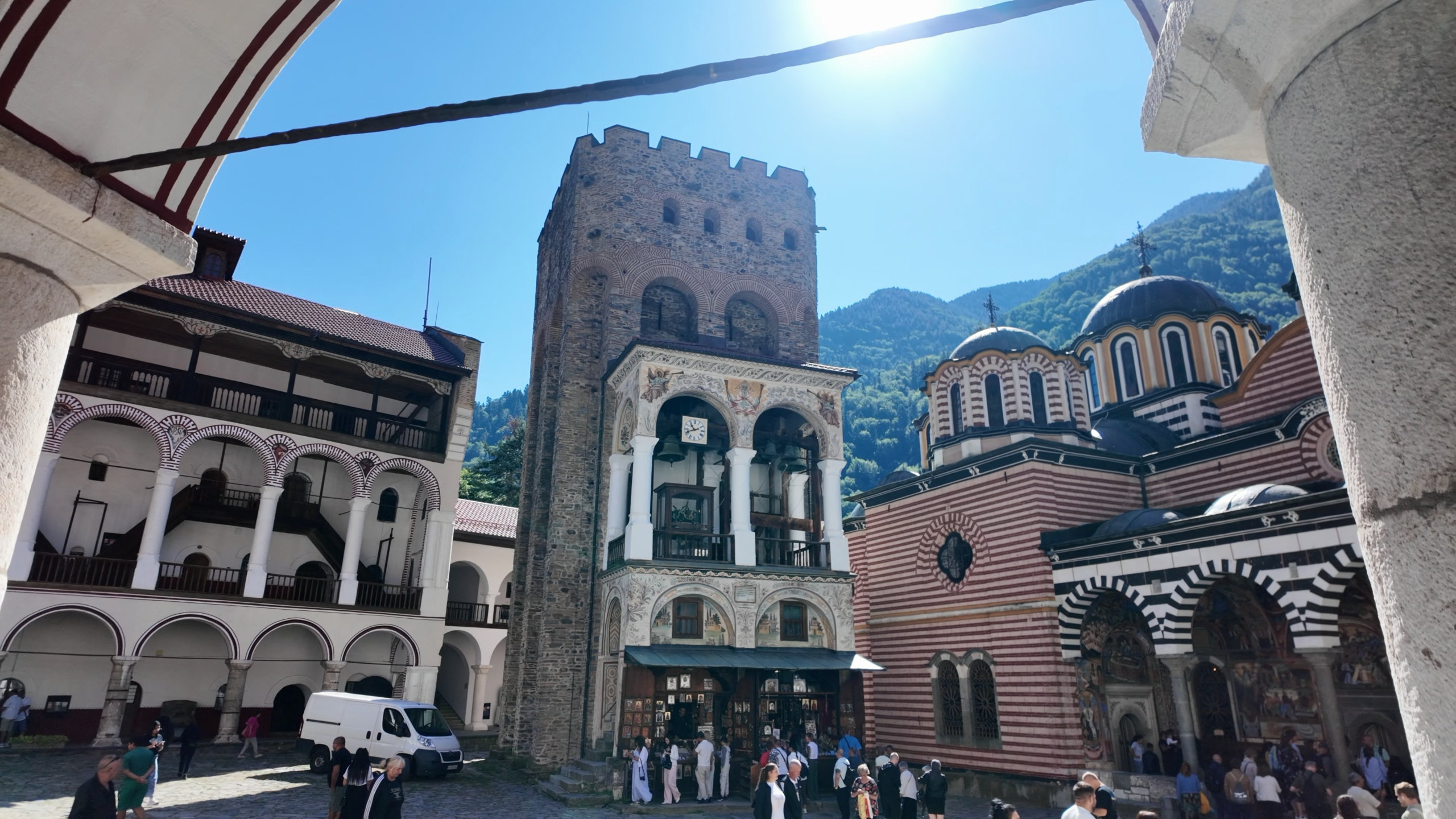
14:33 First View of Hrelyo’s Tower
15:06 Around the Courtyard
21:42 Church History Museum
24:12 Walking the Courtyard
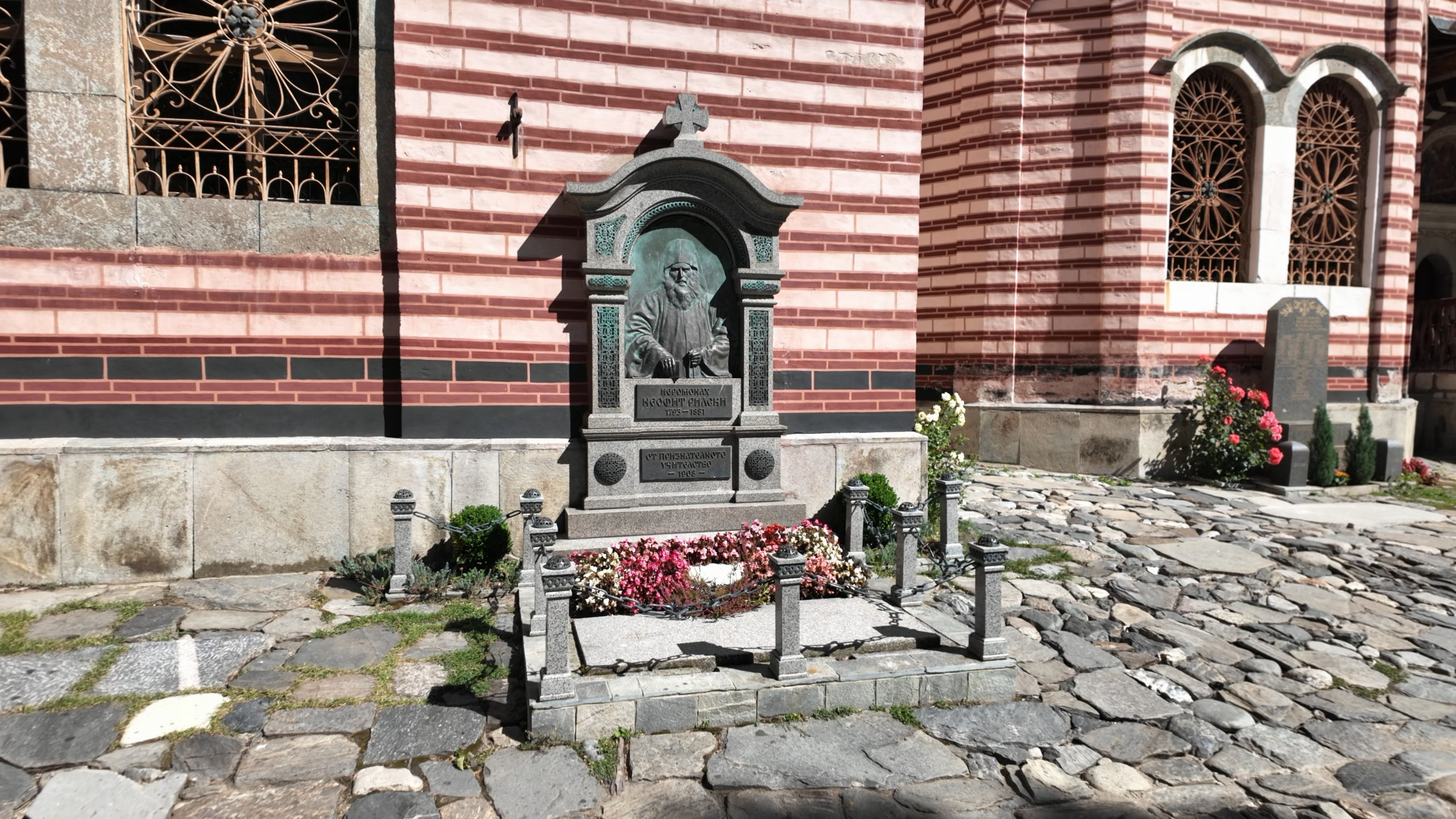
27:07 Grave of Neofit Rilski
30:05 Hrelyo’s Tower
38:08 The Estate Museum
48:45 Leaving the Monastery
50:31 The Monastery Bakery
50:51 Souvenir Alley
53:34 Toward the Cave of Ivan Rilski
About Rila Monastery
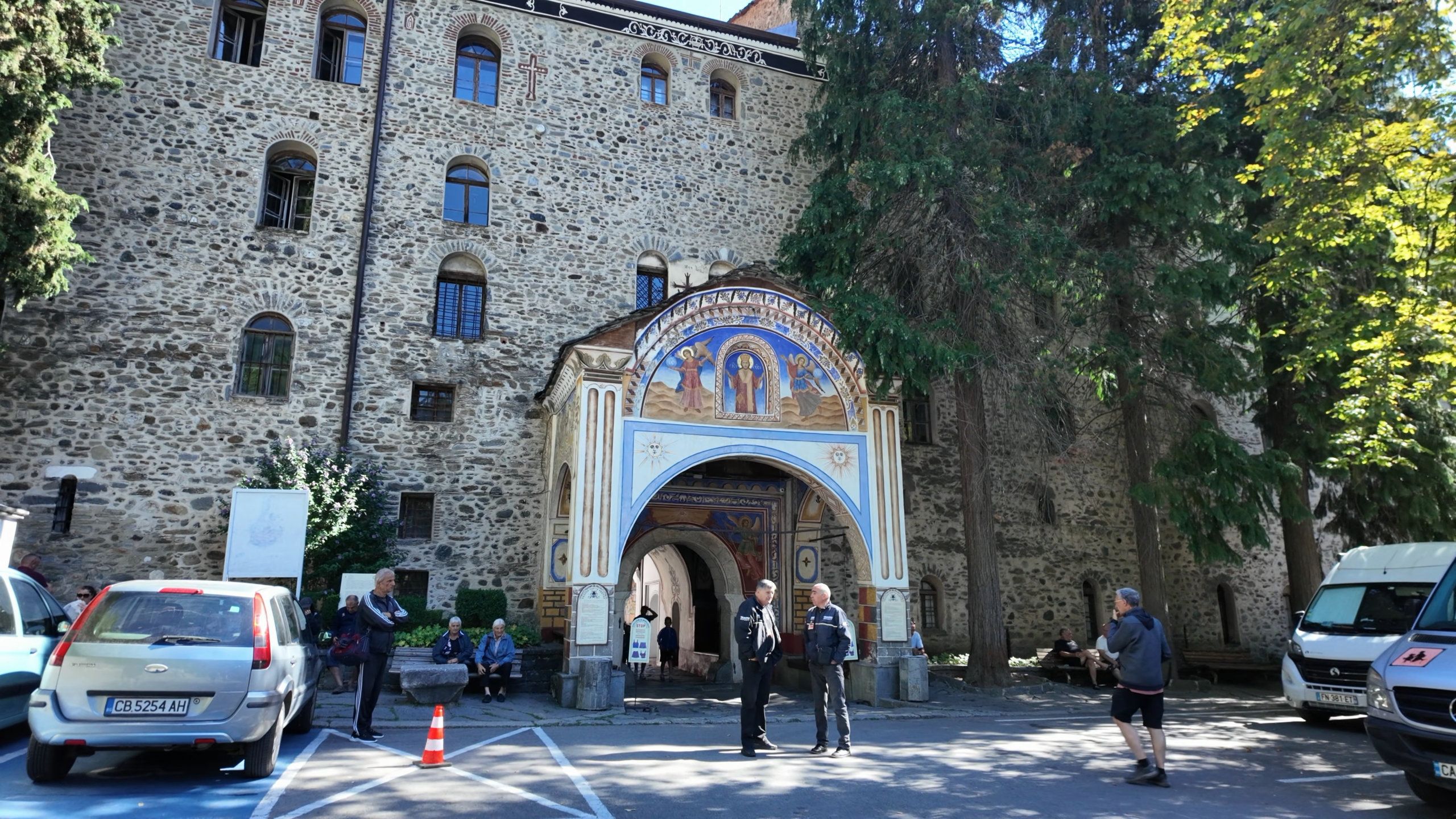
Rila Monastery is Bulgaria’s largest and most sacred monastery, tucked deep in the Rila mountains about two hours south of Sofia. It has been the spiritual heart of the country for over a thousand years, and walking into its striped stone courtyard for the first time is still genuinely one of the most striking moments a trip through Bulgaria can offer.
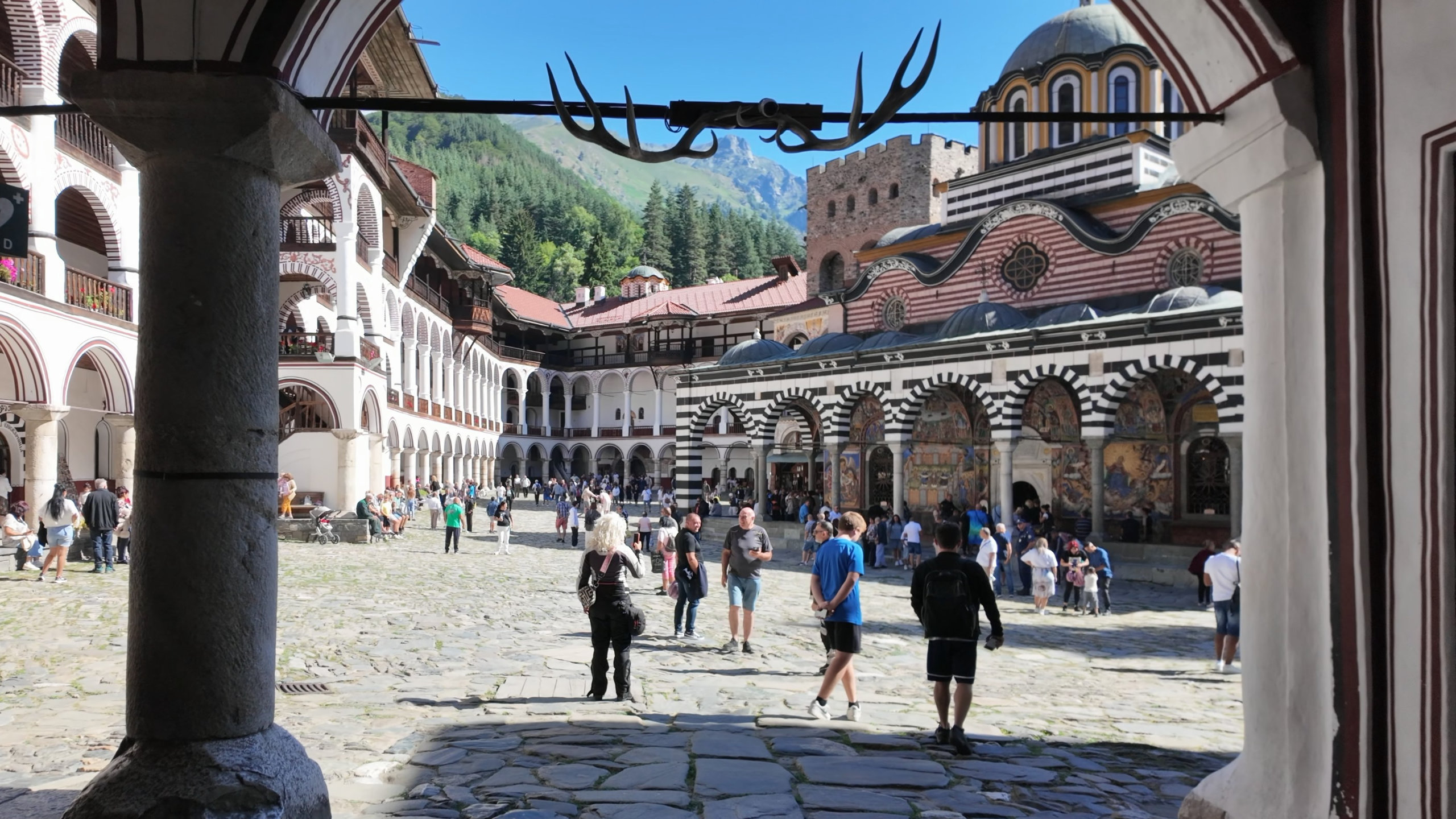
The monastery was founded in the 10th century by the hermit monk Ivan Rilski, and it grew from a single mountain cave into a UNESCO World Heritage Site that today houses around 60 monks. Every wall in the courtyard is covered in frescoes, the church holds one of the most detailed carved iconostases in the country, and Hrelyo’s Tower still stands exactly as it did in the 14th century.
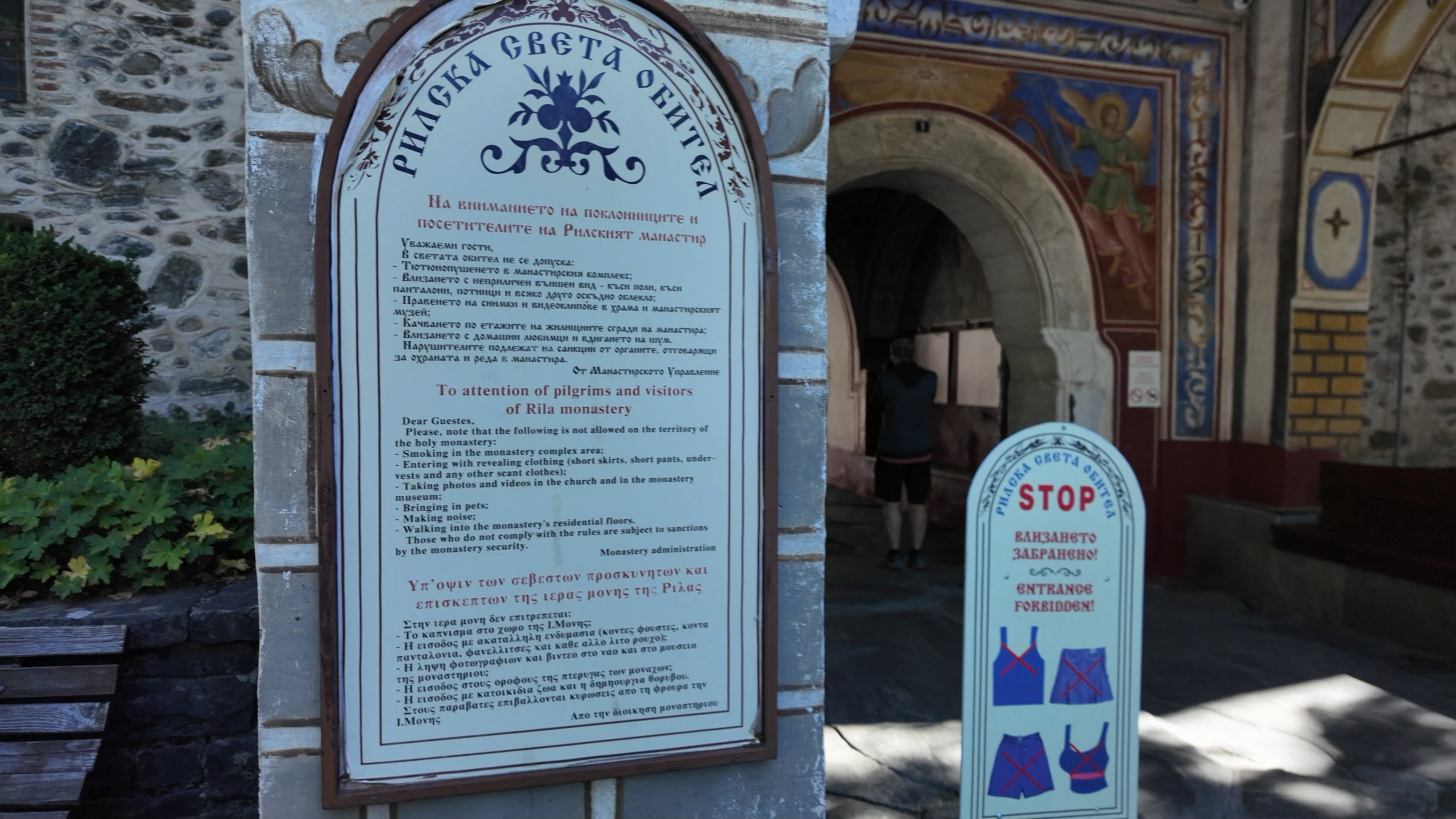
You do not need to be religious to get something out of visiting. Set aside at least half a day and give yourself time to walk the galleries slowly. There is a modest dress code, no shorts, short skirts, or bare shoulders, and men should remove hats before entering the church, so plan your outfit accordingly. This guide covers everything to see, eat, and know before you go.
History and Interesting Facts
Ivan Rilski came to these mountains in the 900s looking for peace and solitude, and lived for years as a hermit in a cave above the current monastery site. After he died in 946, his followers built the first monastery around that cave, and it has drawn pilgrims ever since. He is now Bulgaria’s patron saint, honored across the whole country.
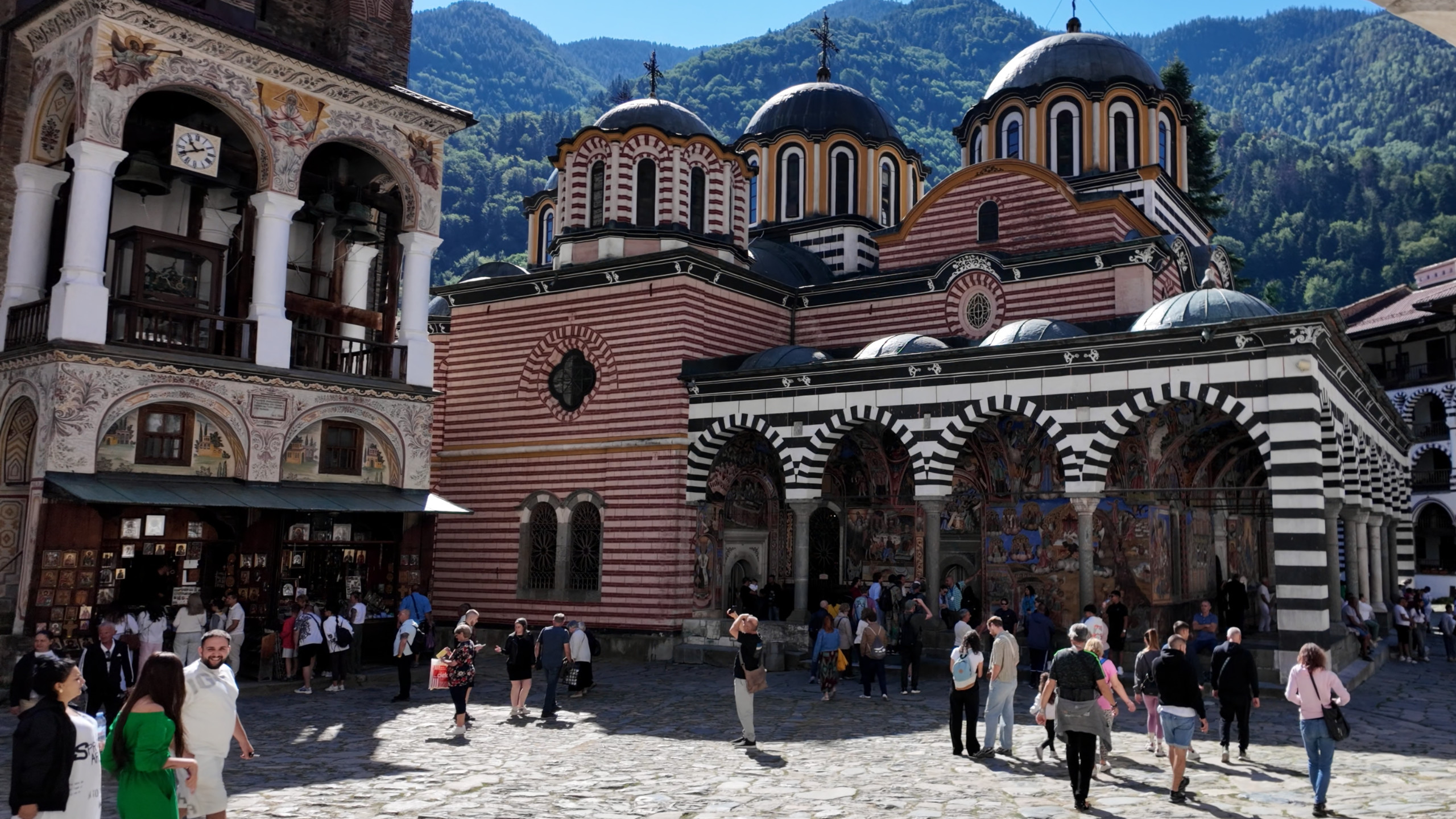
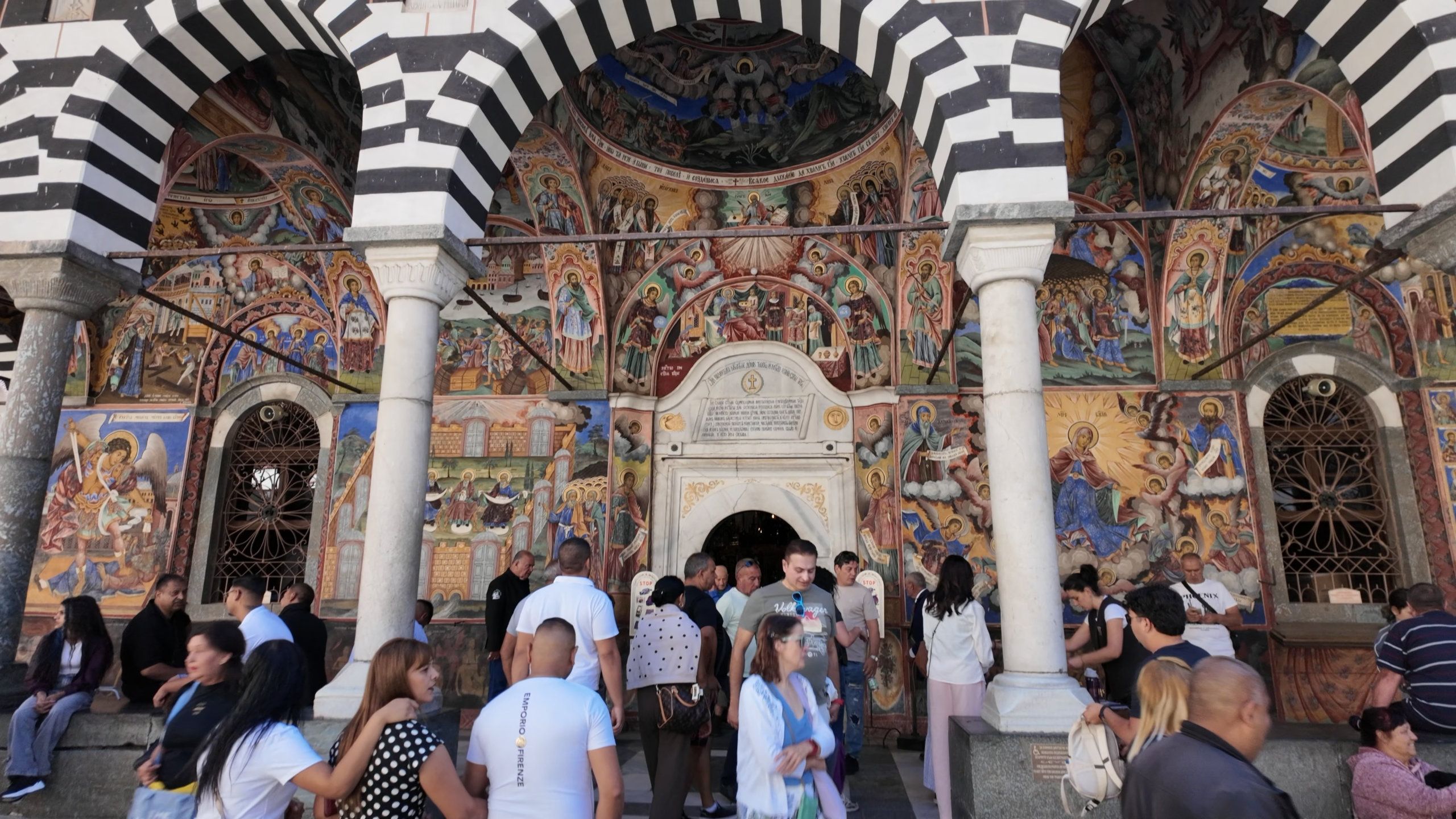
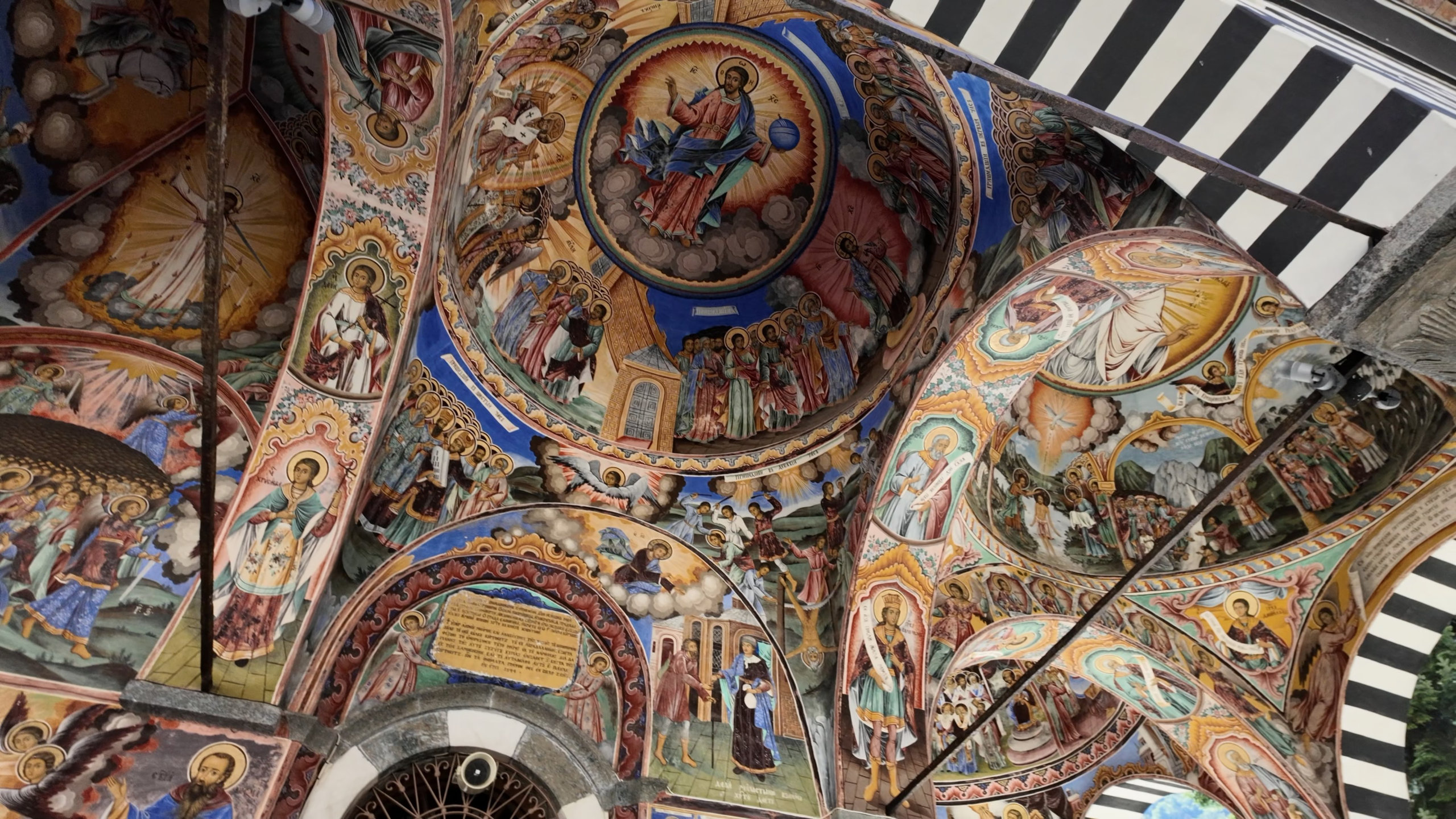
A fire destroyed most of the older monastery buildings in 1833, and what visitors see today is largely the result of the rebuild that followed, completed between 1834 and 1837. The exterior frescoes that wrap around the courtyard were painted in 1846 by Zahari Zograf and his brother Dimitar, working alongside other painters from Bansko, Samokov, and Razlog. They were placed outside rather than inside the church partly because a covered gallery runs around the courtyard, sheltering the paintings from rain and snow while still keeping them visible to everyone who passes through.
One detail worth knowing before you visit: the main church is dedicated to the Nativity of the Virgin Mary, a different feast from the Assumption of Mary celebrated on August 15. If you happen to visit on the 15th, as we did, you will still find the courtyard full of pilgrims and a service running in the background, since it is one of the biggest days on the Orthodox calendar regardless of the church’s own dedication. Rila Monastery became a UNESCO World Heritage Site in 1983, and the complex covers almost 8,800 square meters at 1,147 meters above sea level.
Main Attractions
The Courtyard and Striped Galleries
The courtyard is the first thing that hits you, black and white striped stone arches stacked across multiple floors, connecting more than 300 monastic rooms. Take your time here. Every level has something painted, carved, or worth a second look, and it is the one part of the monastery you will want to walk around more than once.
The Exterior Frescoes
Painted in 1846 and still vivid today, these murals cover almost every saint from the Orthodox calendar. Walk the full loop around the church rather than just the entrance wall, most visitors miss the side and rear sections entirely.
The Courtyard Fountain
A small fountain with a bird sits near the church, and honestly, we could not track down its story. If you know it, it is worth asking one of the monks or looking it up before your visit.
The Church and Its Iconostasis
Inside, the church has five domes, three altars, and two side chapels. The carved altar screen is the standout piece, four master carvers spent five years on it, and the gold detail is worth getting close to. Photos and video are not allowed inside, so this is one to experience in person.
Church History Museum
Tucked in a quieter back corner of the complex, this museum holds Rafail’s Cross, a wooden cross with 650 tiny hand-carved figures that took one monk twelve years to finish. Video and photos are not allowed inside here either.
Icon Gallery
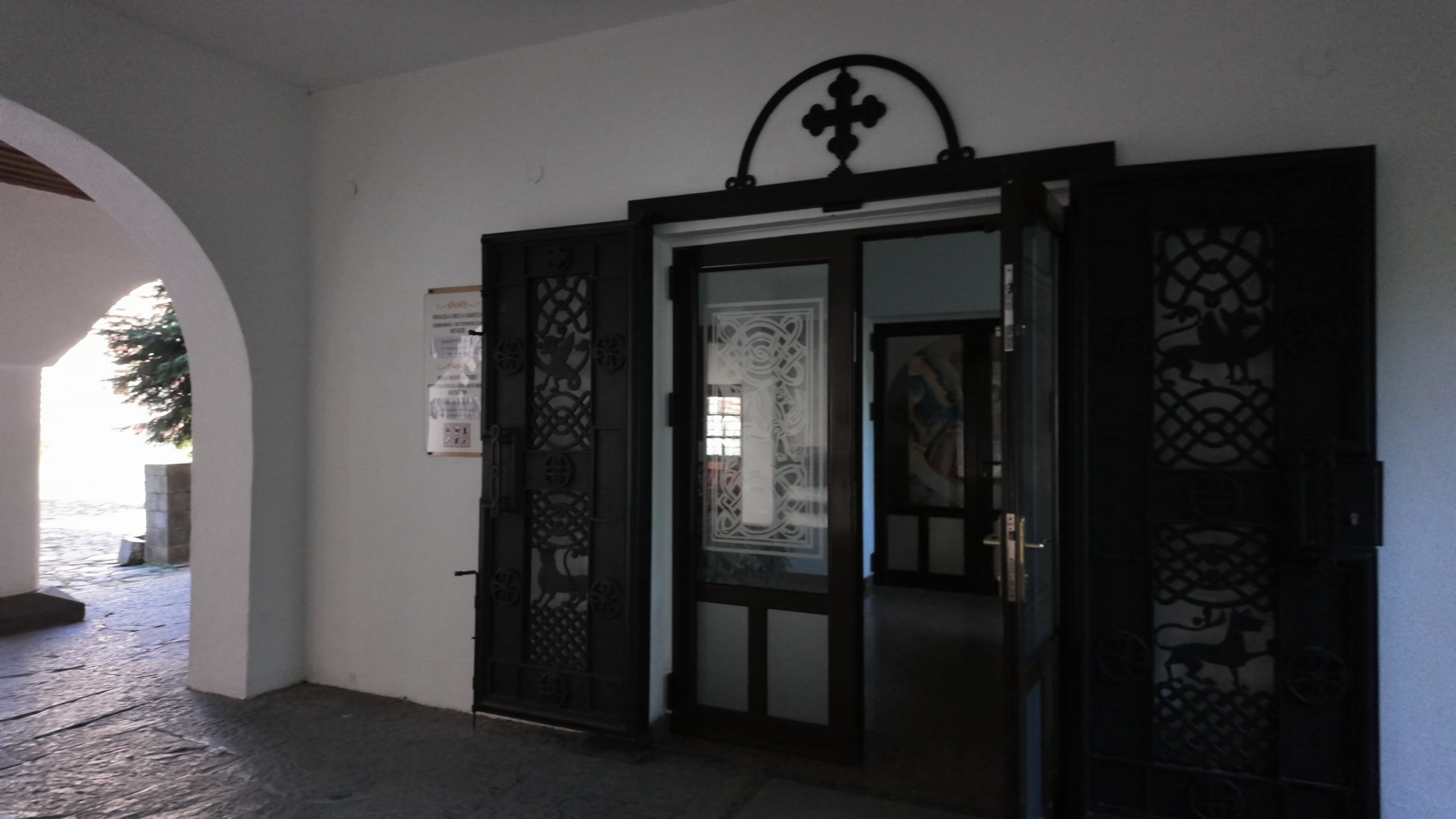
The monastery also has a separate Icon Gallery. It was closed on the day we filmed, so we cannot speak to what is inside, but it is listed as one of the monastery’s collections and worth checking before your visit in case opening hours have changed.
Grave of Neofit Rilski
Neofit Rilski is buried in the courtyard. In 1835 he wrote Bulgaria’s first grammar book, and he later became abbot of this very monastery in 1860. A small, easy-to-miss stop that matters more than its size suggests.
Hrelyo’s Tower
Built in 1335 by the regional nobleman Hrelyo, this is the oldest building in the complex and the one structure that survived the 1833 fire. It stands 23.6 meters tall across five floors, with a tiny chapel and 14th-century frescoes at the very top, and monks once used it as a refuge during raids.
A ticket to climb it costs 3 EUR per person. It is a steep climb, but worth it for the view alone. Do not skip it.
The Estate Museum
Officially called the Economy of the Monastery museum, this is where you see how the monks actually lived and worked. Highlights include a giant 1816 bread oven that once fed the whole community, hand-carved wooden water pipes, an old millstone, a huge cauldron once used to boil milk, and the old monastery kitchen, known as a magernitsa, with a tall smoke vent built into the roof. Traditional Karakachan shepherd costumes are on display near the exit. Rila also has a separate ethnographic exhibit elsewhere on the grounds, which was not part of our walk and is not covered in the video.
Cave and Grave of Ivan Rilski
A path from the monastery leads toward the cave and grave of Ivan Rilski himself, about a 20-minute walk. It was far too crowded to reach on the day we filmed, so it is not covered in the video, but it is considered an essential stop for anyone with time to spare, especially on quieter days than August 15.
What to Eat and Drink
The monastery’s own bakery is the one food stop everyone should make. It is famous locally for fresh bread, and the smell alone is worth following. Weekends get busy here and parking nearby gets tight, so aim for a weekday if you can.
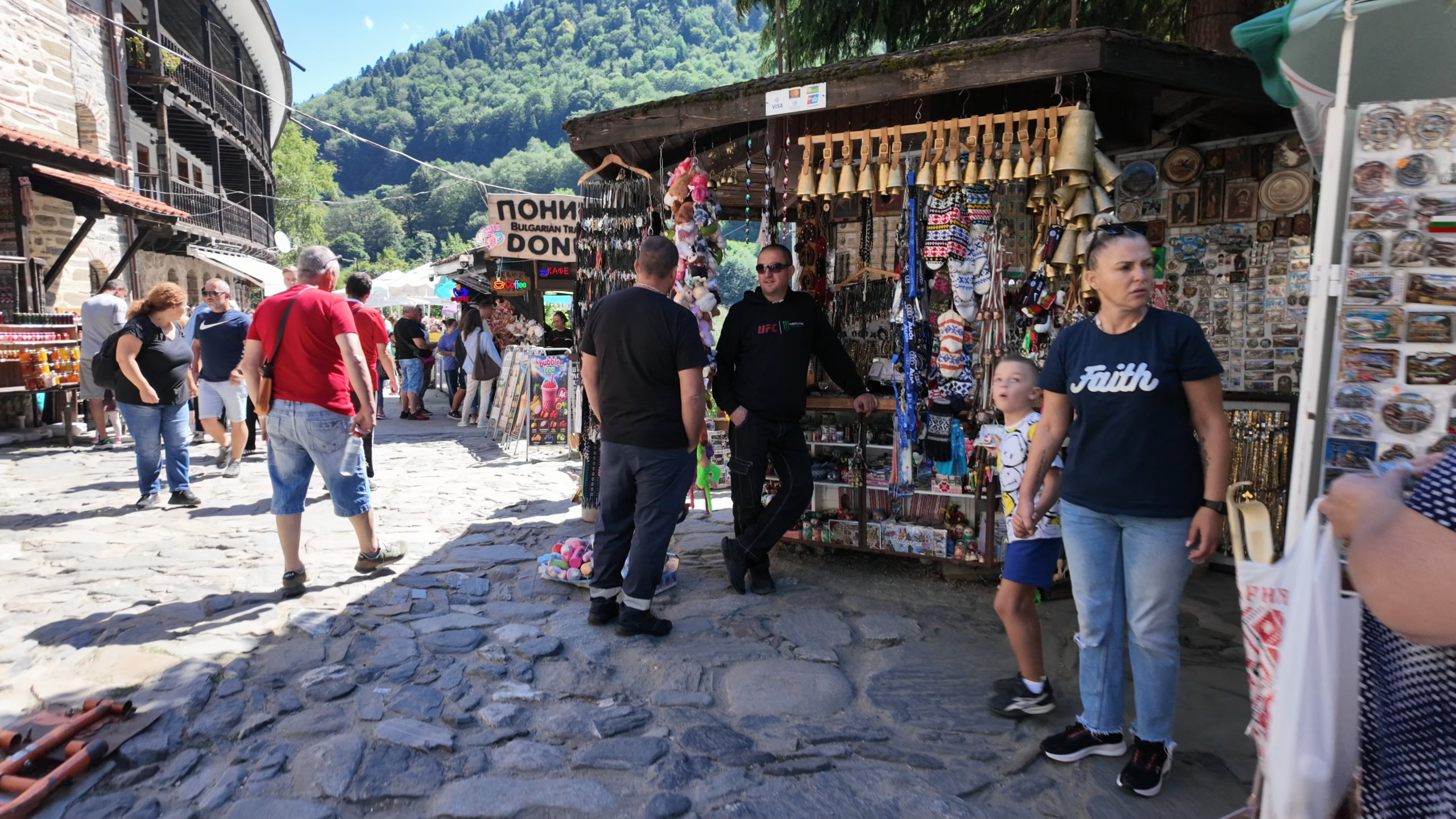
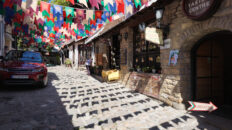
Just past the main entrance, a short alley is lined with souvenir stalls selling homemade jams, honey, and local sweets. It is a good spot to pick up something to take home, and the whole alley smells sweet, especially near the pastry stalls.
There is also a small restaurant near the monastery serving a hot meal after the walk, useful if you are visiting as a half or full day trip and do not want to drive back hungry.
Practical Information
Getting There
Rila Monastery sits about 117 kilometers south of Sofia, roughly a 2-hour drive. Renting a car gives you the most flexibility, and having a reliable transfer or taxi arranged in advance is a solid backup if you would rather not drive mountain roads yourself.
If you are flying in, Sofia Airport is the main gateway. It is worth comparing flight options or checking Kiwi.com for the best route into the city before arranging onward transport to the monastery.
Without a car, a daily shared shuttle bus (run by Traventuria) leaves Sofia at 09:00 from the Vasil Levski monument and costs around 15 EUR one-way, booked in advance. There is currently no regular public bus or train service running directly to the monastery, so the shuttle or a private transfer are the realistic options if you are not self-driving. If you need mobile data as soon as you land, grabbing a local eSIM before you arrive in Bulgaria saves the hassle of finding a SIM card on the day.
Cost of Living
Rila Monastery itself is remote, with only the bakery, souvenir alley, and one small restaurant nearby, so it does not have the kind of café and restaurant scene you would price out in a city. We do not have confirmed, current prices for that restaurant to share here.
The monastery does offer simple overnight rooms for pilgrims and visitors, shared dormitories and private rooms with en-suite bathrooms, but these are booked directly with the monks by phone or messaging app rather than through a normal booking platform, and pricing is not published. Third-party listings for monastery rooms exist online but are not reliably official, so book with caution if you go that route. Most visitors instead stay in nearby Blagoevgrad or Sofia and treat Rila as a day trip. If that is your plan, it is worth checking hotel options in either town ahead of time, especially around busy pilgrimage days.
Best Time to Visit
We filmed on August 15, the feast of the Assumption of Mary, one of the busiest pilgrimage days of the year here, and the courtyard was full. If you want a quieter visit, avoid mid-August and weekends in general. Spring and early autumn bring cooler mountain weather and thinner crowds, and since the monastery sits at 1,147 meters, it is noticeably cooler than Sofia even in summer, so bring a layer.
What’s Near Rila Monastery
Blagoevgrad
The closest city, about 25 minutes away by car. A lively student city with a completely different energy from the monastery, good for a meal or an overnight stay before or after your visit.
Sofia
Bulgaria’s capital and the usual starting point for a Rila Monastery day trip, about 2 hours away. If you have not explored it yet, it is worth building in an extra day either side of your monastery visit.
Bansko
Around 1 hour 40 minutes by car. Better known for skiing than monasteries, but an easy add-on if you are looping through the wider Rila and Pirin mountain region.
Seven Rila Lakes
A popular pairing with the monastery on the same day, since the transfer between the two is short. Note that reaching the lakes themselves involves a hike or cable car from Panichishte, so plan for extra time if you want to do both properly.
Stob Pyramids
A cluster of striking natural rock formations often combined with a Rila Monastery visit on organized day tours. If you would rather not self-drive between the two, day tours covering both stops are easy to book in advance. A good pairing if you want something completely different from the monastery’s architecture and history.