





📍 Location: Sofia, Bulgaria
📹 Filmed on: May 23, 2026
⛅ Weather: 19°C, Cloudy
🎧 This video features binaural audio – for the best experience, use headphones.
📜 Turn on subtitles for travel tips and additional information about each museum.
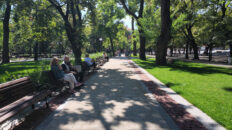
0:00 Sofia University – The Starting Point
3:12 National Library of Saints Cyril and Methodius
4:10 Walking Toward Alexander Nevski
6:38 Prom Night at Alexander Nevski Cathedral
17:15 National Gallery – Alexander Nevski Square
57:20 Heading Back to Alexander Nevski
1:00:07 Inside Alexander Nevski Cathedral and Museum
1:12:01 Through the City Center
1:17:42 Church of Saint Nicholas the Wonderworker (The Russian Church)
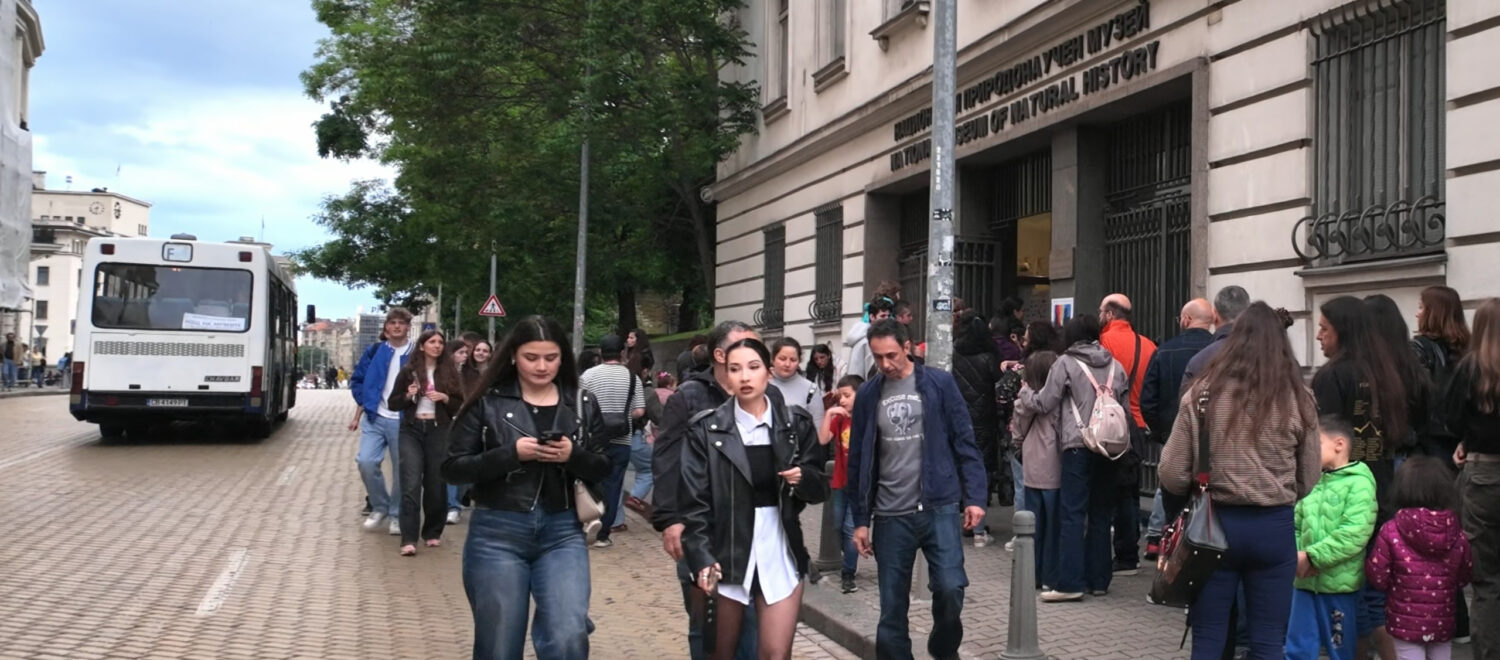
1:19:37 National Museum of Natural History – Museum Night Queues
1:21:22 Yellow Bricks Square – Heading to the National Art Gallery
1:22:42 Outside the National Art Gallery
1:24:21 City Center – Parliament, BNB and Museum Night Bus Stop
1:29:24 National Archaeological Museum
1:32:01 Ancient Serdica Cultural Complex
1:41:24 Regional History Museum of Sofia
1:51:50 Night Walk Back Through the City Center
About This Walk
This walking tour follows Sofia’s main museum corridor on the evening of European Museum Night – one night a year when every major cultural institution in the city opens its doors for free. The route covers the Alexander Nevski Square cluster, the National Library, and continues west through the city center to the Archaeological Museum, Ancient Serdica, and the Regional History Museum.
The full route is walkable in an evening and takes in more museums than most visitors cover in a full trip to Sofia. Everything is free and the official Museum Night Bulgaria website has the full program, map, and venue list updated each year.
European Museum Night in Sofia
European Museum Night is held every May, on the Saturday closest to International Museum Day on May 18. It runs simultaneously across more than 30 countries. In Sofia, the event is organized by the French Institute in partnership with Bulgaria’s Ministry of Culture and the Sofia Municipality – and it has been running every year for nearly two decades.
Over 80 museums, galleries, and cultural spaces in Sofia take part. All of them are free from the moment they open until midnight. Many run special programs alongside the free access – guided tours in Bulgarian and English, live music, workshops, and temporary exhibitions that open specifically for the night.
Free Transport on Museum Night
The Sofia Municipality runs a dedicated Museum Night bus route connecting the main venues across the city. It is completely free to use on the night and runs until the museums close. The bus stops at all the major clusters – the Alexander Nevski Square area, the National Palace of Culture area, and points in between. The full route and timetable are published on the official Museum Night website each year ahead of the event.
The Sofia metro is also a practical option for getting between venues. The two main metro lines connect the university district, the city center, and the NDK area – covering most of the museum corridor on foot or with a single metro stop.
Museums and Locations in This Walk
National Library of Saints Cyril and Methodius
The National Library sits on Shipka Street just behind the Alexander Nevski Cathedral. It holds over 7 million books, manuscripts, and documents – including some of the oldest surviving Slavic manuscripts in existence. Founded in 1878 immediately after Bulgarian Liberation, it is one of the oldest national libraries in the Balkans. On Museum Night it opens its doors for guided tours of the reading rooms and special collections not normally accessible to the public.
National Gallery Kvadrat 500
The newest gallery building in Bulgaria, Kvadrat 500 opened in 2015 in the former State Printing House right on Alexander Nevski Square. Twenty-eight halls across four floors hold nearly 2,000 works drawn from a collection of over 42,000 pieces. The Bulgarian collection traces the country’s art from the 1890s through to the present day. The foreign collection includes sketches by Renoir and Matisse and works by Gustave Courbet.
The artists to look for first are Vladimir Dimitrov-Maistora – known simply as The Master, Bulgaria’s most beloved painter, famous for his bold peasant portraits surrounded by flowers and fruit – and Zlatyu Boyadziev, who suffered a stroke mid-career, taught himself to paint left-handed, and produced some of the most extraordinary expressionist work in Bulgarian art history. One hall is dedicated to the three great classical painters of the 1930s: Dechko Uzunov, Iliya Petrov, and Nenko Balkanski. On Museum Night, all four floors are open and guided tours run in both English and Bulgarian throughout the evening.
Regular opening hours are Tuesday to Sunday, 10:00 – 18:00. Closed Mondays. Entry is free on Museum Night.
Alexander Nevski Cathedral and Crypt Museum
The crypt beneath the cathedral is a separate museum and the highlight for many visitors. It holds Bulgaria’s largest collection of medieval icons – over 300 pieces gathered from churches across the country, spanning the 14th to the 19th century. Bulgarian icon painting has roots going back to the 9th century and the range and quality on display here is genuinely impressive. The crypt is usually ticketed separately from the cathedral. On Museum Night both are free.
The cathedral itself was built between 1882 and 1912 and can hold 5,000 worshippers. The interior holds frescoes and mosaics by the leading artists of the era. The bell tower has 12 bells – the largest weighing 12 tons, cast in Russia. It is one of the most visited buildings in Bulgaria and the defining landmark of the Alexander Nevski Square area.
Church of Saint Nicholas the Wonderworker (The Russian Church)
The Russian Church sits on Tsar Osvoboditel Boulevard a short walk from Alexander Nevski. It is immediately recognizable by its five emerald-green onion domes. Built between 1907 and 1914 with funding from the Russian Imperial Government, it was constructed to serve the Russian diplomatic community in Sofia. The interior is richly decorated and the architecture is a deliberate contrast to the Bulgarian ecclesiastical style around it. It is small and easy to miss if you walk past quickly – do not.
National Museum of Natural History
The first natural history museum in the Balkans, founded in 1889. Fifteen halls across four floors cover the full range of biological and mineralogical diversity – around 400 mammals, 1,200 bird specimens, hundreds of thousands of insects, a paleontology hall with fossils, a mineral collection covering roughly 25 percent of the world’s known mineral species, and halls dedicated to reptiles, fish, and plants. The museum also holds actual lunar rock samples and meteorite finds from Mars – a genuinely surprising detail that catches most visitors off guard.
Open every day, 10:00 – 18:00, last admission 17:30. Free on Museum Night.
National Art Gallery (The Royal Palace)
The National Art Gallery occupies the former Royal Palace of Bulgaria on Knyaz Alexander I Square – a different building and location from Kvadrat 500. This branch focuses on temporary exhibitions and holds additional parts of the gallery’s permanent collection. The palace building itself is worth seeing – it is one of the grandest structures in the city center and the ceremonial halls give context to the scale of the Bulgarian royal court before 1946. Check the Museum Night program for what is running on the specific night you visit.
National Archaeological Museum
The oldest museum in Bulgaria, founded in 1892, and one of the most unusual in Europe – it occupies a 15th century Ottoman mosque. The Buyuk Dzhamiya (Great Mosque) was built in 1494 and converted into a museum after Liberation. The building itself is worth the visit. Inside, the collection covers Bulgaria’s full archaeological span: Thracian gold and silver treasures, Roman mosaics and sculpture, medieval Bulgarian artifacts and jewelry, and one of the country’s most important coin collections covering Greek, Roman, and medieval periods. The Thracian gold alone makes it unmissable.
Regular opening hours are Tuesday to Sunday, 10:00 – 18:00. Free on Museum Night.
Ancient Serdica Cultural Complex
Ancient Serdica is the Roman city preserved beneath Sofia’s modern streets, discovered during the construction of the city’s metro system. The complex is centered around the Largo – the open square between the Presidency and the Council of Ministers – and extends beneath the surrounding streets and buildings. What you can see includes 4th century streets, public baths, early Christian churches, and residential structures. Emperor Constantine the Great reportedly called Serdica his favorite city, saying ‘Serdica is my Rome.’ The scale of what survives underground is remarkable. The panels are detailed and worth reading.
The complex has free or low-cost admission and is accessible year-round, not just on Museum Night.
Regional History Museum of Sofia
The Regional History Museum covers the history of the Sofia region from the Stone Age through to the 1940s. The collection has over 120,000 objects organized across archaeology, ethnography, and history sections. The archaeology section covers Thracian finds – gold jewelry, weapons, and ceremonial objects. The ethnography section covers Bulgarian traditional life in the 18th and 19th century: costumes, crafts, domestic objects, and festival traditions. The history section takes the story from Liberation through the early 20th century. It is a thorough and well-organized museum that puts everything you see across the city into longer context. Allow at least an hour.
Planning Your Visit to Sofia
For everything you need to plan a trip – hotels, transport, food, cost of living, and the full city guide – see our complete Sofia travel guide.
More Sofia Walking Tours
Sofia: The City Older Than Rome
A full-length walking tour of Sofia’s city center covering the main boulevards, key monuments, and historic squares. A good introduction to the city if you are visiting for the first time and want to get your bearings before exploring the museum corridor.
Vitosha Boulevard – Sofia’s Main Street
Sofia’s main pedestrian boulevard runs from the National Palace of Culture to the city center. This walk covers the shops, cafés, and street life that make it the most visited street in the city. Easy to combine with a Museum Night visit – the boulevard is a natural starting or ending point.
Sofia Christmas Markets
If Museum Night gives you a taste for Sofia after dark, the Christmas Market walk shows a completely different side of the city. The same central squares transform completely in December.
Plovdiv
Bulgaria’s second city is 130 kilometers from Sofia and one of the most rewarding day trips in the country. Guided day trips from Sofia to Plovdiv are easy to book and include the Old Town, the Roman amphitheater, and the Kapana creative quarter. Reachable by train in just over two hours or by car in about 90 minutes.