






















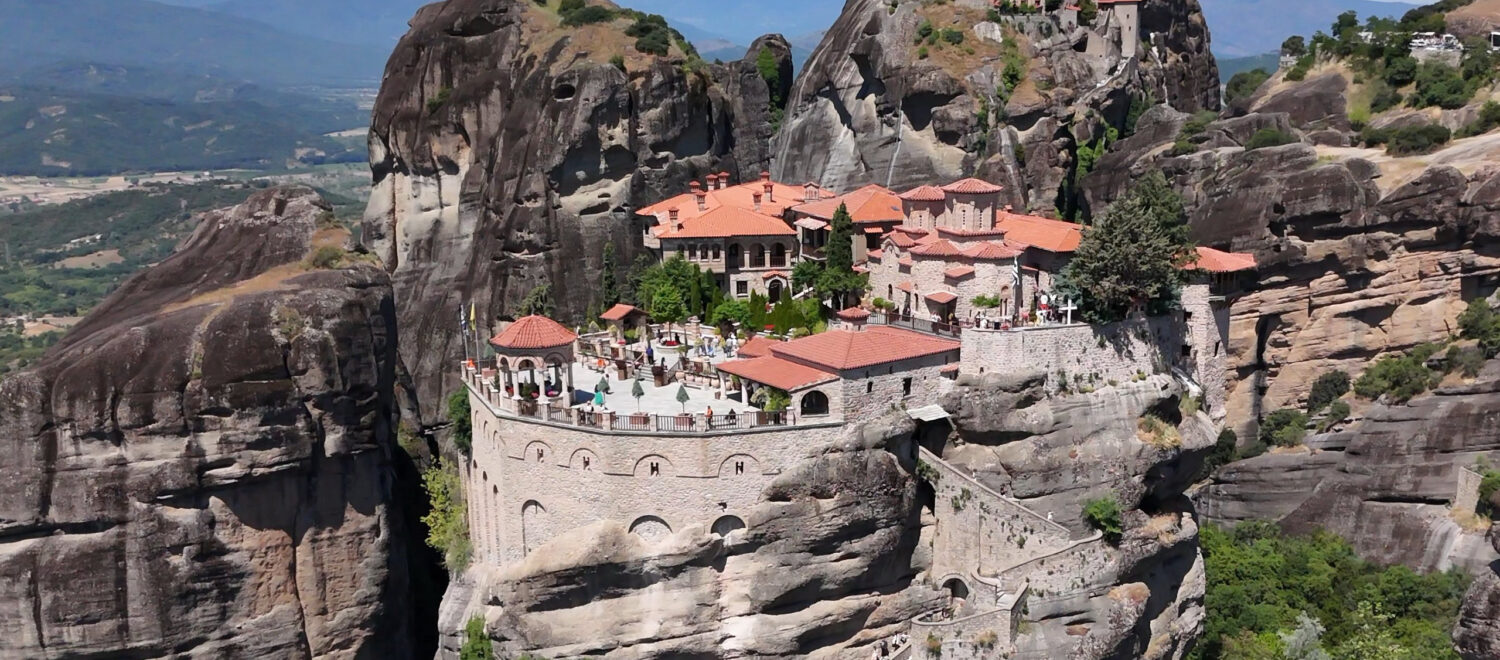
This is a walking tour of Meteora, Greece – a UNESCO World Heritage Site since 1988 and one of the most remarkable places in all of Europe. This tourtakes you through towering sandstone pillars rising hundreds of meters above the valley floor, where ancient monasteries remain impossibly balanced on sheer cliff faces.
Experience the awe-inspiring beauty of Meteora, Greece as we explore three of the region’s most iconic sites.
Part 1 of this definitive tour explores three of the region’s most iconic sites: Holy Monastery of Varlaam, Holy Monastery of The Great Meteoron, and Holy Monastery of St. Stephen. Experience the sheer scale, rich history, and spiritual serenity of these historic clifftop sanctuaries in high-resolution detail.
📍 Location: Meteora, Greece
📹 Filmed on: 29.05.2026
⛅ Weather: 26 °C
🎧 This video features binaural audio – for the best experience, use headphones.
📜 Don’t forget to turn on subtitles for travel tips and additional information.
⏱️ Timestamps:
00:00 Meteora Walking Tour Start
02:07 Entering Holy Monastery of Varlaam – Path & Stairs
08:06 Holy Monastery of Varlaam – Main Entrance
31:30 Holy Monastery of The Great Meteoron – Path & Stairs
39:50 Holy Monastery of The Great Meteoron – Main Entrance
58:40 Holy Monastery of St. Stephen
Meteora is one of the most striking places in Greece, and one you have almost certainly seen in a photo even if you did not know its name. Picture six ancient monasteries built on top of giant rock towers that rise straight up out of a flat plain, some more than 300 meters high. The monasteries sit right on the summits, as if they grew out of the stone. The name Meteora means “suspended in the air,” and once you see it, the name makes perfect sense.
It is in central Greece, in a region called Thessaly, next to a small town called Kalabaka. Getting there is easy enough: it is about 4 to 5 hours by road from Athens and around 3 hours from Thessaloniki, with a direct train line running up from Athens as well. That combination of dramatic scenery and easy access is a big part of why it has become one of the country’s most visited spots outside the islands.
The rocks came first, long before anyone lived on them. They were formed over millions of years as ancient rivers and seas laid down layers of stone, which wind and water slowly carved into the towers you see today. Nothing else in Greece looks quite like this. The pillars are huge, dark, and smooth, and in the last hour before sunset the whole landscape turns gold.
The monks came looking for isolation. The first hermits climbed into caves in the cliffs as far back as the 11th century, living alone on the rock. Proper monasteries followed from the 14th century onward, and at the peak there were 24 of them up here. Six are still active today. For centuries the only way up was by rope net or long wooden ladders the monks pulled up behind them, cutting themselves off from the world completely. The stone steps you climb now only arrived in the 1920s.
You come to Meteora for the sheer sight of it. Standing at the base and looking up at a monastery balanced on a summit is something photos never fully capture. You can walk the trails between the rocks, step inside the monasteries to see centuries-old frescoes, and watch the valley glow from the viewpoints at sunset. UNESCO protects it for both its natural beauty and its history, and it earns that on both counts.