

📍 Location: Kalabaka, Trikala, Greece
📹 Filmed: 29.05.2026
🎧 Audio: Binaural 4K – use headphones for the best experience
About Kalabaka
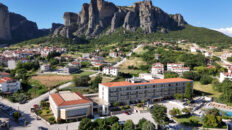
Kalabaka sits where the Thessaly plain meets the foothills of the Pindus mountains, right at the base of the Meteora rock formations. The sandstone pillars rise up to 400 meters from the edge of the town and are visible from almost every street. Most visitors to Greece arrive, sleep one night, visit the monasteries, and leave. That is understandable. It is also a mistake.
With around 12,000 residents, Kalabaka is a real working town. Local cafes where nobody is speaking English, a central square that fills up every evening, a food scene that serves the neighbourhood rather than the tourist season. The prices are fair and the atmosphere belongs to the locals first.
There are six Meteora monasteries to visit. Most visitors need at least two to three days to cover them properly, and the town itself rewards the extra time. Stay longer than one night.
History and Interesting Facts
The area has been settled since antiquity. The ancient city here was known as Aiginion or Stagi, positioned where the Thessaly plain meets the mountain routes connecting central Greece to Epirus. It was a natural crossroads, and the town has never quite stopped being that.
The Byzantine period left the most visible mark. Kalabaka became the seat of the Bishopric of Stagi and the church built during that era is still standing and still in use. The Church of the Dormition of the Virgin Mary dates to the 10th and 11th centuries, built on the foundations of an even older early Christian basilica from the 4th or 5th century. The frescoes inside span nearly five centuries. The marble pulpit at the center is unique – it is the only free-standing pulpit in any Orthodox church in the world.
The town passed to Ottoman rule in the 15th century and remained so until 1881, when it was incorporated into the modern Greek state. Every year on May 29, Greece marks the anniversary of the Fall of Constantinople in 1453 – the moment the Byzantine Empire ended – with memorial services in churches across the country. The walk filmed for this article was shot on exactly that day, right before Pentecost weekend. The streets had a particular energy because of it.
Main Attractions
Church of the Dormition of the Virgin Mary
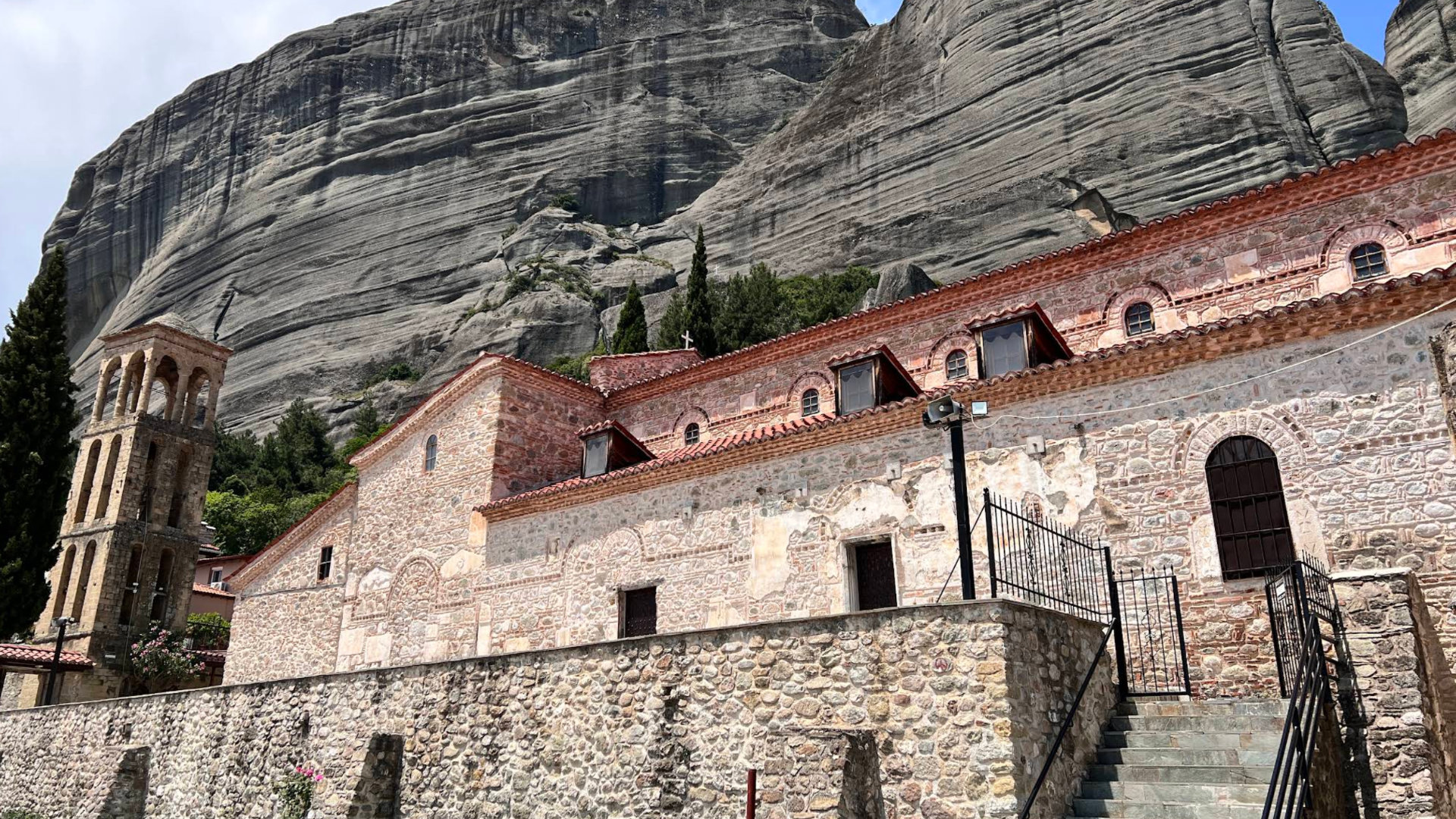
The most important monument in Kalabaka and one of the finest Byzantine churches in Thessaly. It sits in the old part of town, a short walk from the central square. The exterior is modest. The interior is not – every surface carries frescoes, the oldest dating back nearly a thousand years. The free-standing marble pulpit is a rare thing; there is nothing else like it in Orthodox Christianity. Entry is around €2 to €3. Do not skip it.
The Central Square and Main Streets
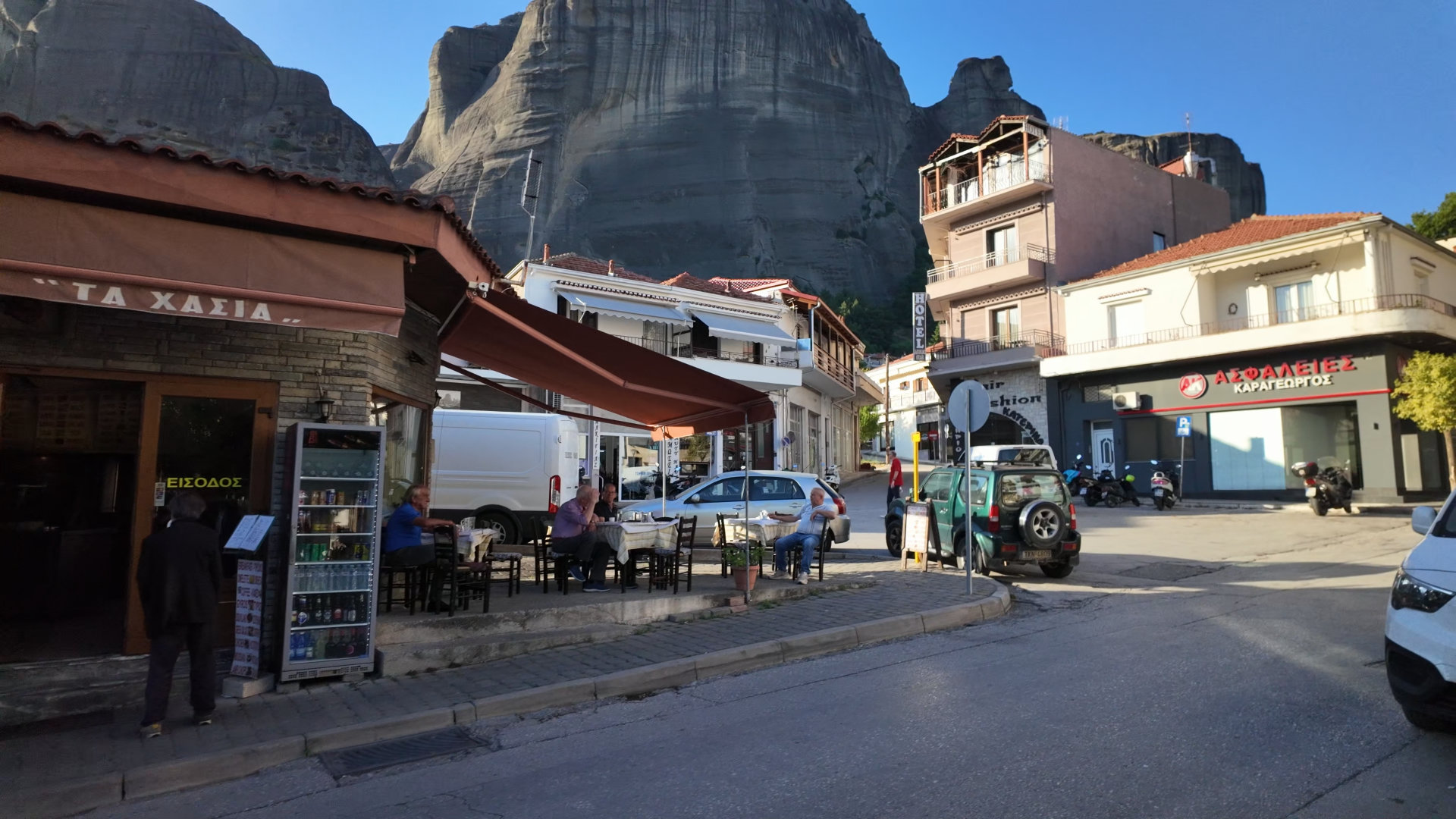
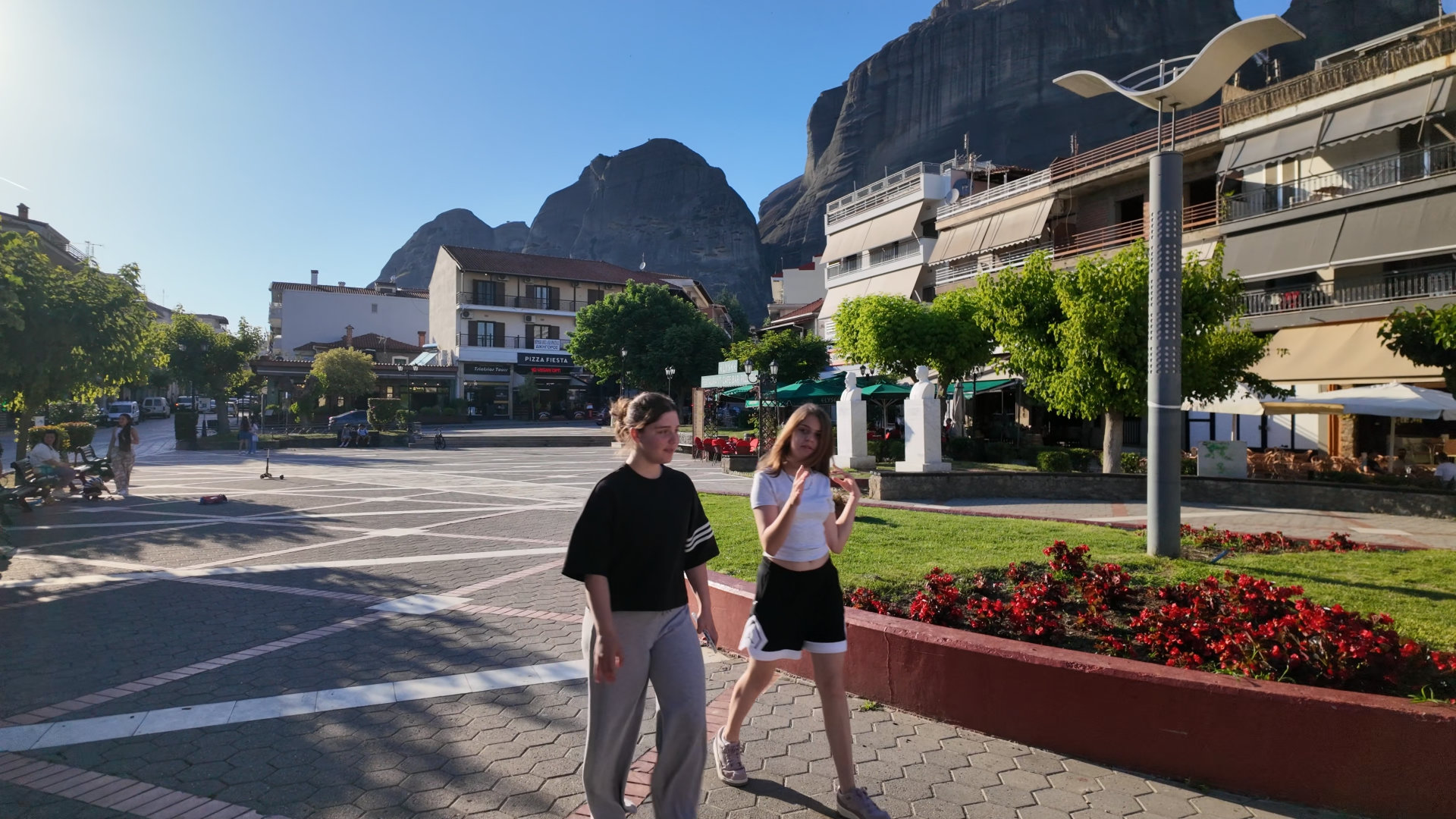
The square fills up from late afternoon and stays busy into the evening. Cafes and tavernas line the streets around it, and the rock formations frame the rooftops in every direction. This is where Kalabaka actually lives. Sit here for an hour and the whole character of the town makes sense.
Ambrosia Taverna and Cloud Coffee Bar
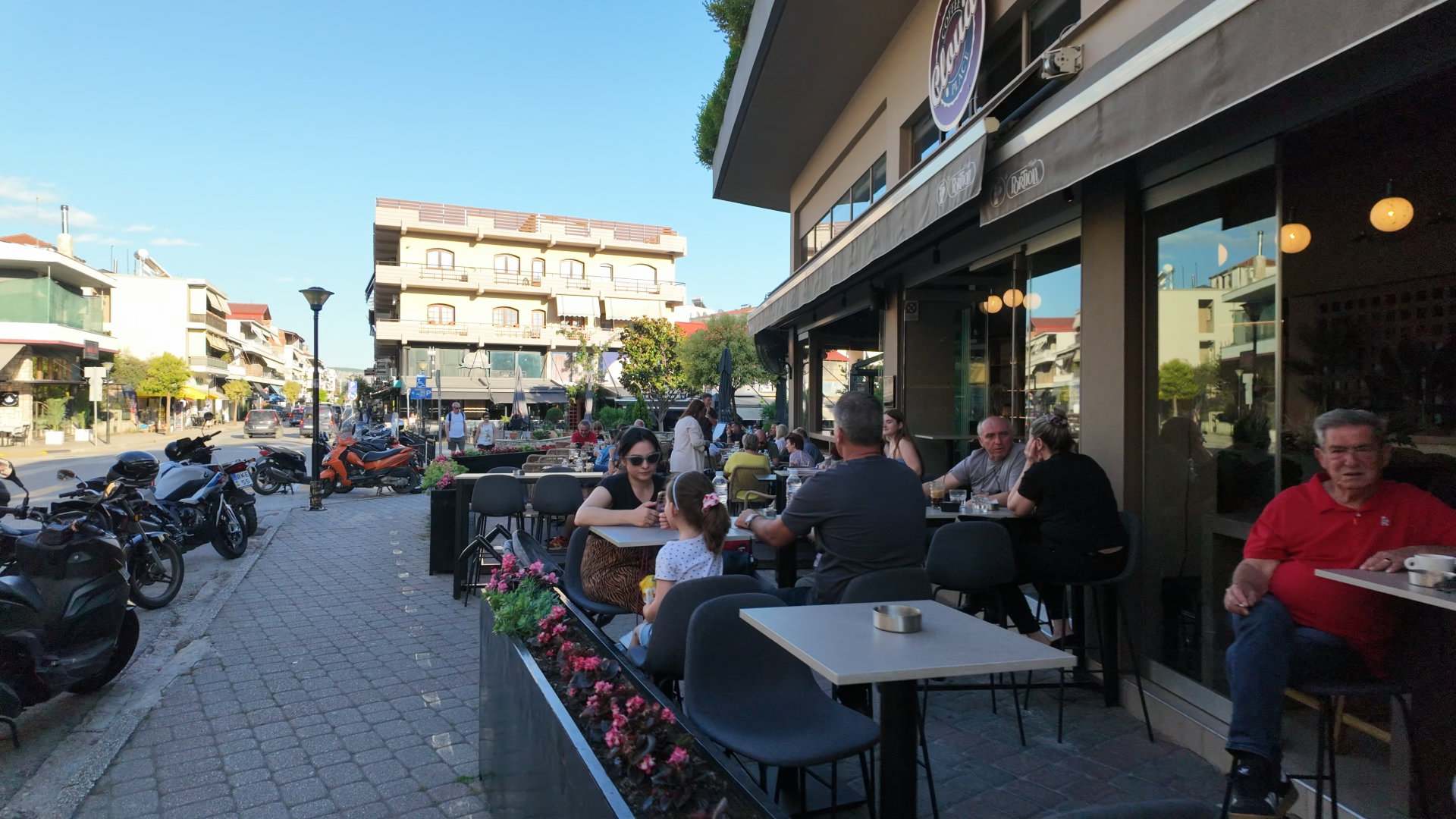
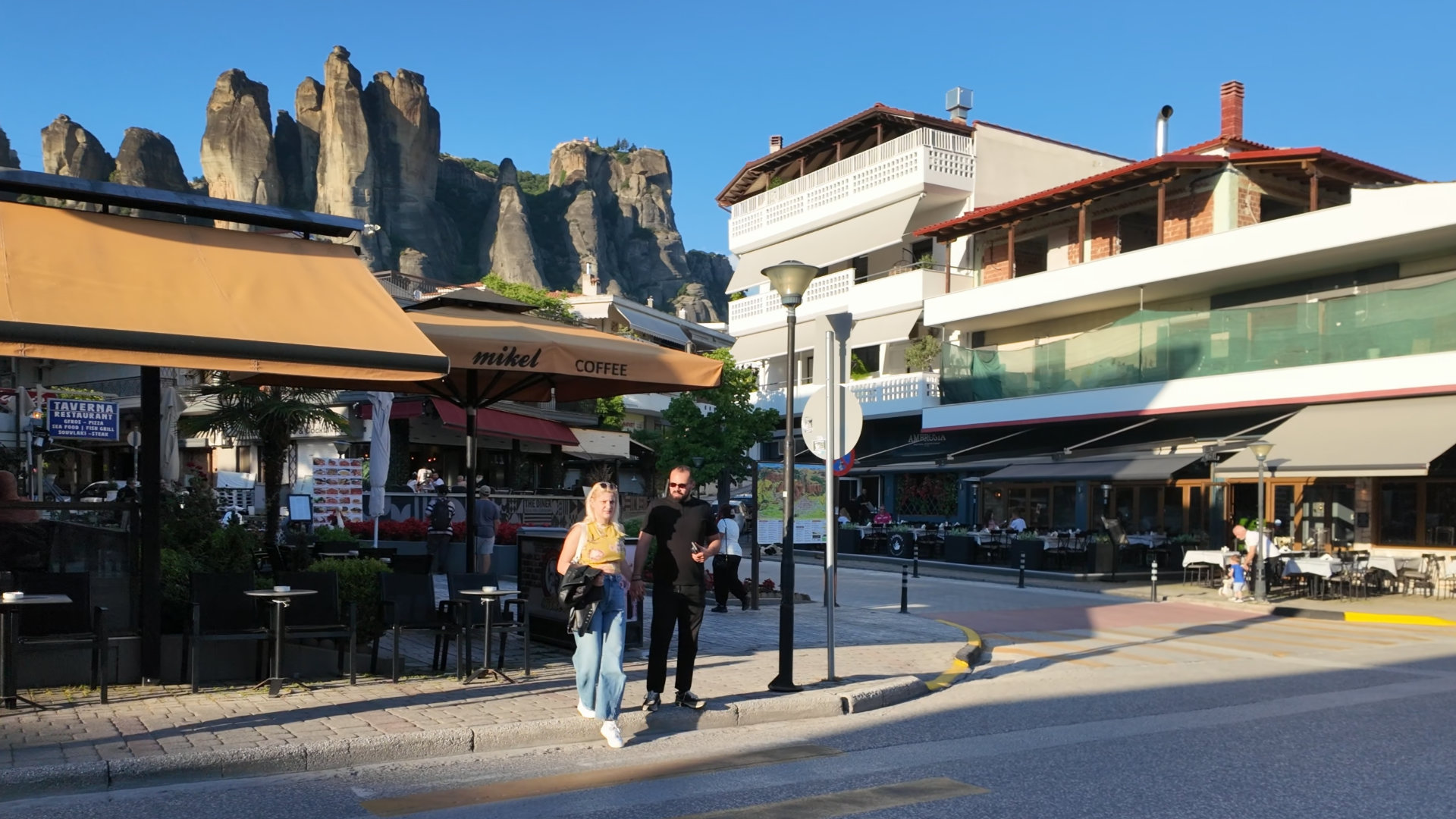
Both are in the town center, directly opposite each other on the main street. Ambrosia Taverna is a solid choice for a full sit-down meal – local food, generous portions, honest prices. Cloud Coffee Bar handles the cafe side. Easy to find and worth knowing about both before you arrive.
The Meteora Monasteries
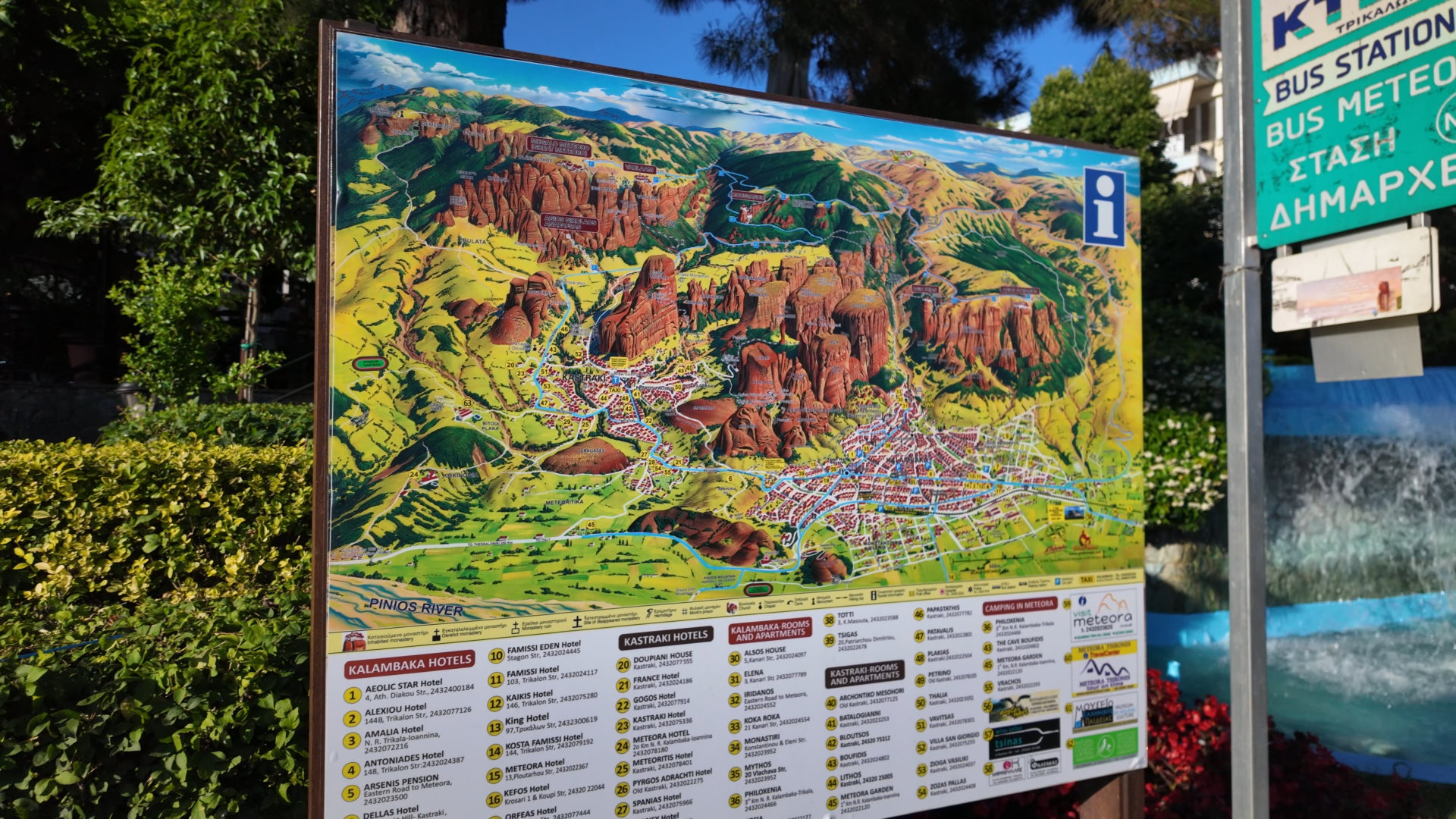
The six monasteries perched on the rock formations above the town are the reason most visitors come to this part of Greece. They are around 10 minutes by car from the town center. We cover them in dedicated walking tours on this channel – see the videos below. One strong recommendation: go at sunset. The light on the rocks in late afternoon is exceptional, and most of the day-trip crowds have cleared by then. Come back down to Kalabaka for dinner afterward. You can book guided monastery tours and entry tickets in advance through Booking.com Attractions.
What to Eat and Drink
Kontosouvli is the dish to order. Slow-roasted pork on a spit, served with pita and salad. It is the regional specialty and every taverna in the center does a version worth eating. Start here.
Lamb is taken seriously in this part of Thessaly. Tavernas slow-cook it in the oven for hours. If you see it on the daily specials board, get it. It is not the same thing you find in tourist restaurants further south.
Moussaka is everywhere in Greece, but the version in central Greece tends to be made properly rather than assembled for tourist turnover. Worth ordering at least once.
Tsipouro is the local spirit – clear, grape-based, and strong. It comes with a few small mezedes on the side, which is the correct way to drink it. The right way to end an evening in Kalabaka.
Coffee is cheap and taken seriously. Expect to pay around €2 to €2.50. Cloud Coffee Bar in the center is a good spot to sit down and watch the afternoon light hit the rocks above the rooftops.
Practical Information
Getting There
There are no trains to Kalabaka at the moment. The Palaiofarsalos to Kalabaka rail line has been closed since September 2023, when severe flooding caused by storms Daniel and Elias damaged the infrastructure. No confirmed reopening date exists as of mid-2026. The options are bus or car.
From Athens, the KTEL bus takes around 5 to 6 hours with a change at Trikala. Buses depart from the Liosion KTEL station. From Thessaloniki, the journey is around 3.5 hours, also changing at Trikala. By car, plan for around 4 hours from Athens and 2.5 hours from Thessaloniki. You can compare bus and transport connections on Kiwi.com. If you are flying into Greece from abroad, Athens and Thessaloniki are the nearest international airports – search and book flights on Booking.com Flights and continue by bus or rental car.
Cost of Living
- Coffee: €2 to €2.50
- Restaurant meal per person: €12 to €15
- Beer: €3 to €4
- Budget hotel per night: €40 to €60
- Mid-range hotel per night: €70 to €100
You can compare and book hotels in Kalabaka and nearby Kastraki on Booking.com. Both have good options at different price points.
Best Time to Visit
May and September are the best months. The weather is warm, the monastery crowds are manageable, and the town has its full character. Spring is particularly good – the surrounding foothills are green and the light is excellent for the kind of walk that makes you want to come back.
July and August are busy. The Meteora monasteries attract large tour groups throughout peak summer and Kalabaka books out quickly. If you are visiting in high season, reserve accommodation well in advance.
What’s Near Kalabaka
Kastraki
Five minutes by car, the village of Kastraki sits between Kalabaka and the start of the monastery road. It is smaller, quieter, and has excellent views of the rock formations from the village streets. Some visitors prefer it as a base for Meteora. You can also walk between the two in around 20 minutes.
Trikala
Twenty minutes by car or local bus. Trikala is a proper city of around 62,000 people with a scenic river walk along the Litheos, a Byzantine fortress worth the short climb, and a well-preserved old quarter. It is also the bus hub for the entire region – every journey to or from Kalabaka passes through it. An easy and worthwhile half-day trip.
Thessaloniki
Greece’s second city is around 2.5 hours by car or 3.5 hours by bus. If you are combining Meteora with a longer trip through northern Greece, Thessaloniki is the natural next stop or a good starting point before heading south. We have a full walking tour of the city on the channel.
Serres
Around 3.5 hours northeast by car. Serres is one of the most undervisited cities in northern Greece and the home of the country’s best bougatsa – the cream pastry that locals here take very seriously. We have a walking tour on the channel worth watching before you go.