


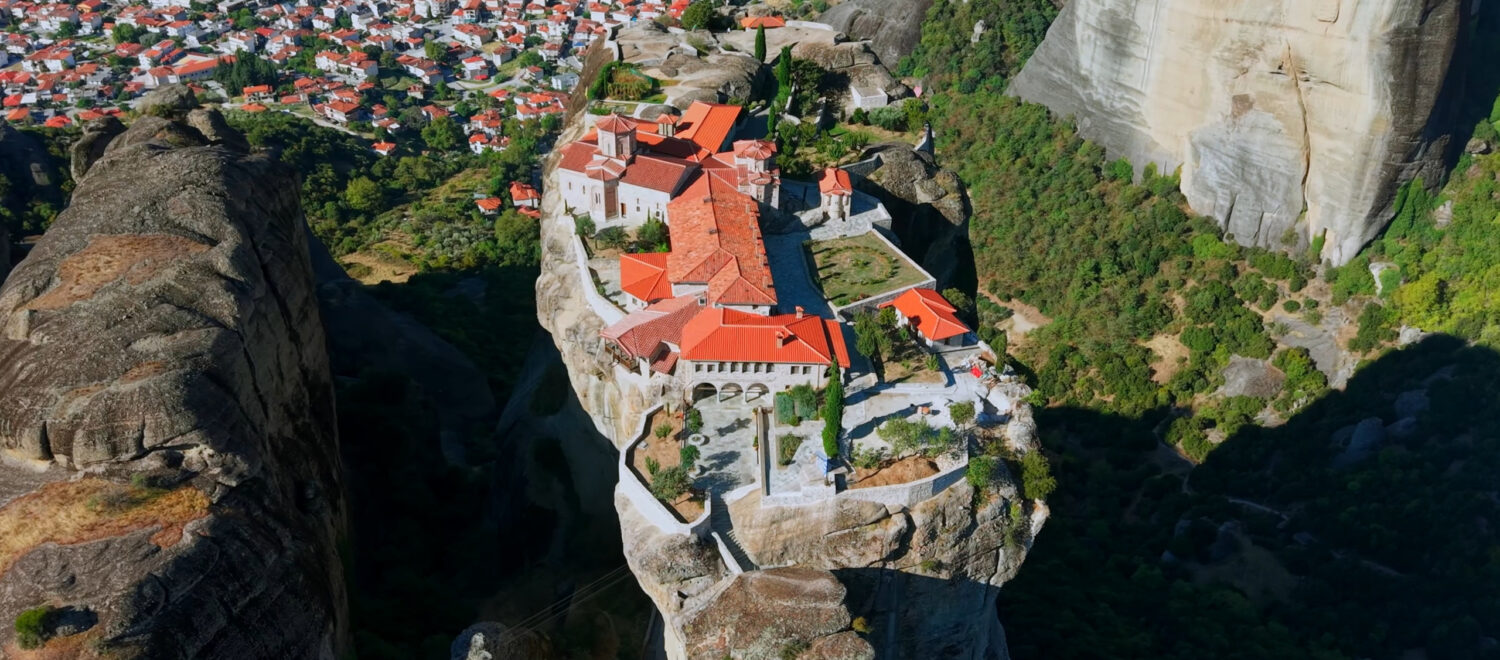
Meteora is one of those places that looks impossible until you are standing underneath it. Giant sandstone pillars rise straight out of the plain in central Greece, and perched on top of them sit centuries-old monasteries, built where almost nobody could reach them. It is one of the most photographed landscapes in the country and a fixture on most people’s bucket lists, and once you see it in person you understand why.
The name Meteora means “suspended in the air,” and that is exactly how the monasteries look. Hermit monks first settled these cliffs around a thousand years ago, hiding in the caves and clefts of the rock. At the peak there were 24 monasteries here and more than 2,000 monks. Today six remain active, and the whole site has been a UNESCO World Heritage Site since 1988.
This guide covers everything you need to plan the trip: all six monasteries with hours and access, how to actually get there, when to go, and where to base yourself. If you are planning a wider trip, browse our full Greece travel guides. For general destination information across the country, the Greek National Tourism Organisation runs the official site at visitgreece.gr.
How to Get to Meteora
Meteora has no airport, no train of its own, and no ferry. The gateway is the town of Kalabaka, right at the foot of the rocks, with the village of Kastraki just next to it. You reach Kalabaka overland from either Athens or Thessaloniki, and which one you choose makes a real difference to the journey.
From Athens
Athens sits about 350 km south. The direct Athens to Kalabaka train that people used to recommend has been out of service since flooding damaged the line in 2023, and it is not expected to fully reopen before 2027, so ignore older guides that send you to the station. Your realistic options today are driving (around 4 to 4.5 hours via the E65 motorway, tolls apply), the KTEL intercity bus via Trikala (around 5 to 6 hours), or a guided coach that handles everything and leaves central Athens early each morning.
If you are flying into Athens first, you can compare fares and routes on Kiwi.com flight search before you lock in the rest of the trip. It is worth checking the Hellenic Train website for the current rail status too, since the line is slowly being rebuilt.
From Thessaloniki
Thessaloniki is the easier approach, only about 230 km away. Driving via the Egnatia Odos motorway takes roughly 2.5 to 3 hours, and there are bus and rail connections through Trikala in the 3 to 4 hour range. If you want the shortest, simplest overland leg, base your trip around Thessaloniki rather than Athens.
Either way, you will want a transfer from the airport or station and a way to move between the monasteries once you arrive. You can book an airport taxi or private transfer through Booking.com transfers to skip the logistics on arrival.
Getting around once you are there
A single ridge road links all six monasteries, so getting between them is simple. Most people drive and park at each stop, take local taxis or a hotel minibus for the steeper legs, or join a guided tour. There are also old monks’ footpaths connecting some of the rocks if you want to walk. One warning: the small parking areas fill up by late morning, so an early start pays off. And before you arrive, sorting out a data plan with a Saily eSIM for Greece means you will have maps and directions working the moment you land.
Before You Go: The Essentials
A few rules apply at every monastery, and knowing them in advance saves you a wasted climb.
Entry is 5 EUR per monastery, cash only. There is no combined ticket, so each one you visit is a separate 5 EUR, and card machines are not a given. Bring enough cash for the day.
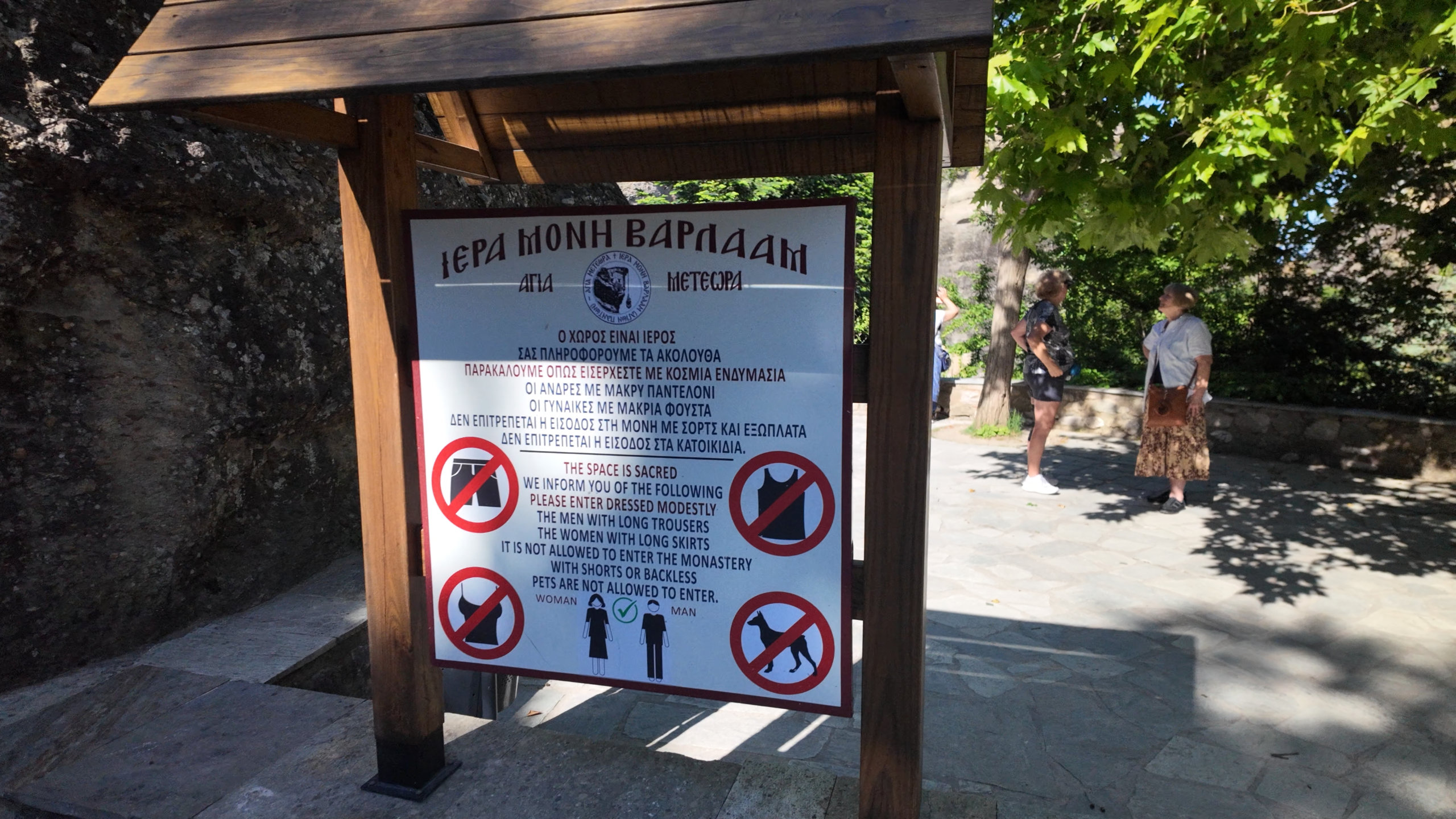
There is a strict dress code. Shoulders and knees must be covered for everyone. Men cannot enter in shorts or sleeveless tops. Women are asked to wear a skirt below the knee, and wrap-around skirts and shawls are provided to borrow at every entrance if you turn up without one. It takes ten seconds and they will turn you away without it.
No photos or video inside the churches. You can film and shoot freely outside, on the terraces and courtyards, but the painted interiors are off limits. Respect it.
As for how to see them, you have three sensible choices: self-drive and park once near each stop, take a guided tour that sorts transport and context for you, or go on foot using the connecting paths if you are fit and it is not too hot. If you would rather have a local guide walk you through the history, you can browse guided Meteora tours and tickets and book ahead.
Want to see exactly what the climbs and the interiors look like before you go? We filmed the whole thing in 4K. Watch our Meteora walking tour, Part 1 for Varlaam, Great Meteoron and St. Stephen, and Meteora walking tour, Part 2 for Holy Trinity, St. Nicholas and the main viewpoint.
The Six Monasteries of Meteora
These are the six that remain active. The hours below are the summer timetable (April to October). Winter hours are shorter, closing days can shift, and each monastery also closes on its own feast days, so confirm the current schedule before you set out. Note that two of them close on Fridays, which is the one day worth planning carefully.
The Holy Monastery of the Great Meteoron (Monastery of the Transfiguration)
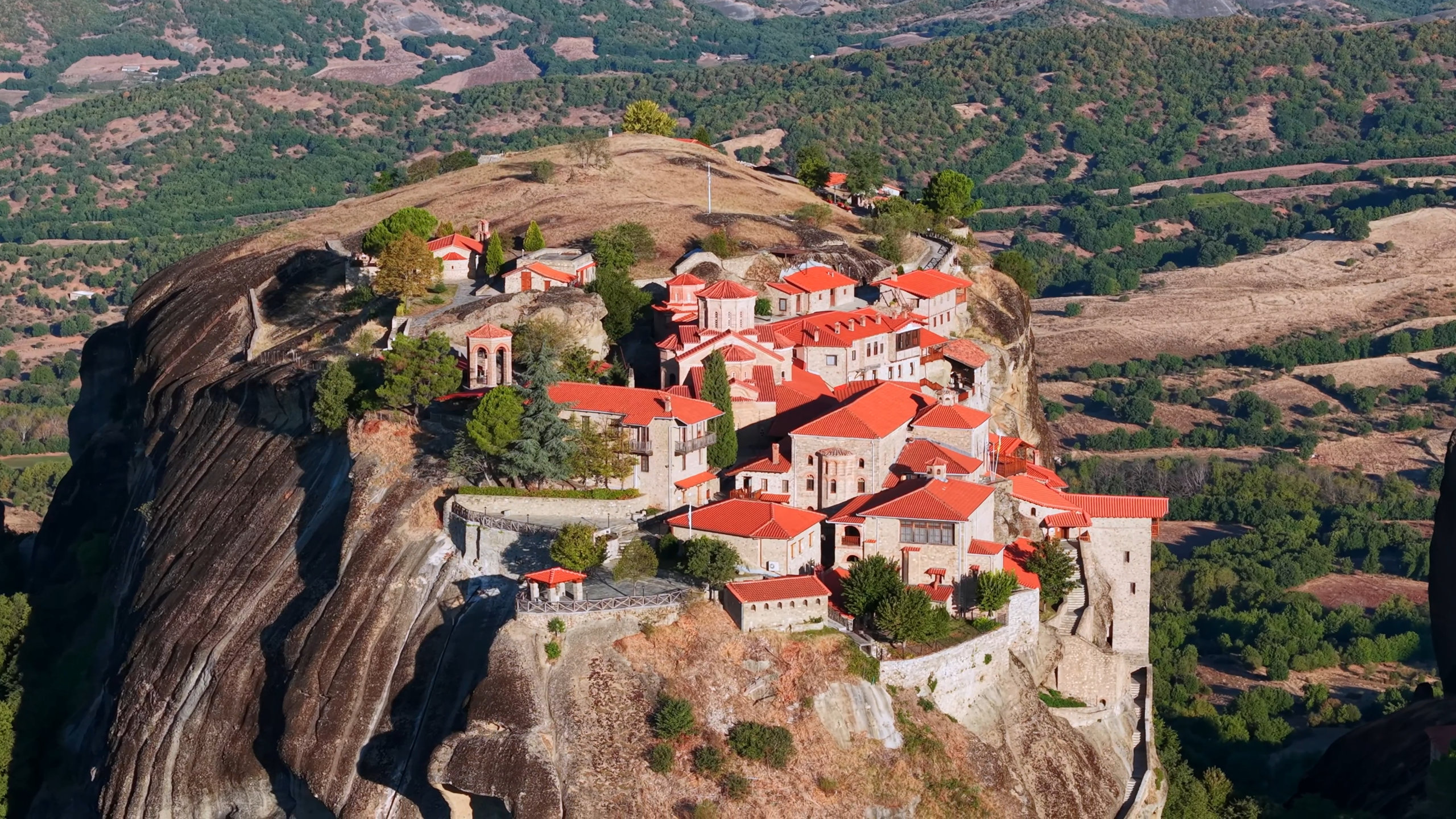
The largest and the oldest, founded around 1340 by a monk named Athanasios. Legend says an eagle carried him up to the peak. It sits highest of all and reaching it means climbing around 300 steps, so this is the hardest of the six. It rewards you: a museum in the old refectory holds the silver-cased skulls of its founders, a golden bull issued by a Byzantine emperor in 1336, and manuscripts spanning nine centuries. The old kitchen is still black with smoke and the wine cellar is lined with giant barrels. Give this one the most time, it is a small village on a rock.
- Working Hours: 09:30 to 15:00 (summer), closed Tuesdays
- Entry Fee: 5 EUR per person, cash only
- Dress Code: Shoulders and knees covered; wrap skirts available at the entrance
The Holy Monastery of Varlaam
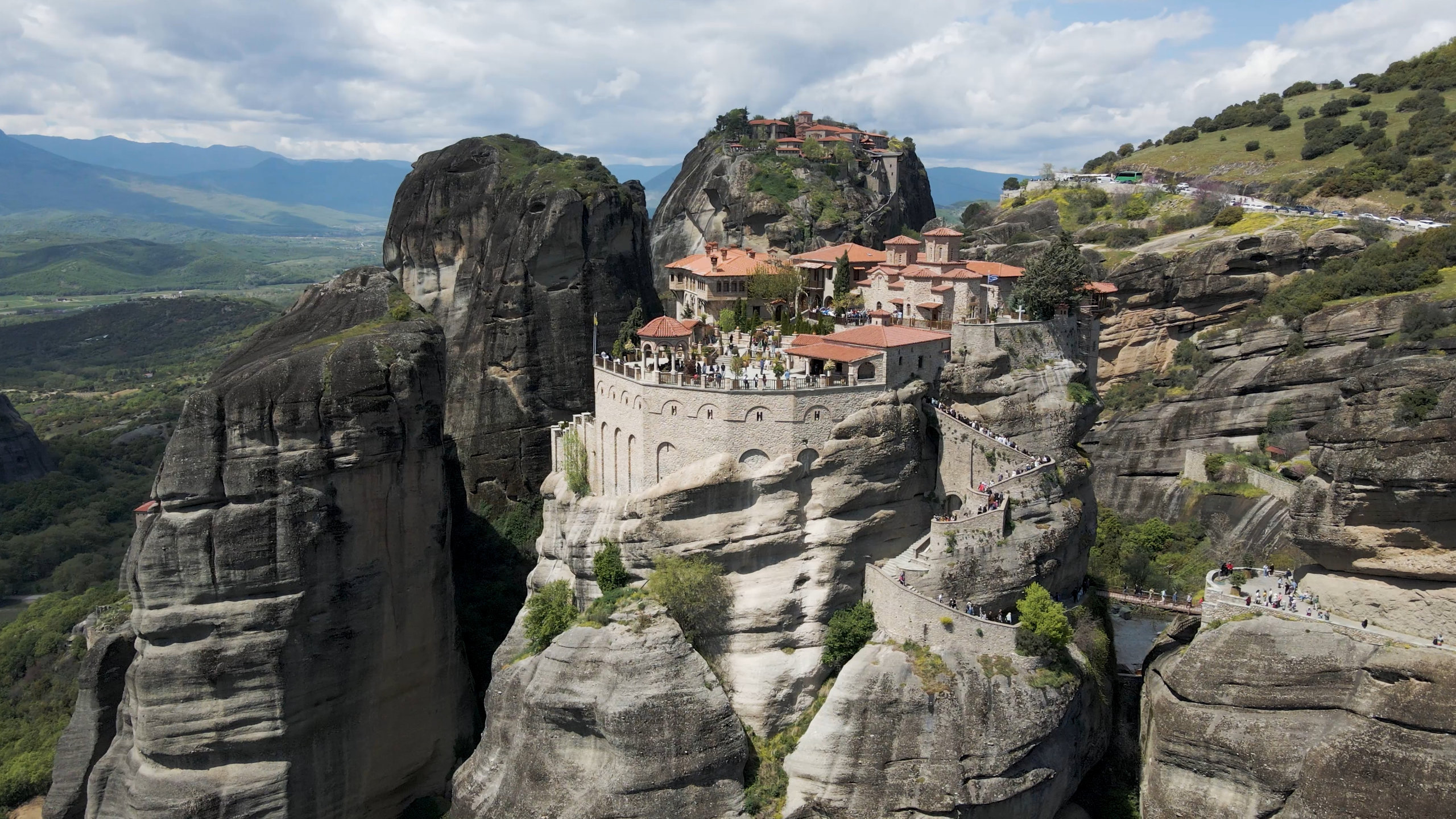
Right beside Great Meteoron sits the second largest, Varlaam. Two brothers from Ioannina, Theophanes and Nektarios, rebuilt it in 1517. The 195 steps up were carved into the rock in 1923, and before that the only way in was a rope and net hauled by a winch. The museum, set in the old dining hall, is exceptional: gold-embroidered vestments, a parchment codex dated to 861 AD, and a single oak barrel that once held thousands of liters of monastery wine. The museum alone earns the climb.
- Working Hours: 09:00 to 16:00 (summer), closed Fridays
- Entry Fee: 5 EUR per person, cash only
- Dress Code: Shoulders and knees covered; wrap skirts available at the entrance
The Holy Monastery of Rousanou (Agia Varvara, St. Barbara)
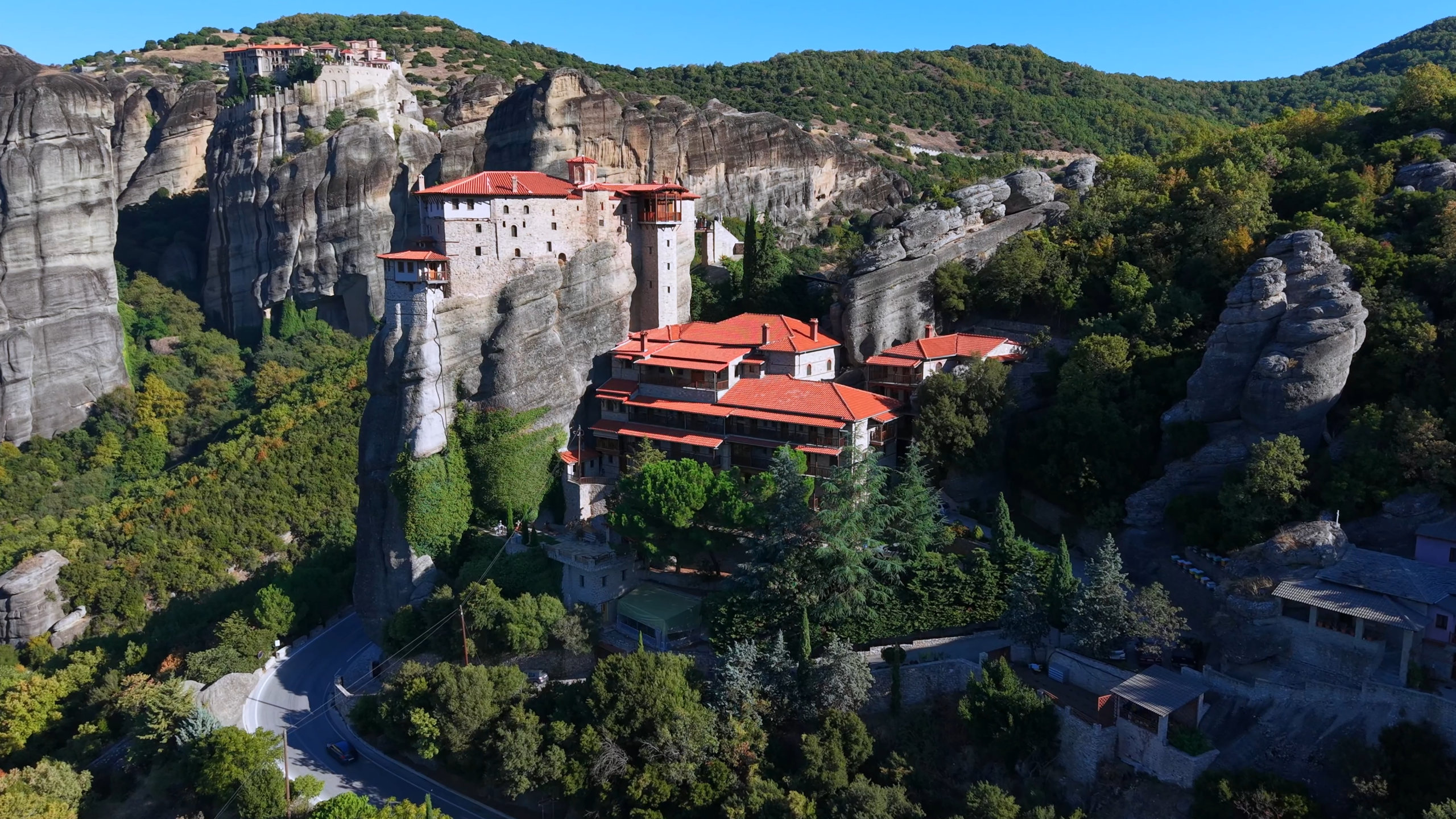
If the big climbs worry you, this is your monastery. Rousanou sits lower than the others and is reached across two short, solid bridges built in 1930, with only around 140 steps, so it is the most accessible after St. Stephen. It took its current shape in the 16th century under the brothers Ioasaph and Maximos from Ioannina; the church dates to 1545 and its frescoes to 1560, painted in the refined Cretan style. It has been run by nuns since a 1980 restoration, and they keep beautiful gardens and sell handmade souvenirs. From the terrace you look straight across the gorge to St. Stephen. It is the most photogenic of the six seen from a distance.
- Working Hours: 09:00 to 16:30 (summer, 16:00 on Sundays), closed Wednesdays
- Entry Fee: 5 EUR per person, cash only
- Dress Code: Shoulders and knees covered; wrap skirts available at the entrance
The Holy Monastery of St. Nicholas Anapafsas
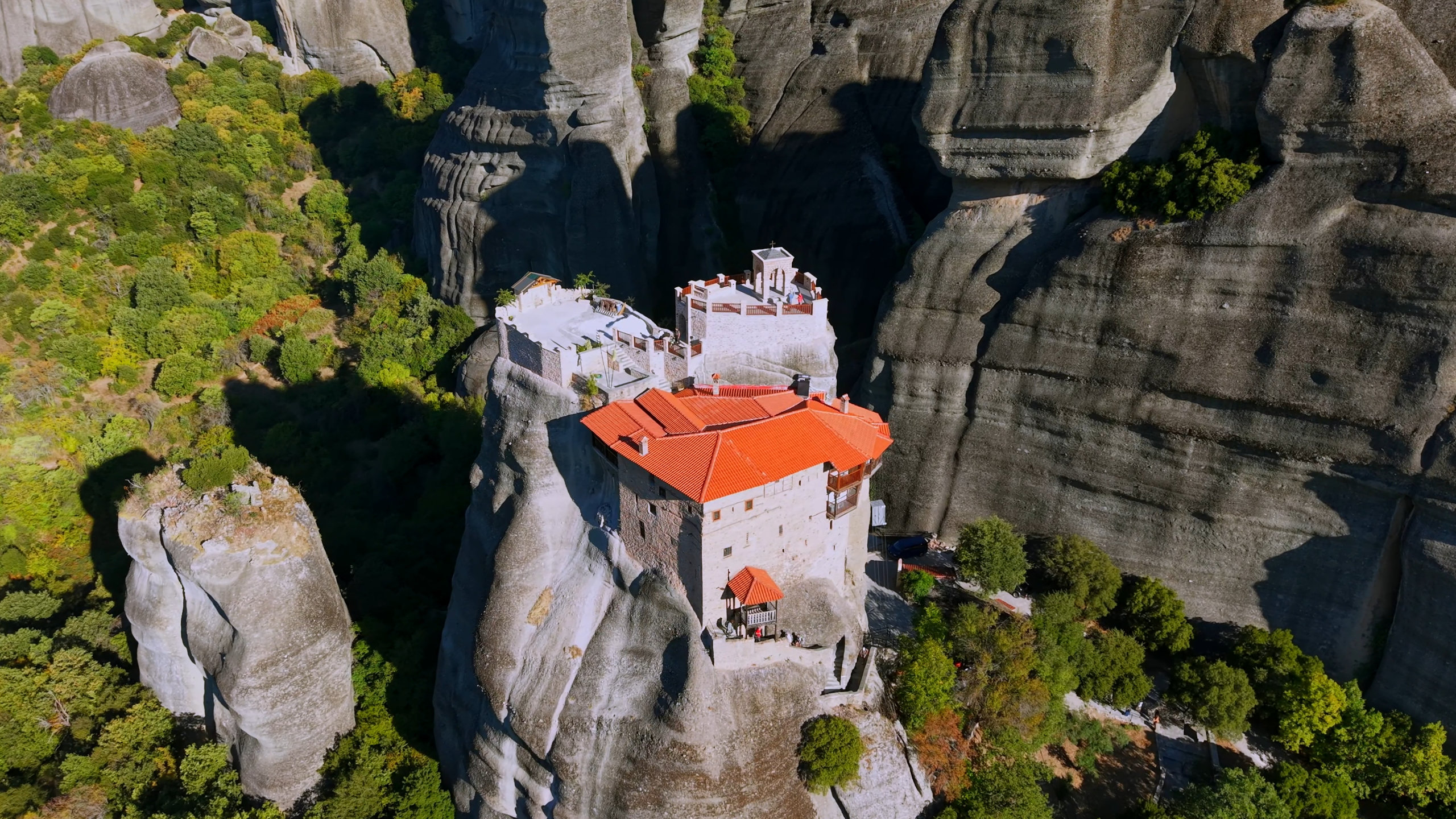
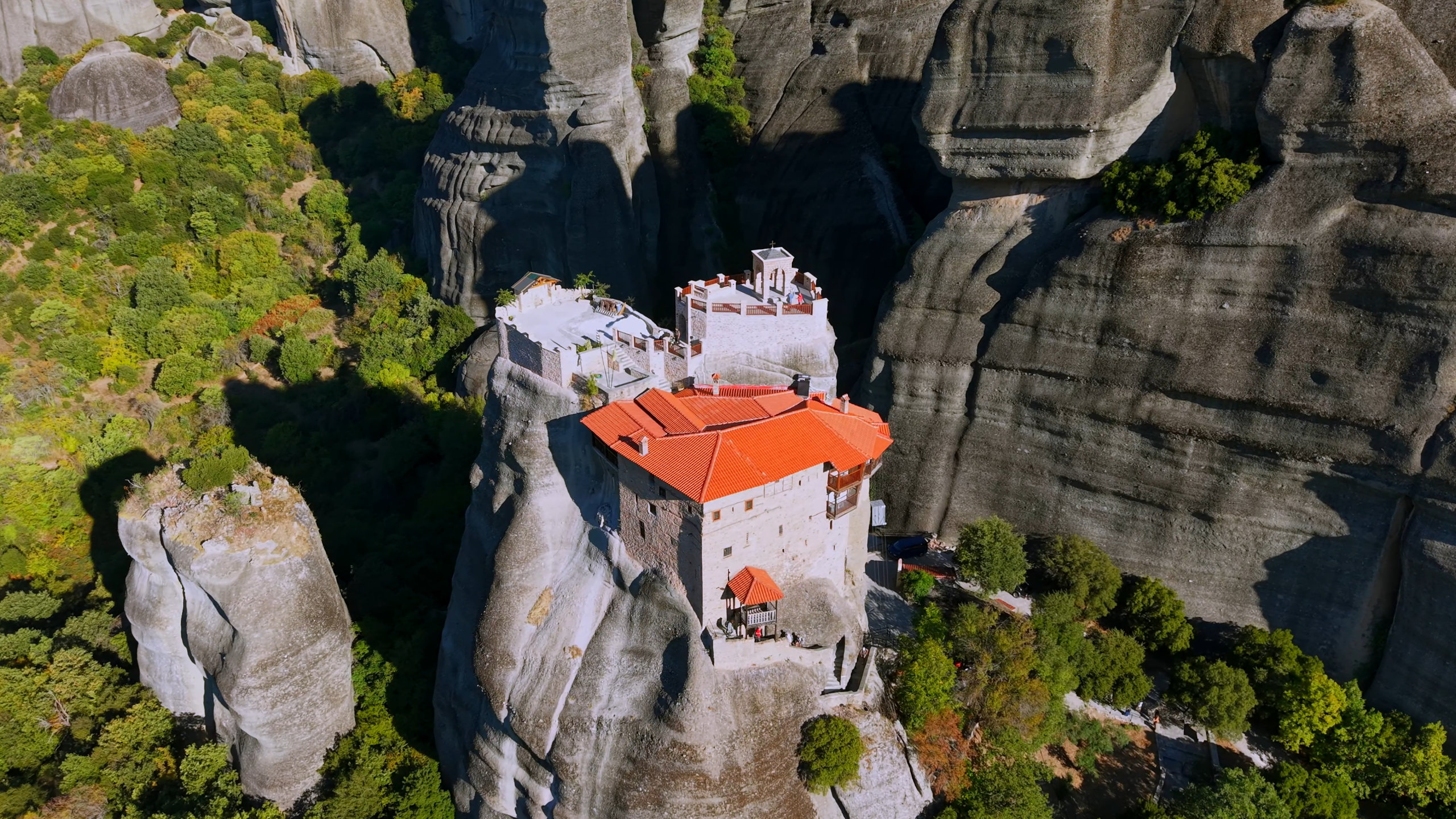
The smallest monastery, and the first you meet coming up from Kastraki. The rock is so narrow that the whole place was built upward, floor by floor. It was rebuilt into its current form in 1510, and the reason to come is the frescoes: painted in 1527 by Theophanes the Cretan, they are some of the finest post-Byzantine work in Greece, including a rare scene of Adam naming the animals. Its saint, Nicholas of Myra, is the historical figure behind the Santa Claus story. Plan 30 to 40 minutes here. Smallest footprint, biggest surprise once you step inside.
- Working Hours: 09:00 to 17:00 (summer), closed Fridays
- Entry Fee: 5 EUR per person, cash only
- Dress Code: Shoulders and knees covered; wrap skirts available at the entrance
The Holy Monastery of the Holy Trinity (Agia Triada)
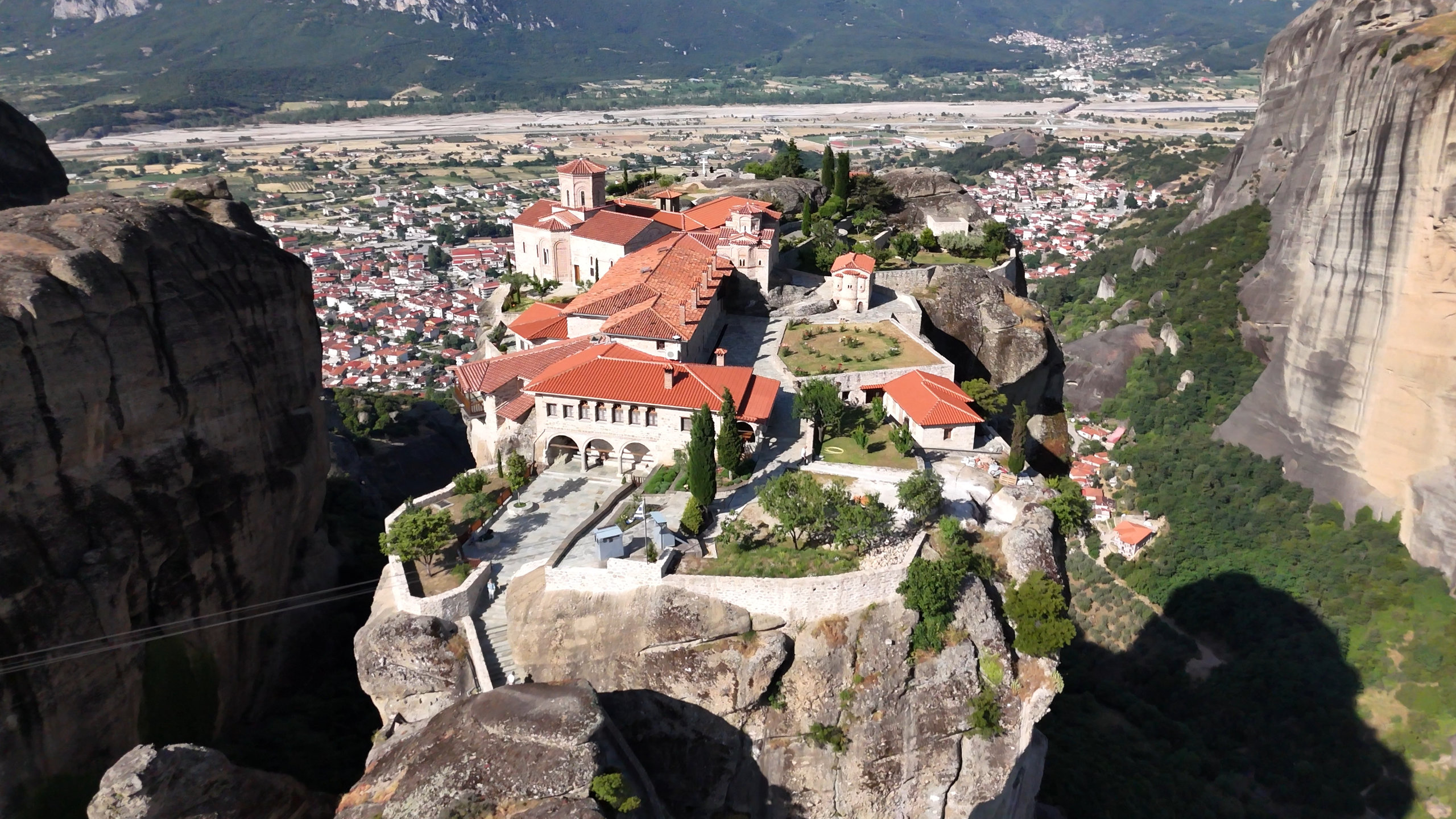
The one you have probably already seen on screen. In 1981 this exact cliff appeared in the James Bond film For Your Eyes Only, though the monks refused to let the crew film inside. It was founded from 1438 by a monk named Dometius, with the church built in 1475, and it stands high above the valley, reached by 140 steps cut into the rock in 1925. Only about four monks live here now. A crypt discovered in 1909 held 47 hidden manuscripts. Fun aside: the band Linkin Park named an album after Meteora. It has the most dramatic approach of all six.
- Working Hours: 09:30 to 16:30 (summer), closed Thursdays
- Entry Fee: 5 EUR per person, cash only
- Dress Code: Shoulders and knees covered; wrap skirts available at the entrance
The Holy Monastery of St. Stephen (Agios Stefanos)
The easiest to reach by far. There is no long stairway, just a short bridge straight across to the entrance, which makes it the obvious choice if stairs are a problem. Nuns have run it continuously since 1961. Its most prized relic is the skull of St. Charalambos, given to the monastery in 1398. German troops damaged it badly during World War Two, convinced resistance fighters were hiding inside the walls. The balcony looks straight down over Kalabaka and the entire valley. Save it for last and just take in the view.
- Working Hours: 09:00 to 13:30 and 15:30 to 17:30 (summer), closed Mondays
- Entry Fee: 5 EUR per person, cash only
- Dress Code: Shoulders and knees covered; wrap skirts available at the entrance
When to Visit and the Best Viewpoints
Spring and autumn are the sweet spots. From April to June and again in September and October the weather is mild, the light is good, and the crowds are thinner. July and August are hot and busy, so if you come in summer, visit the monasteries first thing and save the viewpoints for later in the day. Winter is quiet and often misty or snow-dusted, but expect shorter hours and shifting closing days.
The single best free stop is the main observation deck up on the ridge, where you can see five of the six monasteries at once. It is the most popular photo spot in Meteora, and its small parking lot fills fast because tour buses stop there all day. Sunset here is famous and crowded. Sunrise is the quieter version, with mist sitting low in the valley and hardly anyone around. Whichever you choose, get there early.
How to Plan Your Days: A 3-Night Itinerary
Trying to see all six monasteries in a single day is a mistake. You will spend the day rushing, climbing, and absorbing almost nothing. We suggest three nights, which gives you three unhurried mornings to visit two monasteries a day, always early, before the tour buses arrive and before the parking fills.
The six fall into three natural pairs along the ridge, so tackle one pair each morning:
- Great Meteoron and Varlaam sit side by side and are the two biggest and highest. They are also the two hardest climbs, so do them on your first, freshest morning.
- St. Nicholas Anapafsas and Rousanou are close together in the middle of the ridge and both are quick, so this is your lightest morning.
- Holy Trinity and St. Stephen are the pair nearest Kalabaka. End here, with St. Stephen’s easy access and its long view over the town.
Route your three mornings around the closing days: Great Meteoron shuts Tuesdays, Varlaam and St. Nicholas Fridays, Rousanou Wednesdays, Holy Trinity Thursdays, and St. Stephen Mondays. Friday is the awkward one, since two monasteries close, so if a Friday falls in your trip, use it for Holy Trinity and St. Stephen, which both stay open. Your afternoons are then free for the viewpoints, a walk on the old monks’ trails, or simply a slow lunch in town.
Where to Stay and Eat: Kalabaka and Kastraki
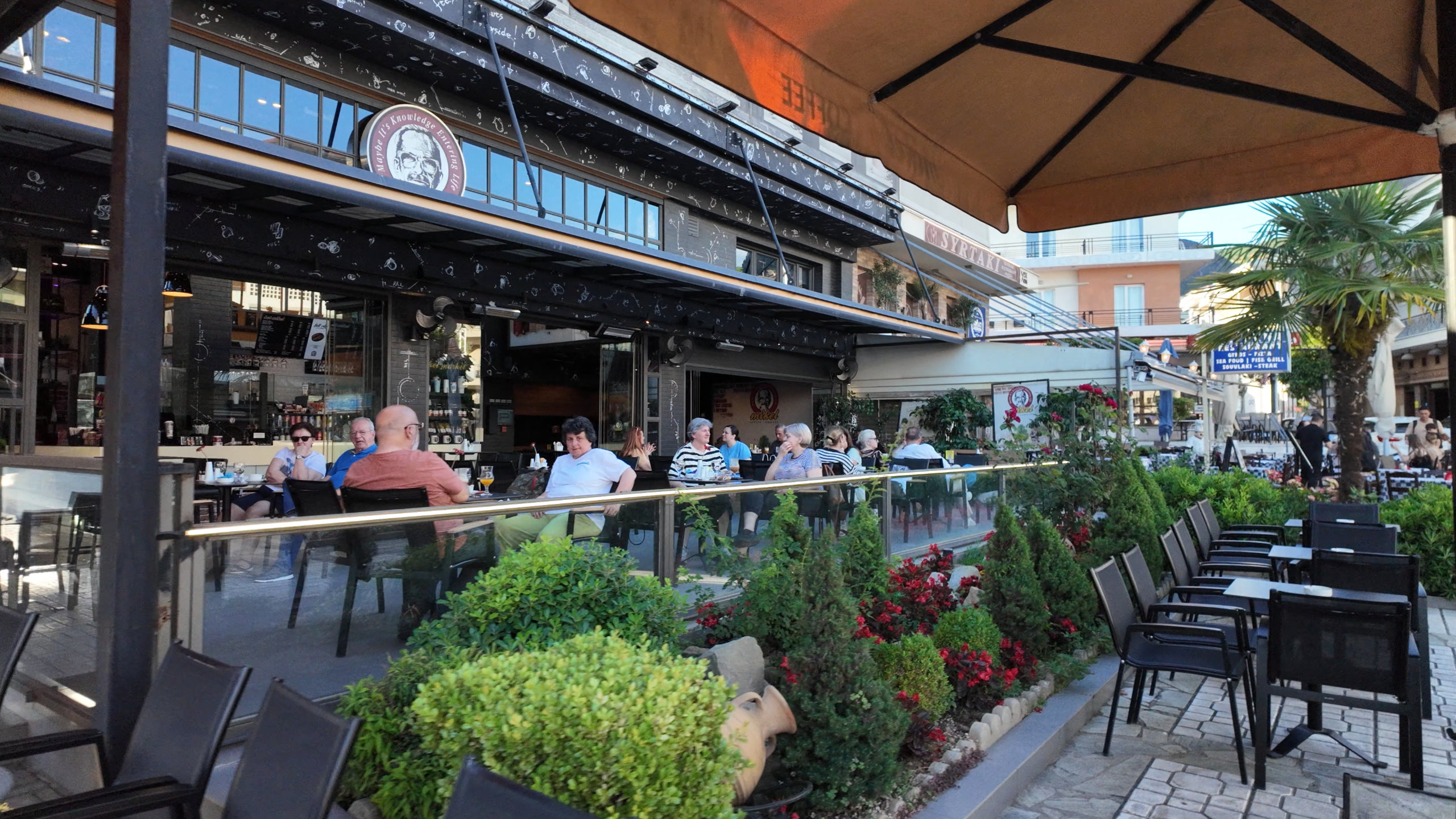
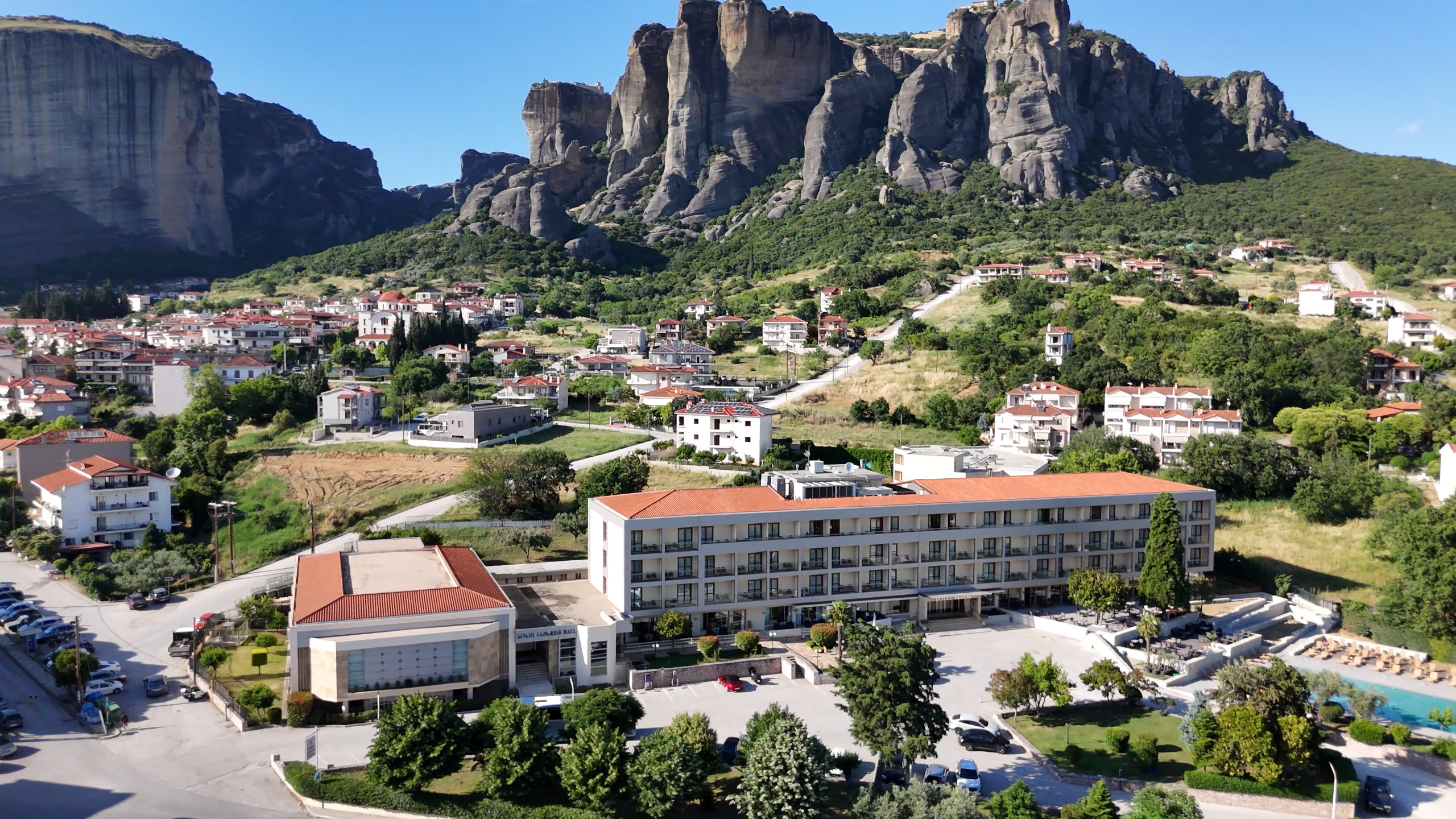
Two towns sit right under the rocks. Kalabaka is the larger base, with the most hotels, restaurants, and services, and it is where the train station is. Kastraki is the quieter, more traditional village, tucked directly beneath the pillars with some of the best rock views from your window. Both put you within minutes of the first monastery.
We based ourselves at the Divani Meteora and wrote up the full experience in our Divani Meteora hotel review, worth a read if you want to know exactly what to expect. To compare a range of places across both towns, you can check current hotel rates in Kalabaka and Kastraki and book early, since the good rooms go fast in season. For a proper feel of the town itself, our Kalabaka walking tour shows you around before you arrive.
On the food: this is Thessaly, so eat like a local. The monasteries here were once serious wine producers, and local Meteora wine is still the thing to order with dinner. Start with a glass of tsipouro, the regional spirit, usually served with small plates. For mains, go for the grilled meats the area does well, especially kontosouvli, slow-roasted pork, and look out for hilopites, the local egg pasta, often served with cheese or in a hearty sauce. You will find these in the tavernas around central Kalabaka and in the smaller, family-run places in Kastraki. And if you pass a monastery shop, their honey and handmade goods are the real thing.
What’s Near Meteora
Meteora pairs naturally with a few other spots in northern and central Greece if you have extra days.
Paralia Katerini
Around 1.5 to 2 hours away on the coast, this is the easiest beach-and-monasteries combination in the region. Plenty of visitors base themselves on the Pieria coast and take a day trip inland to Meteora, and it works just as well the other way around.
Thessaloniki
Greece’s lively second city sits about 2.5 to 3 hours north and is the most convenient gateway to Meteora. If you are routing through it anyway, give it a day or two of its own.
Trikala and Delphi
The nearest city, Trikala, is only about 30 minutes away and makes an easy lunch stop with a pretty old town. Further afield, the ancient site of Delphi is roughly 3.5 hours by car, and the two icons of central Greece pair beautifully into one longer trip.
Meteora is one of the few places that lives up to every photo you have seen of it. Give it three unhurried days, start each morning early, and it will be the part of Greece you talk about most when you get home.