

📍 Location: Kırklareli, Turkey
📹 Filmed: November 2026, overcast, 14 °C
🎧 Binaural audio: use headphones for the best experience.
📜 Turn on subtitles for travel tips and extra information.
⏱️ Chapters:
0:00 Cumhuriyet Street
5:43 ASINAM Nut & Sweet Shop
8:37 Fevzi Çakmak Boulevard
15:47 İstasyon Street
25:09 Vilayet Square & Jet Monument
26:20 Atatürk Monument & Governor’s Office
34:07 Hızırbey Mosque & Arasta Bazaar
39:35 Saatli Park & Dionysus Relief
41:59 Hastane Street
44:18 Türkan Saylan Monument
46:07 Provincial Health Directorate
50:25 Covered Market (Kapalı Pazar)
1:00:53 Walldorf Street & Residential Kırklareli
About Kırklareli
Bulgarians call it Lozengrad, the Vineyard Town, and many of them know it better than any Turkish city except Istanbul. Kırklareli sits just 30 km south of the Malko Tarnovo border crossing, and on market day thousands of Bulgarians drive or ride a bus down for clothes, groceries and fish. Foreign tourists are rare, which is exactly what makes it fun.
About 85,000 people live here, and it is the capital of its own province, one of only two Turkish provinces that border Bulgaria. The centre is flat, compact and easy to walk. Traffic is light even at midday, and the town feels calm and safe.
Come for the cheap shopping and stay for a real Turkish town that does not perform for visitors. If you are driving from Bulgaria to Istanbul, it is the perfect first stop. For more places across the country, see our Turkey travel guides and walking tours.
History and Interesting Facts
The town has worn three names. The Greeks called it Saranta Ekklisies, Forty Churches. The Bulgarians called it Lozengrad for its vineyards, and since 1924 the Turkish name Kırklareli has meant place of the forties.
The Ottomans took the town in the 1360s under Sultan Murad I. One of his commanders, Hızır Bey, built the mosque, double bath and bazaar that still stand in the centre in 1383. That makes the mosque more than 640 years old.
In 1912, during the Balkan Wars, the Bulgarian army won a major battle here. The Ottomans took the town back in 1913, and Greece held it until 10 November 1922. A year later the population exchange sent the local Greeks to Greece and brought Muslims from Greece to Kırklareli, which is why so many families here have roots all over the Balkans.
One surprising name: Anthim I, the first Bulgarian Exarch, was born here in 1816. The town is also home to about 500 Megleno-Romanians, a small Balkan people you will rarely hear about anywhere else.
Main Attractions
Our walk follows the shopping streets first, then the historic centre and the covered market. Everything below is in the video, in walking order, unless marked otherwise.
Cumhuriyet Street
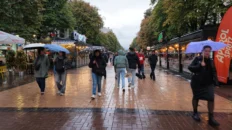
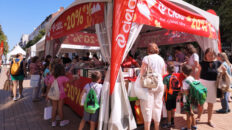
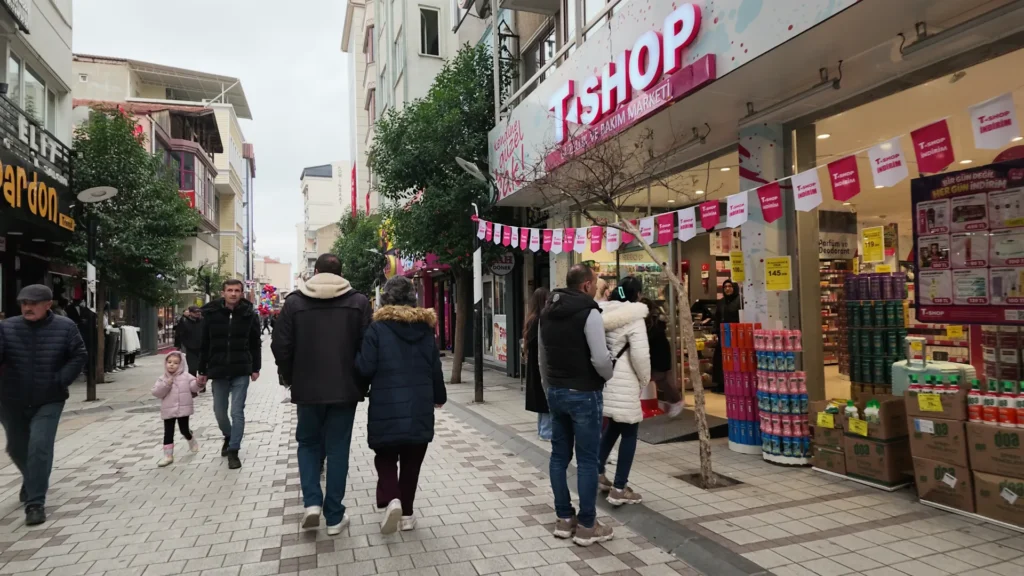
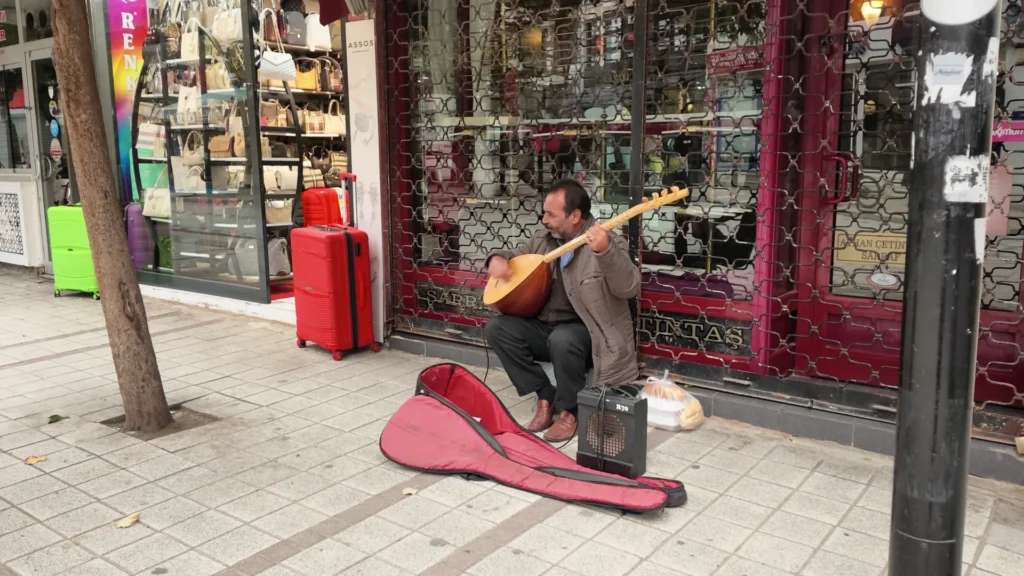
This is where the walk begins, a busy shopping street hung with red and white bunting. Street sellers offer midye dolma, rice-stuffed mussels with a squeeze of lemon. On a good day you will hear a street musician playing the saz, and the shops sell everything from suitcases to handbags.
ASINAM Nut and Sweet Shop
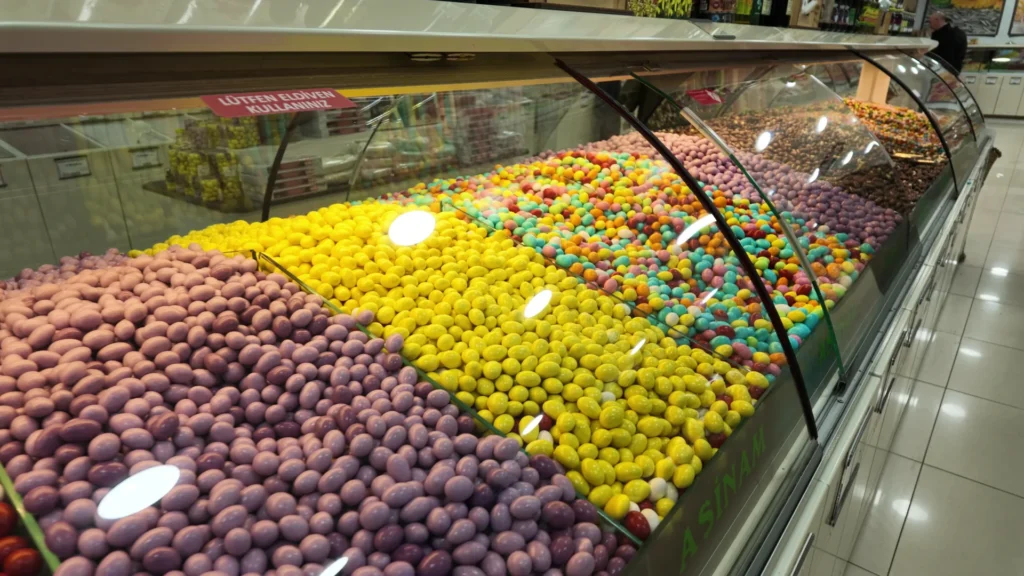
ASINAM is a big shop for nuts, dried fruit, leblebi and Turkish sweets, with long counters of sugar-coated almonds and chickpeas in every colour. You put on the gloves, scoop what you want and pay by weight. Turkish coffee and Turkish delight from here make easy gifts to take home.
Fevzi Çakmak Boulevard
One of the main shopping streets, with fruit shops, pastry shops and carts of fresh greens pushed through the centre. In autumn, locals sell fresh walnuts right on the pavement. This is also where to grab a cheap lunch: we found pide at 80 TL, about 1.50 EUR.
İstasyon Street
İstasyon Street, Station Street, is the town’s main pedestrian street, lined with cafés and bronze statues of everyday people. It once led to the railway station. Sit down for a tea in a tulip glass and watch the town go by.
Vilayet Square and the Atatürk Monument
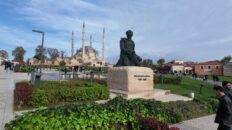
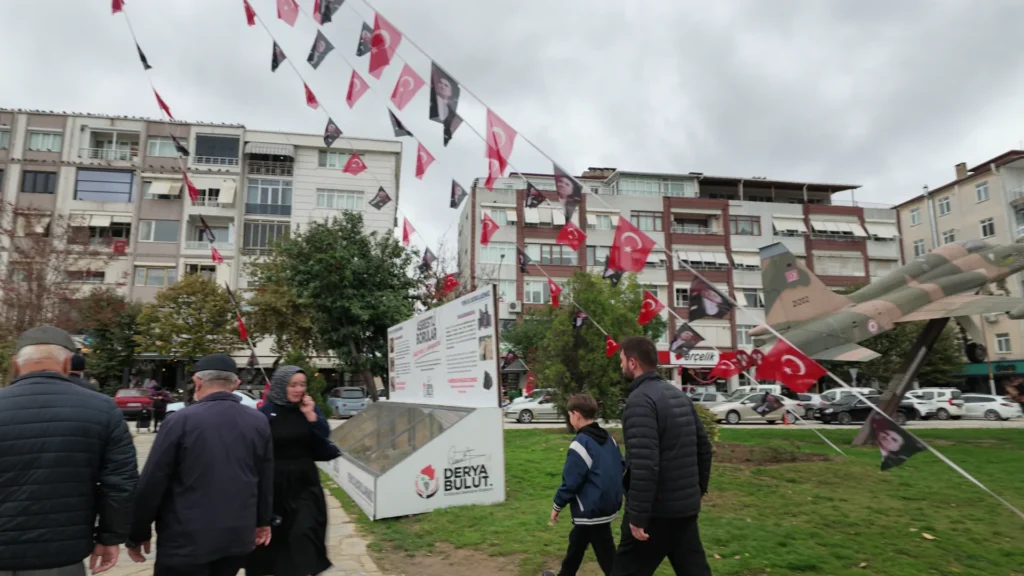
A retired fighter jet stands on display in Vilayet Square, next to the Governor’s Office. The Atatürk Monument stands in the middle of the square. When we filmed in early November, the whole square was still full of Turkish flags.
Hızırbey Mosque and Arasta Bazaar
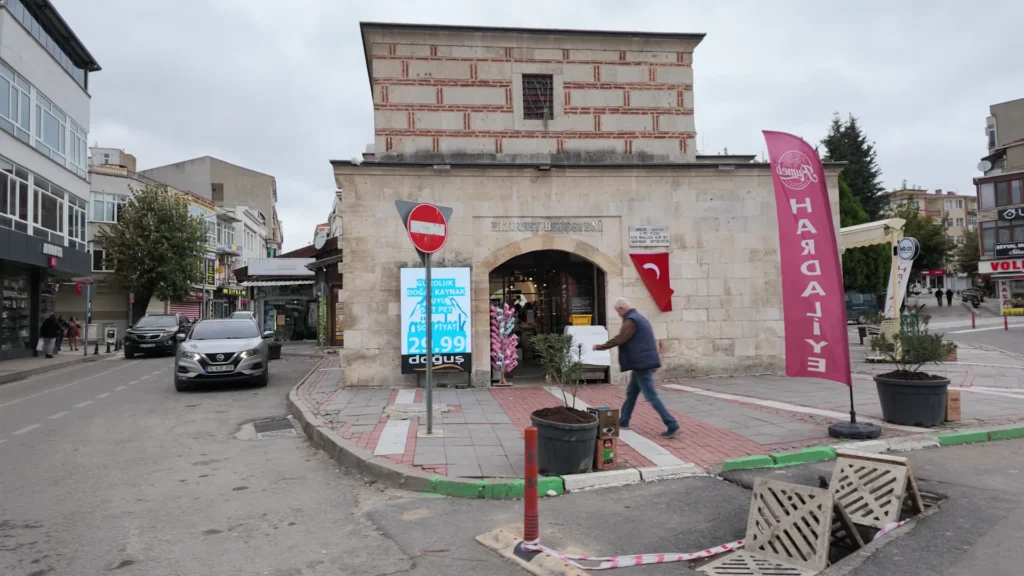
This is the historic heart of Kırklareli: a mosque, a double bath with separate entrances for men and women, and a T-shaped covered bazaar that once held 12 shops. The bath roof has small glass domes that let in daylight. Look for the Bulgarian shop sign nearby selling hairdressing supplies wholesale. Do not skip this corner.
Saatli Park and the Dionysus Relief
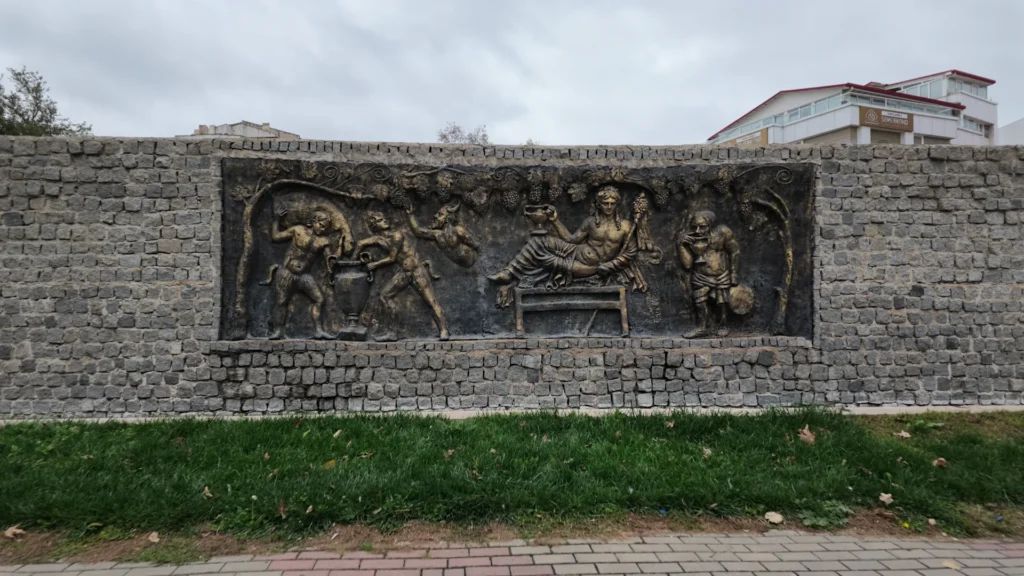
Saatli Park means Clock Park, after its small clock tower. Along its edge, a stone relief shows Dionysus, the Greek god of wine, surrounded by grapes. Legend links him to Mount Nisa near the Dupnisa Cave, a nice nod to the Vineyard Town name. Kahveci Veysel, a coffee house close by, serves Turkish coffee with a glass of water.
Türkan Saylan Monument
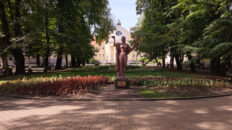
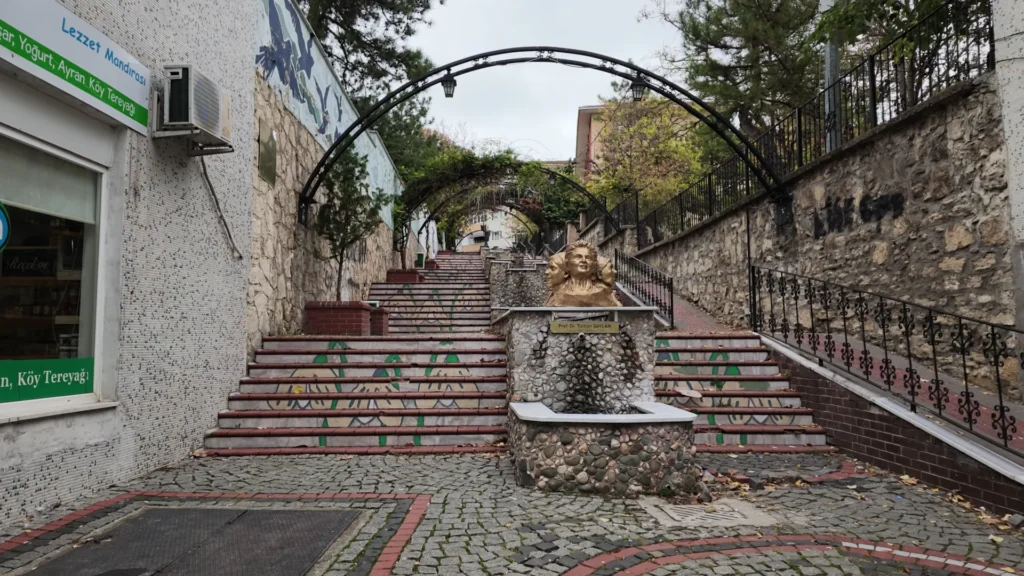
On Hastane Street, a bust of Professor Türkan Saylan stands at the foot of a staircase with mosaic steps. She was a Turkish doctor who fought leprosy and helped girls across Turkey get an education. It is a quiet spot and one of the prettiest corners of the walk.
Covered Market (Kapalı Pazar)
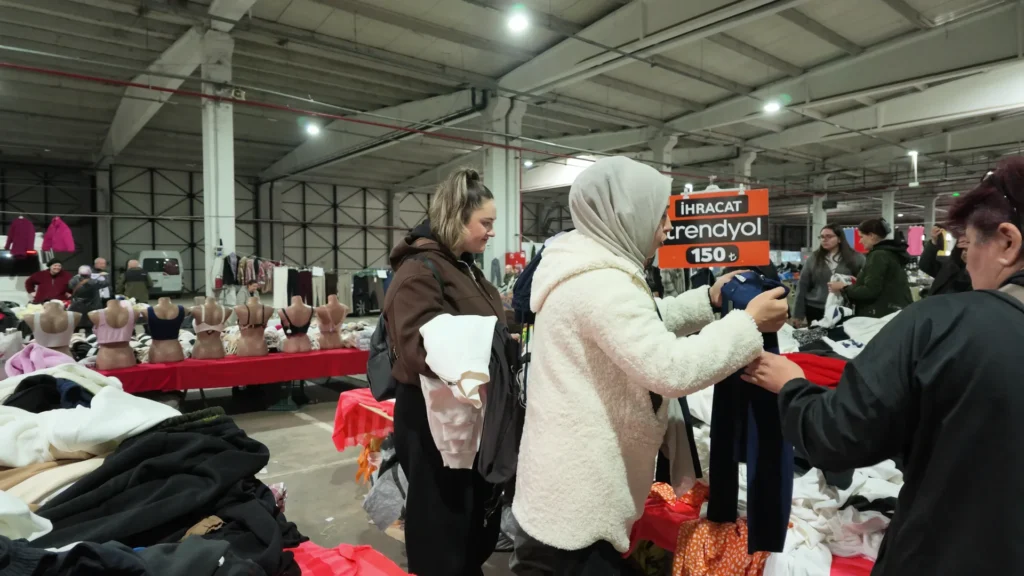
The Kapalı Pazar is the reason most Bulgarians come. Wednesday is the big market day, when thousands arrive by car and by bus, but the hall was also open on the Sunday we filmed. Many tables sell everything at one price, and bargaining is normal when you buy several items.
Look for the İhracat signs: the word means export, and these tables sell export surplus. We saw sweatshirts at 150 to 250 TL a piece, about 3 to 4.50 EUR. Some stalls take cards, and some take euros at a worse rate, so bring lira.
Residential Kırklareli
The walk ends in the quiet streets where locals live, among mid-rise apartment blocks and new buildings going up on the edge of the centre. Shopkeepers greet each other with kolay gelsin, may it be easy. It is a good last look at everyday life in a Thracian town.
Kırklareli Museum (not in the video)
The local museum shows finds from some of the oldest farming villages in Europe. We did not film it on this walk. If you have an extra hour, it adds real depth to the visit.
What to Eat and Drink
Kırklareli has more protected local foods than you would expect from a town this size. Start with the drink.
Hardaliye is red grape juice with black mustard seeds. It has no alcohol and a tart, tangy taste, and it has protected Kırklareli status since 2017. It is best in autumn, right after the grape harvest: look for the hardaliye banners like the one outside the Hızırbey bazaar.
Kırklareli köfte are the local grilled meatballs, also protected. Order them with bread, raw onion and a cold glass of ayran. Any köfte restaurant in the centre will have them.
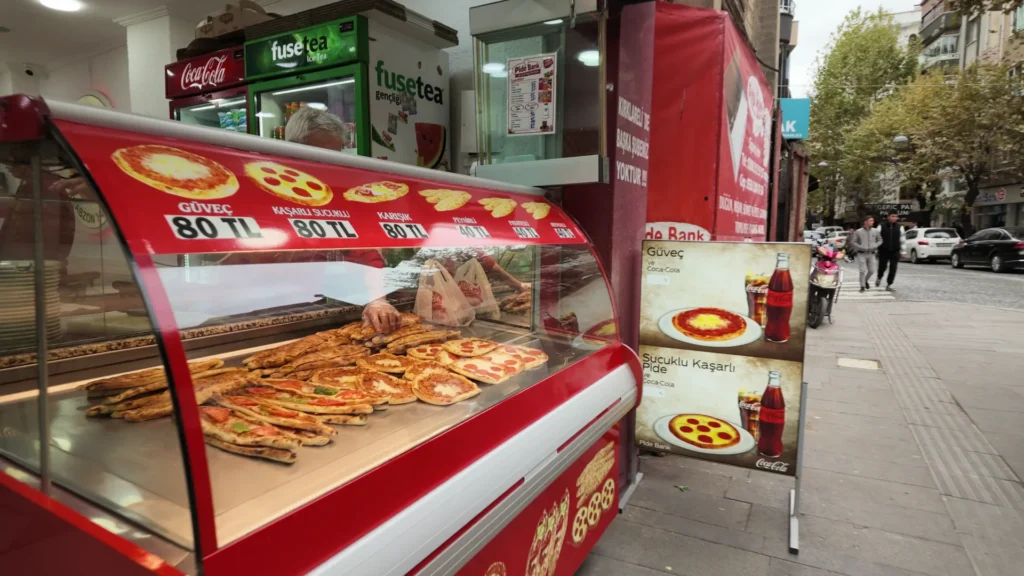
Pide is boat-shaped flatbread topped with cheese, meat or sucuk sausage. At around 80 TL it is the best value lunch in town. You will find pide counters along Fevzi Çakmak Boulevard.
Kalle is a dish found only in Kırklareli, often made with chicken. Manca is a Balkan starter of aubergine, peppers, vinegar and olive oil. Ask for both in local restaurants rather than kebab shops.
Kırklareli oak honey comes from the Strandzha forests and is protected too. A jar is the best food gift to take home, together with nuts and leblebi from ASINAM.
In autumn, fresh palamut and hamsi come from the Black Sea, and many Bulgarian visitors buy fish here. For breakfast, try börek or a simit with tea.
Practical Information
Kırklareli is easy to reach by car from Bulgaria and by bus from anywhere in Turkish Thrace. Here is what you need to plan the trip.
Getting There
From Bulgaria by car: the Malko Tarnovo and Dereköy border crossing is open 24/7 and is the quietest on the whole Bulgarian and Turkish border. From there it is about 30 km to the centre. Get a travel eSIM before you cross: a Saily eSIM gives you Turkish data from the moment you arrive.
By bus: intercity buses link Kırklareli with Istanbul, Edirne and Lüleburgaz. Istanbul is about 200 km away, around 3 hours by bus, and Edirne about 60 km, around 1 hour.
By air: the nearest big airports are in Istanbul, and from there the bus is the simplest way on. Compare routes and fares to Istanbul on Kiwi.com.
Cost of Living
Kırklareli is cheap even by Turkish standards. Rough prices, early November 2026 (the lira changes fast, so check the rate before you go):
- Coffee (cappuccino): around 120 to 150 TL, 2 to 3 EUR
- Pide lunch: around 80 TL, about 1.50 EUR
- Meal in a simple restaurant: around 300 TL, about 5.50 EUR
- Dinner for two, mid-range: around 1,000 TL, about 18 EUR
- Beer, 0.5 litre: around 100 TL, about 1.80 EUR
- Budget hotel: from around 40 EUR per night
Cards work in most shops, but carry some lira for street food and market stalls. For a night in town, compare hotels in Kırklareli on Booking.com.
Best Time to Visit
May, June and September are the nicest months, warm without the summer heat. In late September, the village of Kızılcıkdere, about 10 km away, holds a grape harvest festival. Autumn also brings Black Sea fish and fresh hardaliye.
Our recommendation: come on a Wednesday in September or October. You get the full market, the harvest season and comfortable walking weather.
What’s Near Kırklareli
Kırklareli works best as part of a short Thrace trip. These are the easiest add-ons.
Edirne
The former Ottoman capital is about an hour away, with the Selimiye Mosque, old bridges and an even bigger shopping scene. Kırklareli and Edirne are easy to combine in a two-day trip. Watch our Edirne Ulus Market walking tour and read our guide to shopping in Edirne before you go.
Istanbul
About 3 hours by bus, and the obvious next stop if you are driving through. Start with our Sultanahmet walking tour in Istanbul for the classic sights.
Dupnisa Cave
Just over an hour by car, this cave has an underground river and is linked in legend to Dionysus. Easy half-day trip if you have wheels. No car? Rent one on Booking.com for the day.
İğneada
Further on, on the Black Sea coast, İğneada has a beach and a rare flooded forest. It is a good overnight trip in summer.
Malko Tarnovo and Strandzha
On the Bulgarian side of the border, Malko Tarnovo is the gateway to the Strandzha Mountains, the same forests the oak honey comes from. Combine it with Kırklareli on the way in or out.