

Edirne sits about 20 kilometres from the Bulgarian border, and on a Friday or Saturday morning half the cars in town seem to have Bulgarian plates. People come for the markets, the cheap household stock and a good lunch, and most drive home the same evening with a full boot. We have been going for years, most recently in October 2026, and this guide covers what actually matters: which day to go, where to shop, what things cost right now and what you can legally take back.
Prices in this guide were checked in September and October 2026, from our own footage and from shoppers we trust. Turkish prices move fast, so treat them as a guide to the gap, not a promise. For the rest of the country, see our Turkey travel guides and walking tours.
Table of Contents ▾
Edirne Shopping at a Glance
- Distance: about 20 km from the Kapitan Andreevo – Kapıkule border, around 1.5 hours from Plovdiv.
- Best days: Saturday for the Blue Market, Friday for the clothes market (Balkan Pazarı).
- Tolls: none in Turkey if you stay off the motorway. You need a Bulgarian vignette to reach the border.
- Money: euro works almost everywhere, but lira is around 10% cheaper.
- Documents: Bulgarian citizens can enter with an ID card.
- Bring back: sweets, tea, coffee, spices, textiles and detergents. Not meat or dairy.
Plan Your Trip
Two decisions shape the whole day: which market you want, and how you handle the border. Get those right and the rest is easy.
Which Day to Go
The two big markets run on different days, so pick your day by the market you want:
- Wednesday: a smaller Blue Market and calmer streets.
- Friday: Balkan Pazarı (the former Ulus market) for clothes and home textiles.
- Saturday: the full Blue Market – food and clothes in one place, and the busiest day.
- Every day, including Sunday: the old town bazaars for sweets and gifts, Margi Outlet, and Yüksan Gross, Tuğra and the chains for detergents and pantry stock.
Come early. Traders start setting up around 7:30 to 8:00, and by late morning the aisles are packed. Avoid Bulgarian long weekends if you can – around 3 March and the early May holidays, half the country seems to head for Edirne.
Driving In: Border, Tolls and Documents
Most people cross at Kapitan Andreevo – Kapıkule, which is open 24 hours a day. From there it is about 18 to 20 kilometres into Edirne, roughly 20 minutes. If Kapıkule has a long queue, the smaller Lesovo – Hamzabeyli crossing further north is the usual alternative.
You do not need an HGS toll sticker for a shopping trip. The D-100 state road starts right at Kapıkule and takes you into the city for free, and every market and shop in this guide is in town. The one road to avoid is the O-3 motorway towards Istanbul, which is tolled, and unpaid tolls for foreign cars get collected at Kapıkule when you leave, with a fine on top.
On the Bulgarian side you do need the e-vignette, which covers motorways and all main roads. Since 1 August 2026 a day costs around 5.30 EUR, a weekend 6.60 EUR and a week 10 EUR. Buy it on bgtoll.bg or in the BG TOLL app before you set off.
Bulgarian citizens can enter Turkey with just their ID card for up to 90 days in any 180. Everyone else should check their own country’s rules, and a passport is the safe choice. Take the car’s registration document, and check that your Green Card lists “TR” – if it does not, ask your insurer before you go.
Turkey stays on UTC+3 all year, so in winter it is one hour ahead of Bulgaria. If Yüksan opens at 6:30, that is 5:30 on your phone before you cross. Turkey is also outside EU roaming, so a travel eSIM such as Saily keeps maps and translation working for a few euros.
Plan the way back as carefully as the way in. On Friday and Saturday evenings the wait at Kapıkule can easily stretch to an hour or more, while a quiet weekday morning can take a few minutes.
Where to Park
- Blue Market: an open, unguarded lot across the street. It fills fast on Saturdays, so arrive before 9:00.
- Balkan Pazarı: on Fridays the car park is the market itself, so you will need a spot in the surrounding streets.
- Margi Outlet and Yüksan Gross: large car parks of their own – the easiest places to leave the car.
- Old town: the hardest place to park. Leave the car at your hotel or in a paid car park on the edge of the centre and walk.
Without a Car: Shopping Tours
Bulgarian travel agencies run regular shopping trips by coach, from day trips to weekends that combine Edirne with Lüleburgaz and Kırklareli. They are an easy option for older travellers, since the coach waits at the markets while you buy. The trade-off is time: you shop on the group’s schedule and wait for everyone at the border.
Ask your local agency or search “шопинг Одрин” for current dates and prices. Check which day the trip runs – a Friday trip and a Saturday trip see two different markets.
Where to Shop
Edirne’s shopping splits into three areas: the markets and the outlet on the edge of town, the old town around Saraçlar, and the big supermarkets. Most people do one of each.
The Blue Market
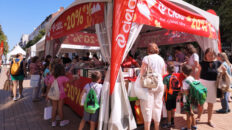
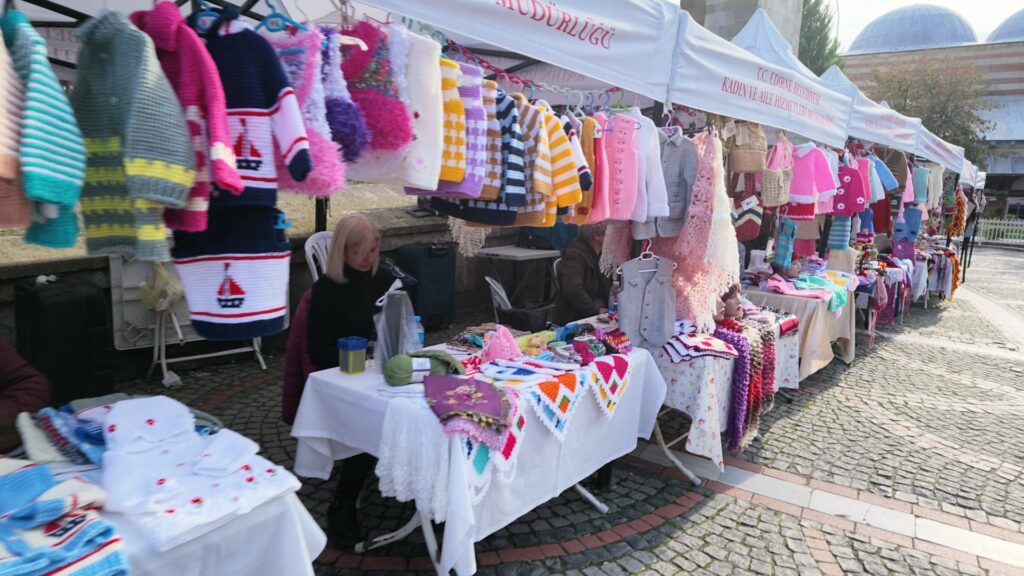
This is the one every Bulgarian means when they say “the market in Odrin”. It sits right behind Margi Outlet, across Haşim İşcan Caddesi, and it sells a bit of everything: fruit and vegetables, olives, white cheese, Edirne pastry sheets, nuts, Turkish delight, then aisle after aisle of clothes, towels, bedding and bags. It is at its biggest on Saturday, with a smaller version on Wednesday.
Most clothes stalls show prices in euro and give change in euro, while the vegetable stalls usually work in lira. If you walk in from the outlet side, you start with the produce. Do the clothes first and the food last, so you are not carrying bags of tomatoes around for two hours.
Balkan Pazarı (the Former Ulus Market)
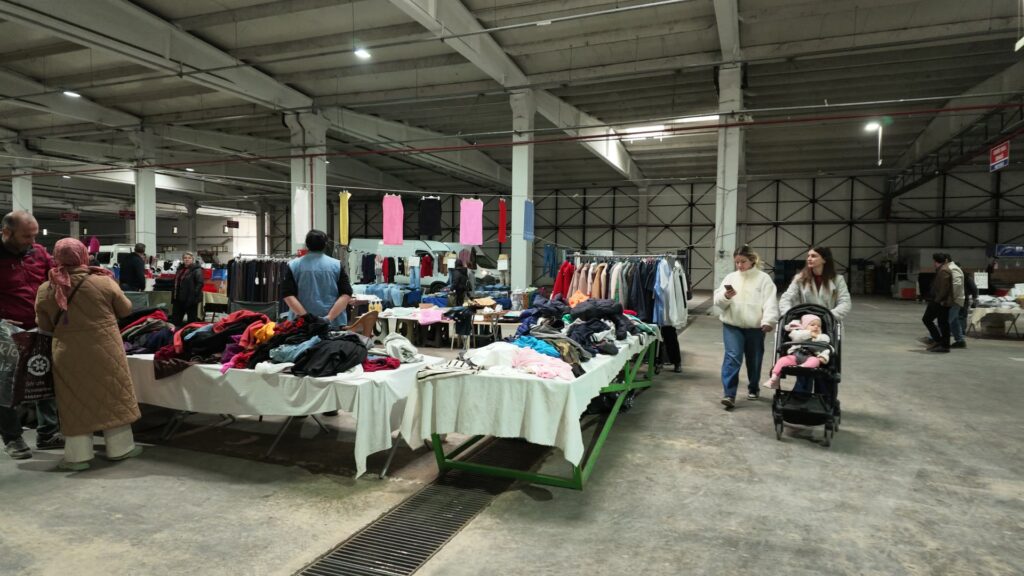
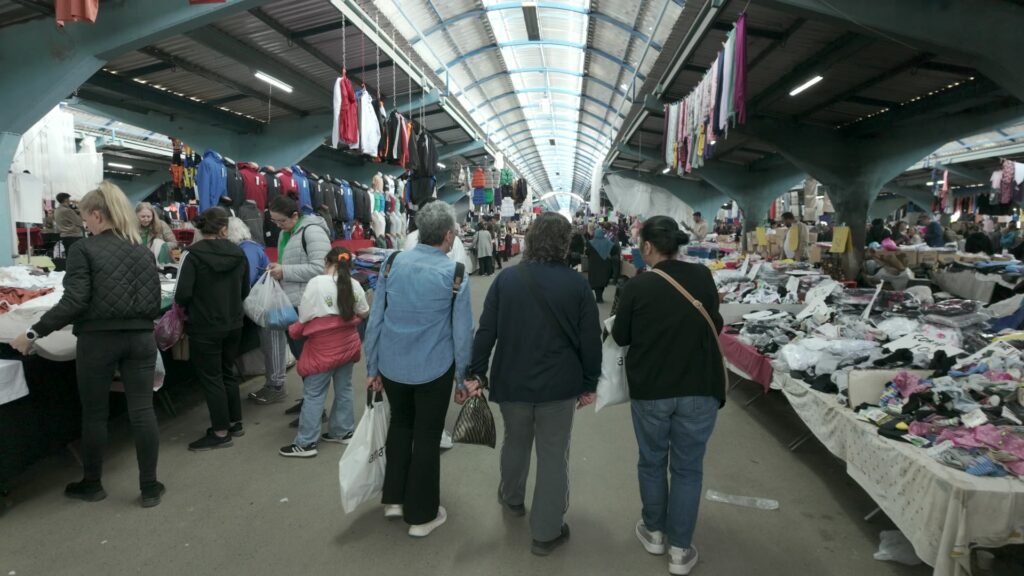
For years this was the famous Friday “sosyete” market, the Ulus Pazarı. The municipality closed it in January 2026, then reopened it on 1 May 2026 under its own management and a new name, Balkan Pazarı. Same place in the Dilaverbey district, same day, same idea: a huge covered hall of clothes, textiles and household goods.
It was packed with Bulgarian shoppers again this autumn, especially at the winter clothes stalls. You can see what the hall looked like before the rename in our Ulus Market walking tour. On other days the market ground works as a car park.
Margi Outlet
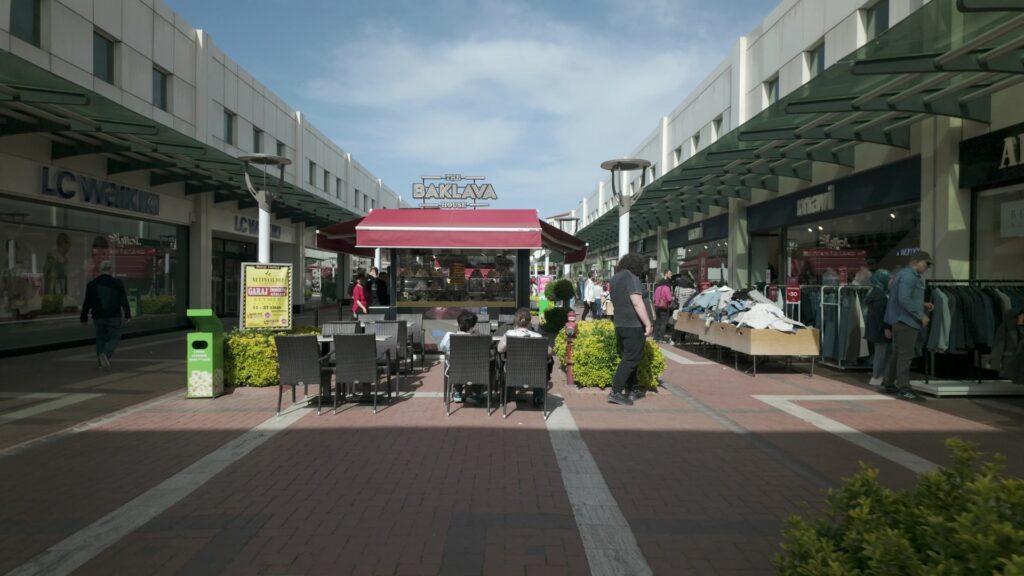
An open-air outlet with 45-plus shops, cafes, a food court and a cinema, right next to the Blue Market. It is the easy option when the weather turns or when you want branded clothes with a receipt, and a simple top was around 8 EUR this autumn.
The Old Town: Saraçlar, Ali Paşa Bazaar and the Arasta
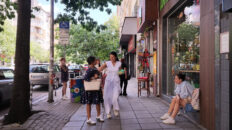
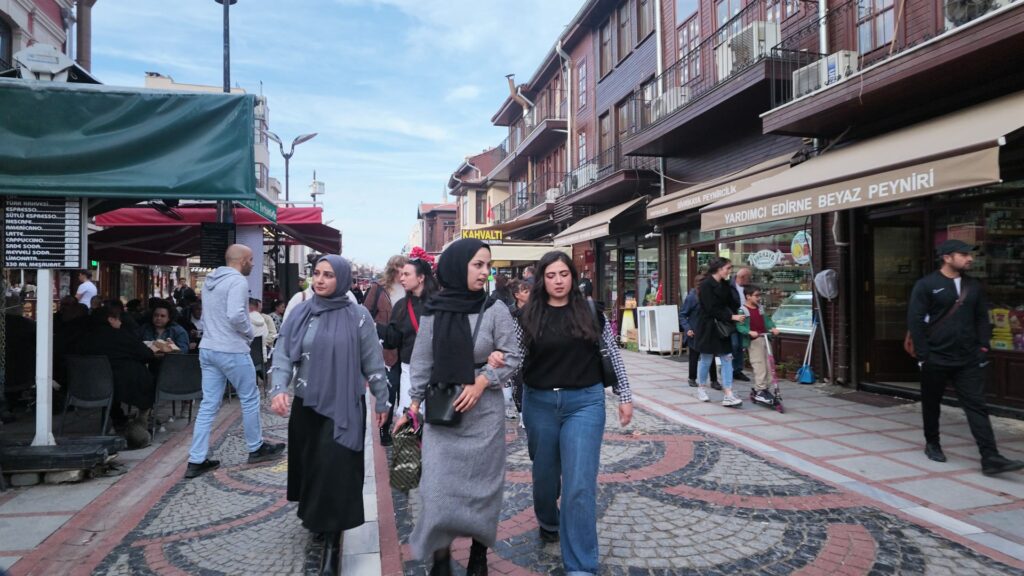
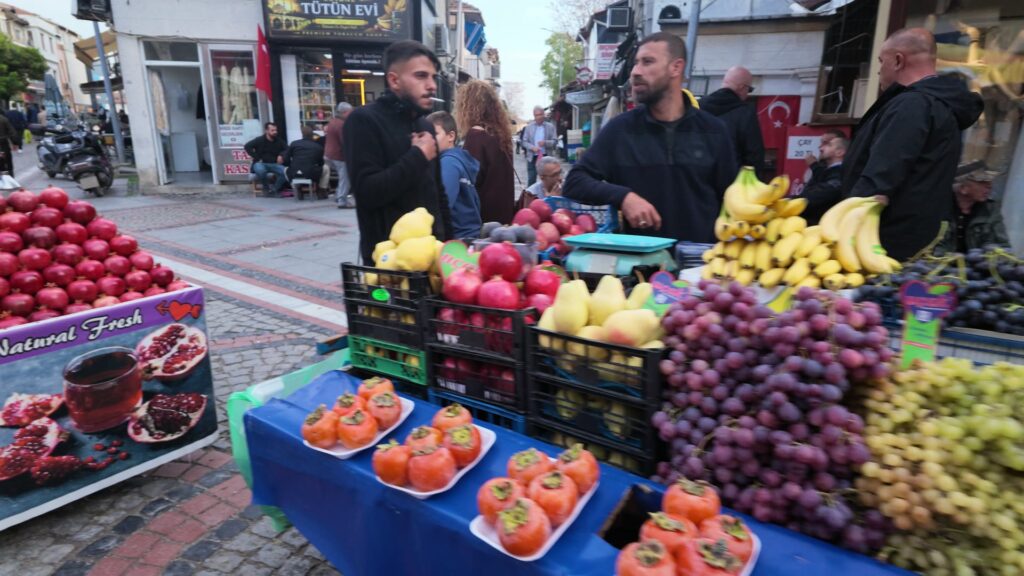
Saraçlar Street is Edirne’s long pedestrian shopping street, lined with sweet shops, nut stalls, jewellers and clothes shops. This is where you buy gifts, almond paste and baklava rather than the weekly shop, and the clothes shops here compete hard with the markets on price.
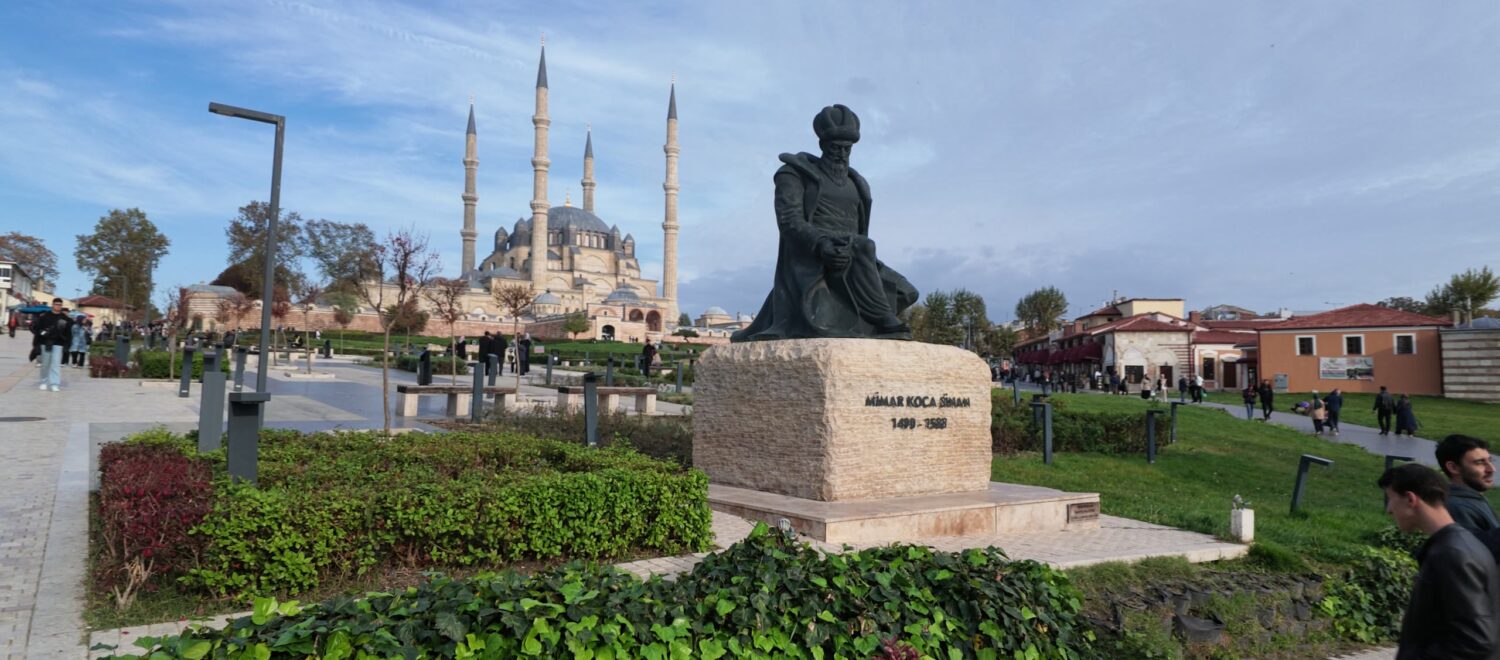
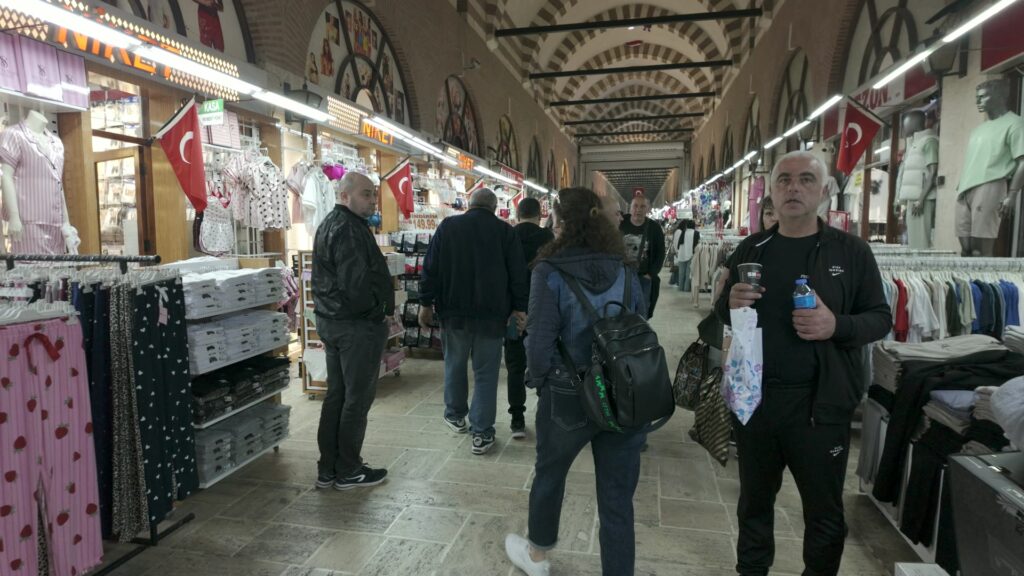
Two covered bazaars sit alongside it. The Ali Paşa Bazaar, built by the architect Mimar Sinan in the 1560s, is a long vaulted street of around 130 small shops selling soaps, spices, towels and souvenirs, and it runs parallel to Saraçlar, so you can walk down one and back up the other. The Bedesten next to the Old Mosque is older still, from the early 1400s, with a similar mix under a grid of small domes.
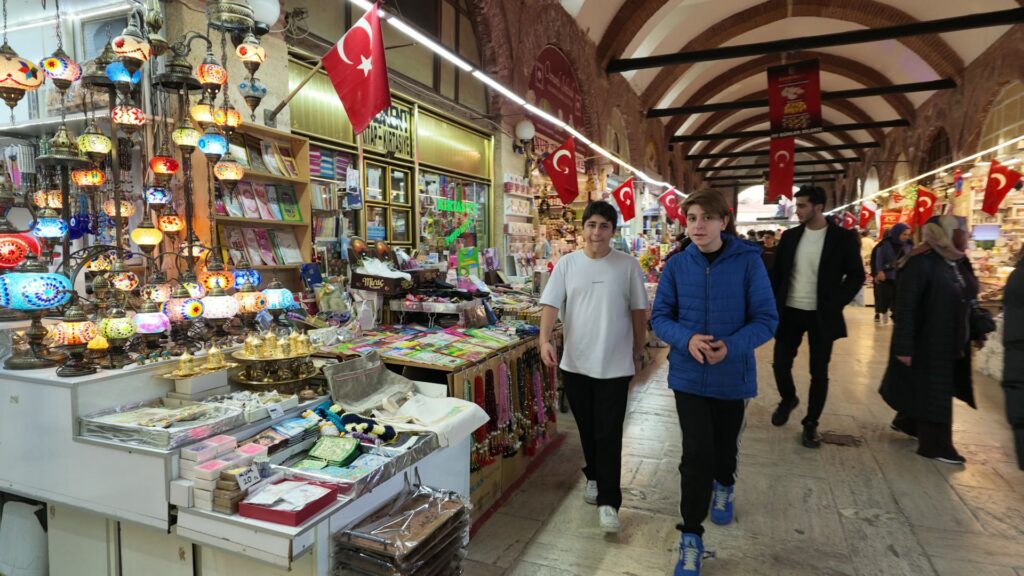
Up by the Selimiye Mosque, the Selimiye Arasta is the place for Edirne’s fruit-shaped soaps, Turkish delight and towels.
We walked the whole stretch on 31 October 2026 – most of the old town prices in the price table below come from that walk. If you want to see the street before you go, our Edirne sunset walking tour follows it at golden hour.
Supermarkets: Yüksan Gross, Tuğra and the Chains
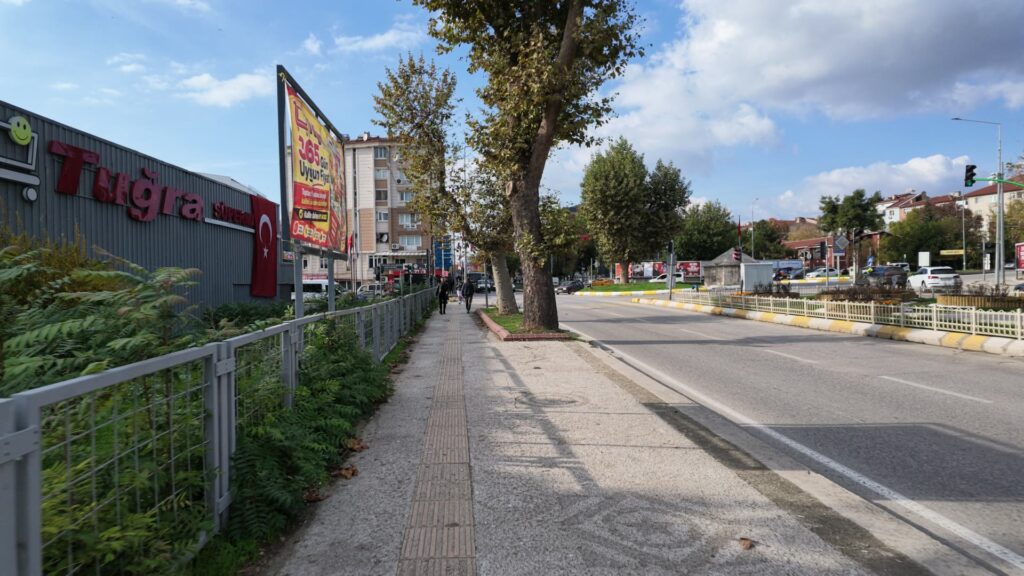
For detergent, cleaning products, pasta, coffee and toilet paper, skip the market and go where most people actually fill their boot. Yüksan Gross is a big wholesale-style store in the Talatpaşa district, close to the Blue Market and right on the way in from the border. It has a huge car park, a free toilet and fruit and vegetables at the entrance, and it opens at 6:30 on Fridays and Saturdays.
Tuğra Market is Edirne’s own supermarket chain, with several branches around the city, including one near the Aliba Hotel. It is the practical choice for groceries and household basics if you are staying in town.
The national discounters BİM, A101 and ŞOK publish weekly “aktüel” catalogues with fixed promotions that can beat the markets. Search “BİM aktüel” or “A101 aktüel” the evening before your trip to see what is on. Migros is the more upmarket option, with a bigger choice of coffee, tea and imported brands.
What to Buy and What It Costs
Clothes and detergent fill most boots, but the best value is in the things Turkey simply does better. Here is what we buy, grouped the way you will shop for it, followed by a full price table.
Sweets and Gifts: Baklava, Lokum, Almond Paste and Soaps
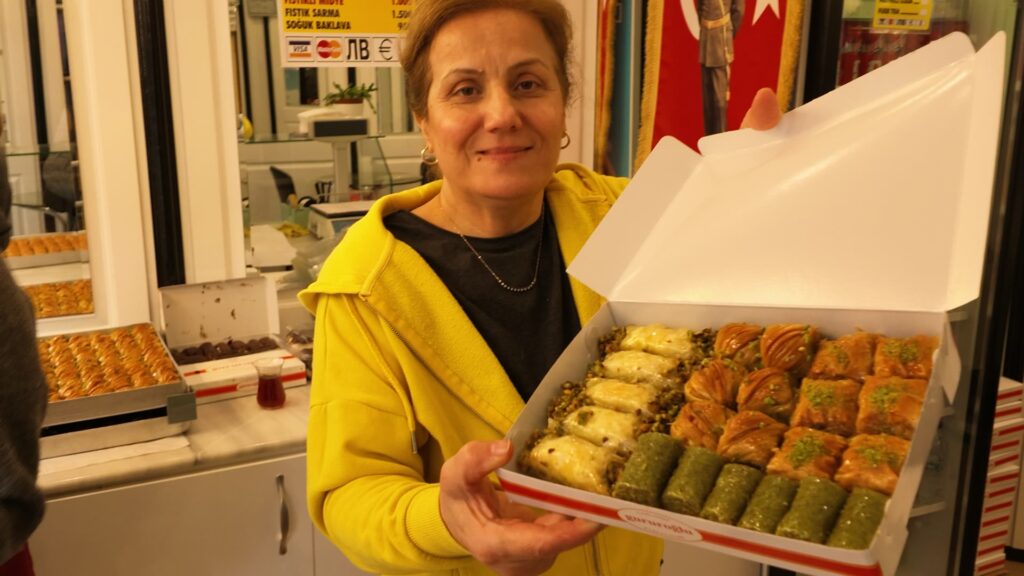
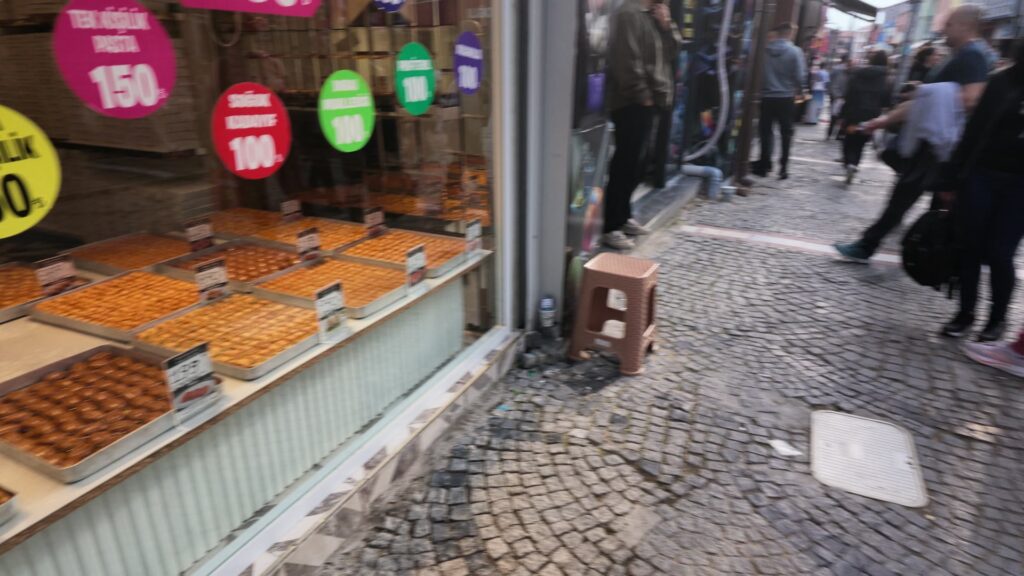
Baklava is the obvious one and still the best gift you can bring home. The simpler kinds started at 200 to 430 TL a kilo on Saraçlar, while pistachio specialities such as fıstık sarma ran to 900 to 1,500 TL. Buy from a busy shop where the trays are being refilled, ask for a box (kutu) rather than a bag, and keep it out of the fridge, which makes the pastry go hard.
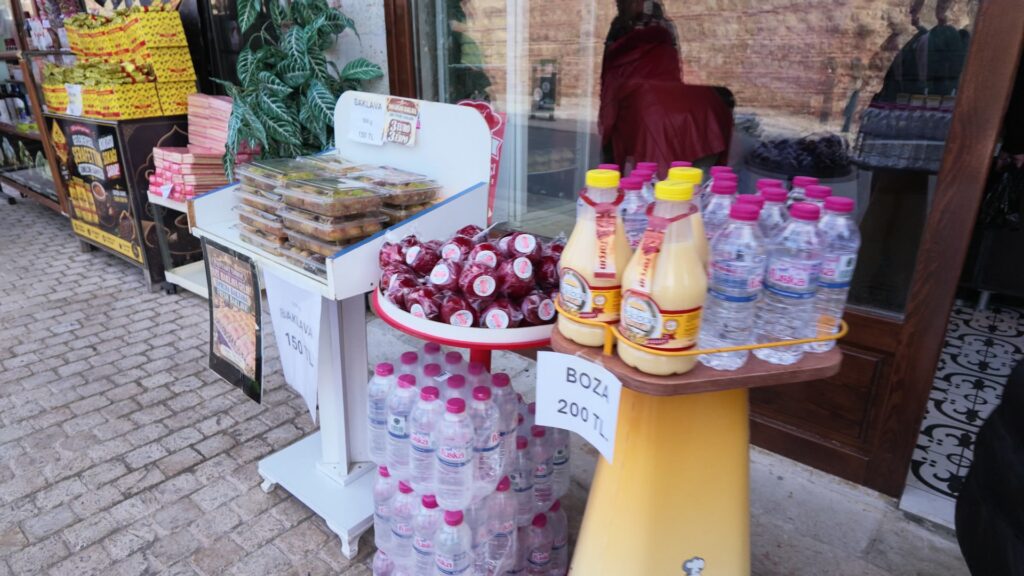
The cheap 500 g boxes sold at stands for 150 TL are fine as a snack, but they are not the same thing. If you are buying for an occasion, pay for the real one by the kilo.
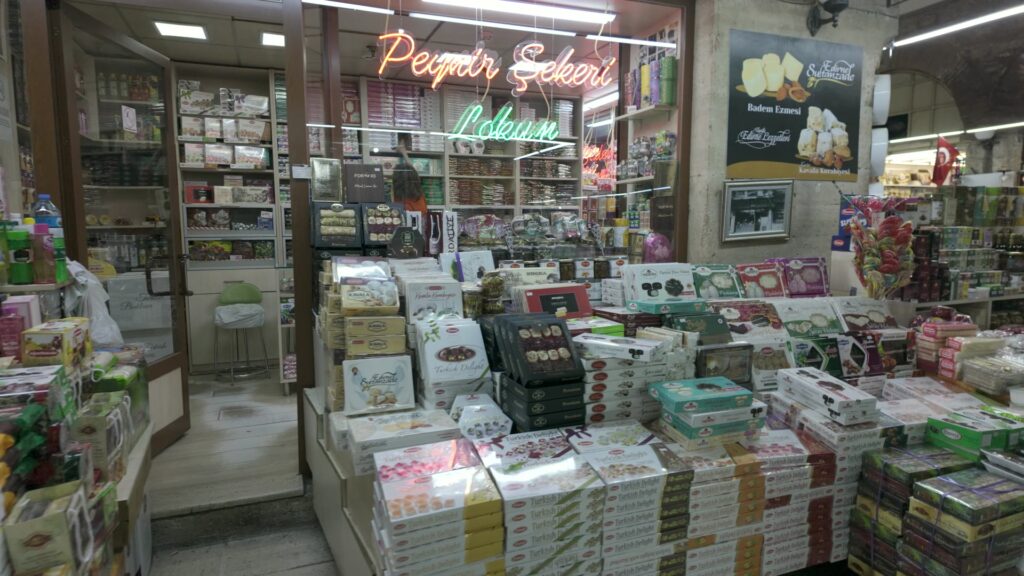
Turkish delight (lokum) starts at around 100 TL a box in the supermarkets. The sweet shops and the Selimiye Arasta sell better versions with pistachio, hazelnut or rose, often by weight, so you can mix your own box. Ask to taste first – most shops are happy to let you.
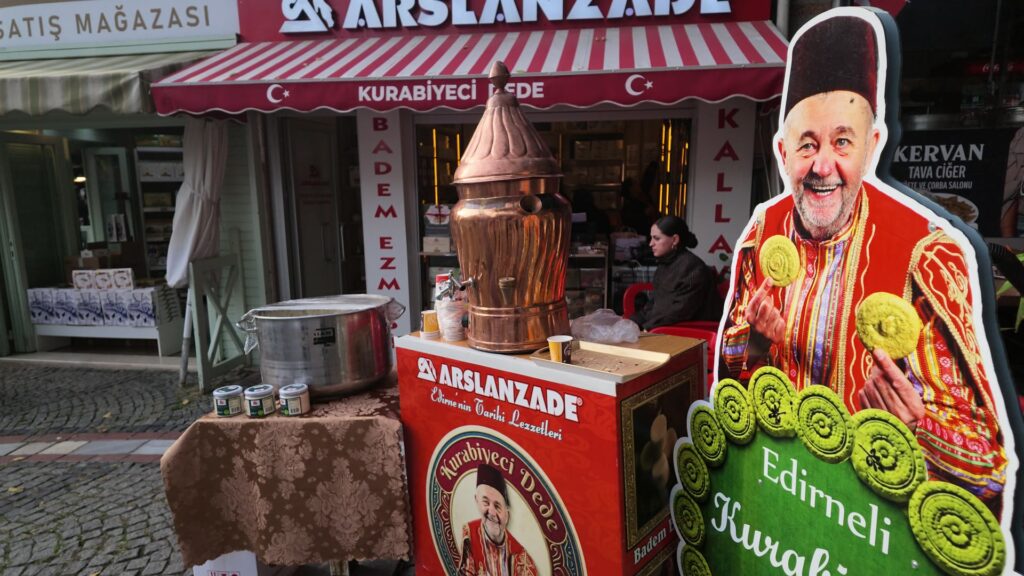
Almond paste and Edirne cookies are what Edirne is famous for in Turkey itself. Badem ezmesi is a soft white almond paste, less sweet than marzipan, and Edirne cookies (also sold as Kavala cookies) are crumbly almond and butter biscuits dusted with sugar. We passed the Arslanzade shop on Saraçlar, with its street cart and “Kurabiyeci Dede” sign, on our October walk.
Fruit-shaped soaps – apples, pears, figs and strawberries – go back to Ottoman palace times and are still made here by hand. They smell lovely, cost little and make the classic small gift. The Selimiye Arasta and the Ali Paşa Bazaar have the best choice.
Pantry: Tea, Coffee, Spices, Olives and Pastry Sheets
Tea: Turkish black tea from Rize is a staple. Çaykur raised its prices on 13 October 2026, and a 1 kg pack of Rize Turist now costs around 430 TL in the chains, though the discounters often have Çaykur Tiryaki on promotion for less. Pick up a two-level çaydanlık teapot and a set of tulip glasses at the Blue Market to brew it properly.
Coffee: Kurukahveci Mehmet Efendi is the brand every Turkish household knows, sold in 100 g foil packs. It is ground very fine for the cezve, the small long-handled pot, which you can buy in copper or steel at the bazaars.
Spices and nuts: red pepper flakes (pul biber), sumac, dried mint and the dark isot pepper are hard to find at home and cost little here. The Blue Market and the spice shops by the Arasta sell them loose, so you can buy small amounts and try them.
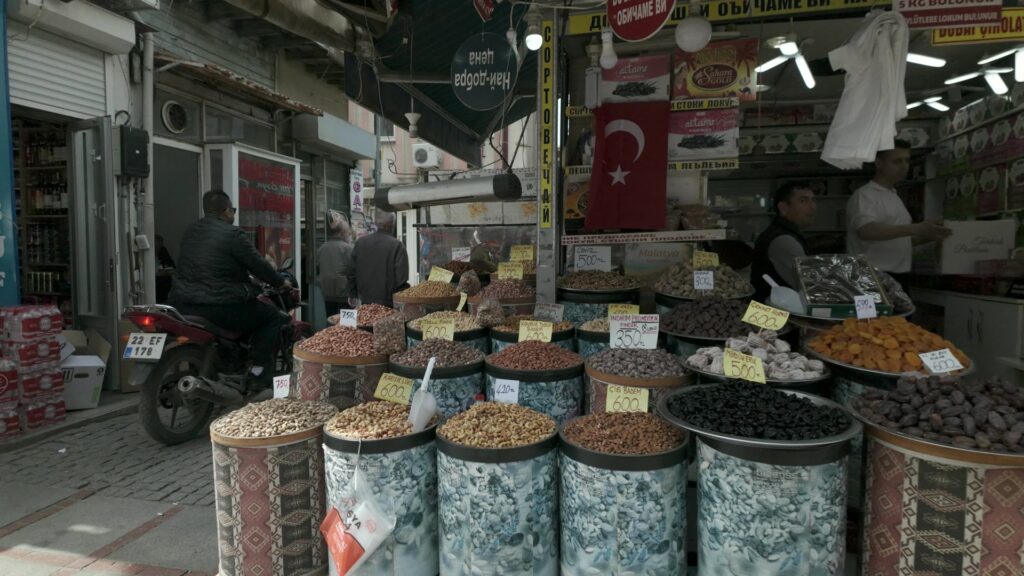
Olives, oil, tahini and pekmez: the Blue Market olive stalls sell dozens of kinds from open buckets. Olive oil is a good bulk buy when the discounters have it on promotion. Tahini and grape molasses (pekmez) are cheap, keep for months and go great together on bread for breakfast.
Pastry sheets: the thin fresh yufka sold at the Blue Market is one of the things many Bulgarian families come for – perfect for banitsa and börek. Fresh kadayıf is sold at the same stalls. Buy them last so they do not get crushed.
Clothes and Home Textiles
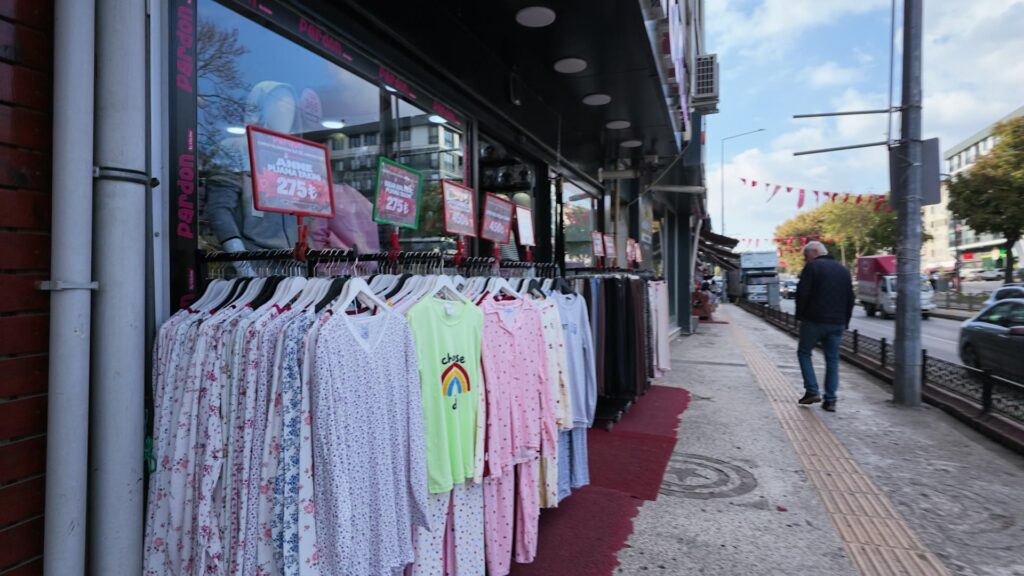
Clothes are the main draw at both markets, and the old town shops are often cheaper still – tops on Saraçlar were 200 to 400 TL, and one shop had everything at 350 TL. Home textiles are one of the clearest savings: Turkish cotton is the real deal, and full bedding sets were around 15 EUR this autumn.
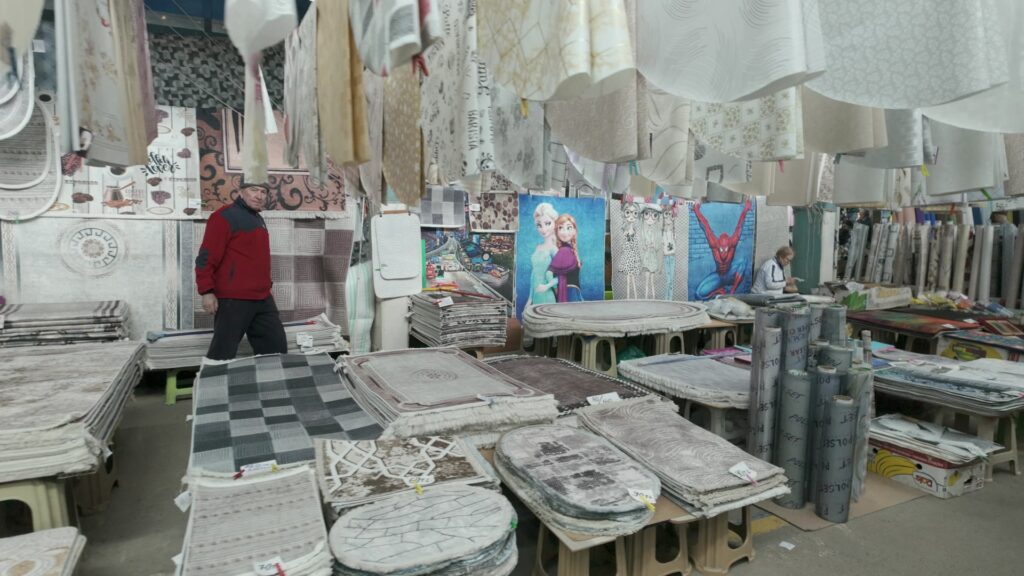
Feel the fabric and check the label for 100% cotton (pamuk) – the good stuff is heavy and soft.
Detergents, Cleaning Products and Cosmetics
This is what fills the boot for most families, and the savings add up fast. A 10 kg bag of Persil or Ariel was under 9 EUR at Yüksan, and the local brands are cheaper still – Hacı Şakir shampoo and Dalan shower gel were both just over 1 EUR. One family filled a car this October with detergents, cleaning products, rice, pasta and groceries for close to 200 EUR.
Price Check: Autumn 2026
The euro was worth around 56 lira in late October 2026. Everything below was seen on price tags between late September and the end of October 2026; euro figures are rounded.
| Item | Price |
|---|---|
| Sweets and snacks | |
| Baklava, simple kinds, 1 kg Saraçlar | 200-430 TL (3.50-7.70 EUR) |
| Baklava, pistachio specialities, 1 kg Saraçlar | 900-1,500 TL (16-27 EUR) |
| Baklava, 500 g box Stand by the Arasta | 150 TL or 3 EUR |
| Tulumba, 1 kg Saraçlar | 199 TL (3.50 EUR) |
| Turkish delight, box Yüksan Gross | ~100 TL (under 2 EUR) |
| Spiced sunflower seeds, bag Saraçlar | 130-140 TL (~2.40 EUR) |
| Pantry | |
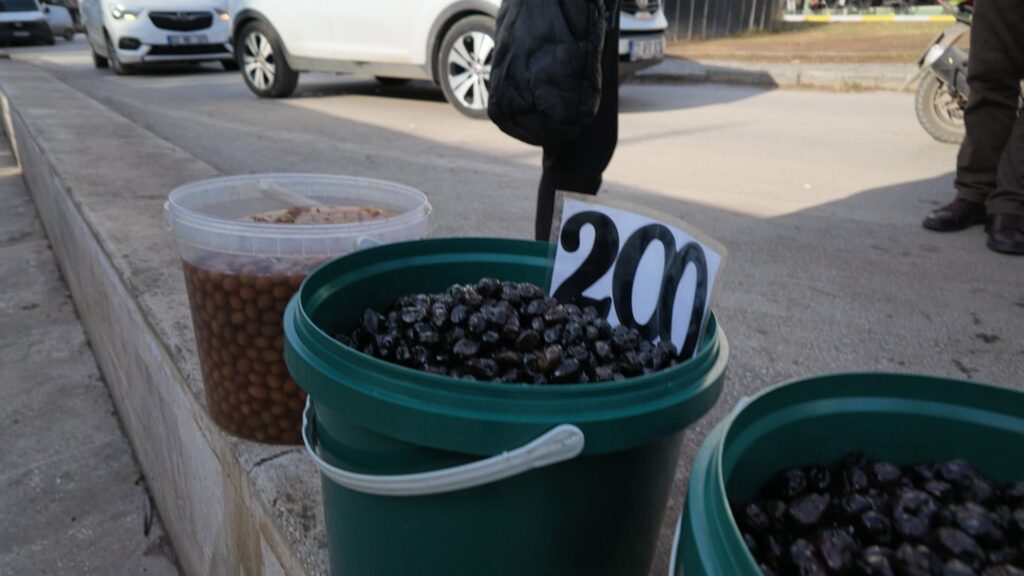
| Olives Street seller, old town | 200 TL (~3.60 EUR) |
| Tahini, jar Yüksan Gross | ~145 TL (~2.60 EUR) |
| Pekmez Yüksan Gross | ~99 TL (~1.80 EUR) |
| Olive oil, 5 l BİM promotion, 20 Oct | 899 TL (~16 EUR) |
| Sunflower oil, 5 l BİM promotion, 20 Oct | 449 TL (~8 EUR) |
| Rize Turist tea, 1 kg Chains | ~430 TL (~7.70 EUR) |
| Mehmet Efendi coffee, 100 g Chains, earlier in 2026 | ~100 TL (under 2 EUR) |
| Pasta, pack Yüksan Gross | 21-28 TL (~0.50 EUR) |
| Fruit and vegetables, per kg | |
| Tomatoes Blue Market | ~25 TL (under 0.50 EUR) |
| Aubergines Blue Market | ~70 TL (~1.25 EUR) |
| Peaches Blue Market | ~50 TL (~0.90 EUR) |
| Lemons Blue Market | 50-70 TL (~1 EUR) |
| Household | |
| Persil, 10 kg Yüksan Gross | ~430 TL (~7.70 EUR) |
| Ariel, 10 kg Yüksan Gross | ~495 TL (~8.80 EUR) |
| Domestos Yüksan Gross | ~70 TL (~1.25 EUR) |
| Toilet paper, 12 rolls Yüksan Gross | ~190 TL (~3.40 EUR) |
| Pantene or Head and Shoulders Yüksan Gross | ~150 TL (~2.70 EUR) |
| Clothes and home | |
| T-shirt Markets | 8-10 EUR |
| Tops Saraçlar shops | 200-400 TL (3.60-7 EUR) |
| Jeans Markets | ~13 EUR |
| Tracksuit set Markets | 25-30 EUR |
| Sneakers Markets | ~20 EUR |
| Sneakers Saraçlar shops | 500-800 TL (9-14 EUR) |
| Pyjama set Saraçlar | 275-450 TL (5-8 EUR) |
| Thermal socks Markets | ~7 EUR |
| Bedding set Markets | ~15 EUR |
| Thick blanket Markets | ~26 EUR |
| Large rug Markets | from ~20 EUR |
What You Can Take Back Into the EU (and What to Skip)
This is the part most shoppers get wrong, so read it before you fill the boot. Turkey is outside the EU, and the limits at the Bulgarian border are stricter than many people think.
- Cigarettes: only 40 (two packs) duty-free at Kapitan Andreevo.
- Alcohol: 1 litre of spirits or 2 litres of drinks up to 22%, plus 4 litres of wine and 16 litres of beer.
- Everything else: up to 300 EUR per adult when you travel by road. Above that, you have to declare and pay.
- Meat and dairy: not allowed at all. EU rules ban personal imports of meat, milk and dairy from Turkey – that includes cheese, kashkaval, sucuk and chicken.
- Fake brands: counterfeit perfumes, bags and clothes can be seized at the border.
Yes, plenty of people come back with Turkish cheese anyway. But the rule is clear, and if customs checks your car, it goes in the bin. Keep your supermarket receipts too – if customs asks about value, they settle it fast.
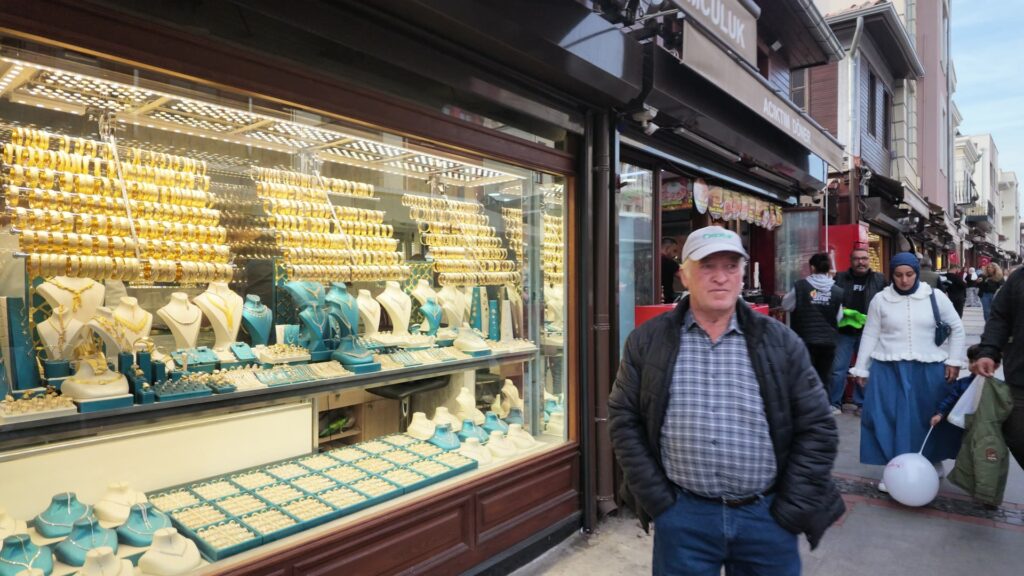
Two more things we would skip. Gold is priced by the gram at world rates, so you only save on the workmanship. Electronics are not cheaper than at home, and a warranty bought in Turkey is hard to use from Bulgaria.
Paying and Bargaining
Two habits save more money than any single bargain: paying in the right currency, and knowing where haggling is expected.
Euro or Lira?
Since Bulgaria joined the euro in January 2026, Edirne has switched its signs from leva to euro, and you can pay in euro almost everywhere shoppers go. It costs a little extra, though. A clothes shop on Saraçlar had its rail marked 400 TL or 8 EUR, when 400 TL was worth about 7.15 EUR that day, so expect to pay roughly 10 to 12% more in euro.
Our advice: pay in euro for clothes, where the round numbers are part of the bargaining anyway, and carry some lira for food stalls and small buys. The bigger sweet shops take cards, but cash gets you a better deal when you bargain. And think twice before changing a lot of money at home – one family who swapped euro for lira in Bulgaria this autumn paid noticeably more than the official rate.
How to Bargain (and When Not To)
At the market clothes stalls, the first price is an opening move. The usual pattern is simple: they say 300, you say 200, and you shake hands somewhere around 250. Smile, take your time and be ready to walk away – often the better price comes as you turn to leave.
Buying several pieces from one stall is the easiest way to get a discount, so do your family’s shopping in one place where you can. Early morning helps too, since many traders like to make their first sale of the day (siftah) and will give a little to get it.
Do not bargain in supermarkets, chain stores, the outlet or shops with printed price tags. Vegetables and fruit are sold at the marked price as well, though a trader will often round down or throw in an extra lemon if you buy a lot.
Almost every trader understands Bulgarian, and many speak it well, but a few Turkish words go a long way:
- Ne kadar? – How much?
- Çok pahalı – Too expensive
- İndirim var mı? – Is there a discount?
- Bir kilo / yarım kilo – One kilo / half a kilo
- Teşekkür ederim – Thank you
Where to Eat While You Shop
Do not spend the whole day in the aisles – eating in Edirne is half the point. A proper lunch is cheap: eight people with salads, mains, desserts and drinks paid around 180 EUR in a central kebab house this autumn, a little over 20 EUR each.
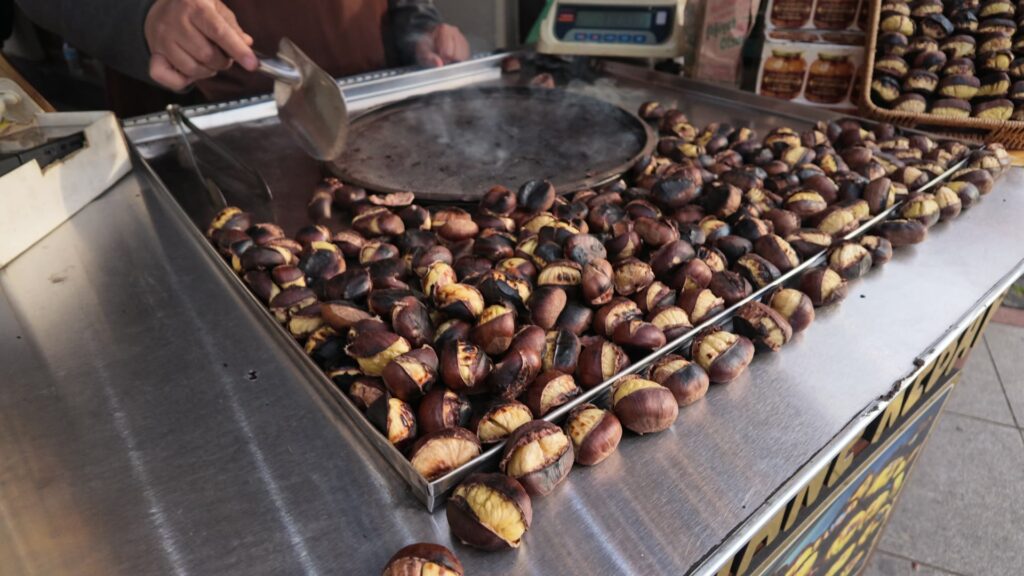
Tava ciğer is the dish Edirne is known for across Turkey: thin slices of calf’s liver, fried crisp and served with crunchy dried red peppers, onion and tomato. Even people who do not like liver tend to like this version, and the signs are all around the old centre, including right next to the Arslanzade cookie shop on Saraçlar.
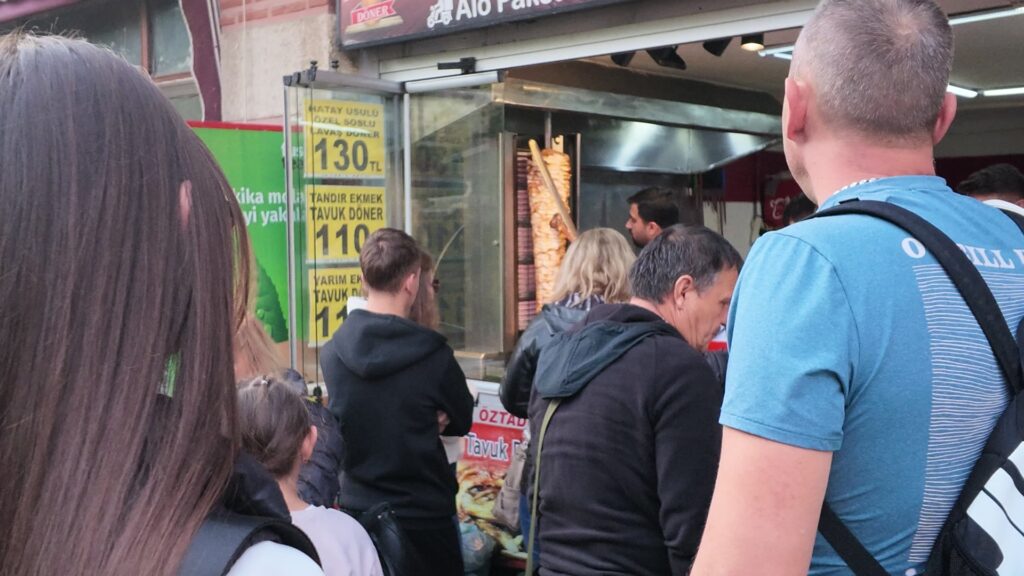
Döner is the fast option between shops. A chicken döner in tandır bread was 110 to 130 TL on Saraçlar in October 2026, around 2 EUR, and the busy places with queues turn their meat fastest.
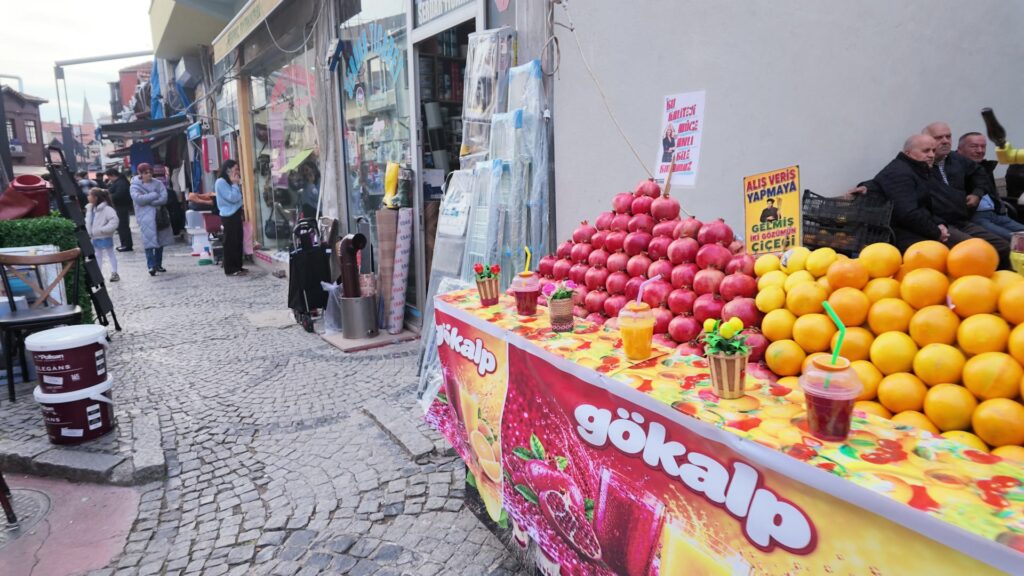
Tea, boza and sweets: a glass of tea at a cafe on Saraçlar was 20 TL, so stop as often as you like. In the cold months, try boza, the thick, slightly sour fermented millet drink, at around 200 TL a bottle, or the colourful Ottoman paste candy (macun) twisted onto a stick from the carts by the Arasta.
If you are shopping by the Blue Market, the Margi Outlet food court is the easy option, with a children’s play area next door. It is not the most interesting food in town, but it saves driving into the centre.
A One-Day Shopping Plan
If you are coming for the day on a Saturday, this is the order that works for us. It front-loads the market while it is quiet, puts the heavy shopping close to the car and leaves time for a proper lunch.
- Early morning: leave Plovdiv or Haskovo around 7:00 and cross the border before the traffic builds.
- 9:00 – Blue Market: clothes and textiles first, then olives, spices, pastry sheets and vegetables on the way out.
- 11:30 – Yüksan Gross: detergents, cleaning products, tea, coffee and pantry stock, straight into the boot.
- 13:00 – Old town: park on the edge of the centre and have lunch – tava ciğer or a kebab.
- 14:30 – Saraçlar and the bazaars: baklava, almond paste, cookies, soaps and Turkish delight, with a look at the Selimiye on the way.
- 16:30 – Head back: leave before the evening rush at Kapıkule.
Bring a shopping trolley and sturdy bags – the regulars at the Blue Market all have one, and after the first hour you will see why. For toilets, Yüksan Gross has a free one, and the old town cafes expect you to buy a tea.
Where to Stay
A day trip works, but staying one night lets you hit the market first thing in the morning, before the crowds and before the border queue builds up. We have stayed at two very different hotels.
Margi Hotel – Next Door to the Market
For a shopping trip, the location is hard to beat. The Margi Hotel is a glass tower right beside Margi Outlet, so the Blue Market is across the road. We stayed in April 2025: a twin room with a city view and a marble bathroom with a tub, a big breakfast buffet with a chef cooking eggs, a terrace restaurant in the evening, and an indoor pool and spa downstairs.
The old town is about 3 kilometres away, so you will want the car or a taxi for Selimiye.
Aliba Hotel – Small and Central
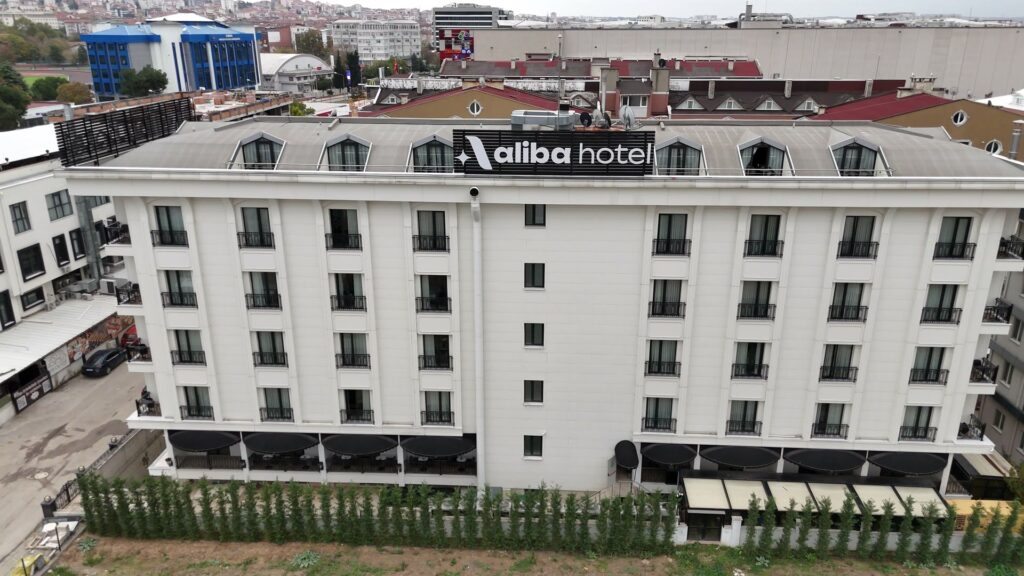
We stayed at the Aliba in October 2026. It is a small hotel in the city with comfortable doubles and a tea and coffee tray in the room, and ours had a balcony over the street. Breakfast is a proper Turkish spread with hot dishes, cheeses, salads and meze, served in a hall with a piano.
We did not see a pool or spa, so book it for the location and the breakfast, not for wellness.
Prices in Edirne jump on Friday and Saturday nights, when half of Bulgaria has the same plan as you. Compare hotels in Edirne a week or two ahead for the best rates.
Frequently Asked Questions
Is shopping in Edirne still worth it in 2026?
Yes, but not for everything. Inflation has narrowed the gap on some goods, and paying in euro eats around 10% of what is left. Detergents, home textiles, sweets, tea, coffee and spices are still clearly cheaper.
Is the Ulus Market still open?
Yes, under a new name. It reopened on 1 May 2026 as Balkan Pazarı, in the same place in Dilaverbey, and runs every Friday.
Is the Blue Market the same as Balkan Pazarı?
No. The Blue Market is behind Margi Outlet and is busiest on Saturdays. Balkan Pazarı, the former Ulus market, is in Dilaverbey and runs on Fridays.
Do I need an HGS toll sticker?
Not for a shopping trip. The D-100 from Kapıkule into Edirne is free. You only need HGS on the O-3 motorway, for example to Istanbul.
Can I bring Turkish cheese back to Bulgaria?
Officially, no. EU rules ban personal imports of meat and dairy from Turkey, including white cheese and kashkaval, and customs can confiscate them.
What’s Near Edirne
If you have a long weekend, Edirne makes a good first night on the way to Istanbul and Sultanahmet, two and a half to three hours down the motorway (this is where you do need HGS). On the way home, a walk through Plovdiv Old Town breaks the drive nicely.
For another market, Kırklareli is under an hour from Edirne, with a huge covered clothing hall and far fewer Bulgarian shoppers.